🚨 Emergency Roof Leak? Free Same-Day Inspection Available | (800) 485-8428

Author: FirstLine Roofing

  • Metal Roof vs. Tile Roof in South Florida: Which One Is Right for Your Home?

    Metal Roof vs. Tile Roof in South Florida: Which One Is Right for Your Home?

    Choosing between a metal roof and a concrete tile roof is one of the biggest decisions South Florida homeowners make when replacing a roof. Both systems perform exceptionally well in our unique climate when installed correctly, but they offer very different advantages depending on your home’s architecture, your budget, HOA requirements, and your long-term property goals.

    At FirstLine Roofing, we specialize in both systems, providing high-end installations throughout Parkland, Coral Springs, Boca Raton, and surrounding South Florida communities. Here’s a comprehensive look at what homeowners should know before making this significant investment.

    The South Florida Roofing Challenge

    Before diving into the materials, it is important to understand what a roof in South Florida must endure. Unlike most of the country, our roofs face a relentless trifecta:

    1. Intense UV Exposure: The Florida sun can bake roofing materials to over 160°F, causing thermal expansion and material degradation.
    2. High Humidity and Salt Air: For coastal properties, the corrosive nature of salt air can eat through low-quality metals and cause organic growth on porous tiles.
    3. Hurricane-Force Winds: We live in a High Velocity Hurricane Zone (HVHZ), where roofing systems must be engineered to withstand wind speeds often exceeding 150 mph.

    Understanding these factors is the first step in deciding whether a metal or tile system is the best fit for your specific building envelope.

    Durability & Wind Resistance

    Both metal and tile are considered "premium" roofing options because of their longevity compared to traditional asphalt shingles. However, their durability profiles differ.

    Metal Roofing Systems

    Modern metal roofing, specifically standing seam systems, is often considered the "gold standard" for wind resistance. Because the panels are interlocked and mechanically fastened or snapped together, there are no exposed fasteners to back out over time.

    • Lifespan: Typically 40 to 70 years.
    • Wind Performance: Often rated for winds up to 160 mph or higher.
    • Impact Resistance: Metal is ductile; while a large hailstone or flying branch might dent a panel, it is unlikely to crack or breach the system’s water tightness.

    Concrete Tile Roofing Systems

    Tile has been the backbone of South Florida architecture for decades. Its durability comes from the sheer mass and resilience of the concrete or clay material itself.

    • Lifespan: The tiles themselves can last 50 to 100 years. However, the underlayment, the actual waterproof barrier, typically lasts 20 to 25 years. This often requires a "tile lift" or "renewal" where the tiles are removed and reinstalled over new underlayment.
    • Wind Performance: Modern installation methods (using specialized foam adhesives or screws) provide excellent wind uplift resistance.
    • Impact Resistance: Tiles are brittle. While they are thick, a direct hit from heavy debris can crack them, which may lead to leaks if the underlayment is aged.

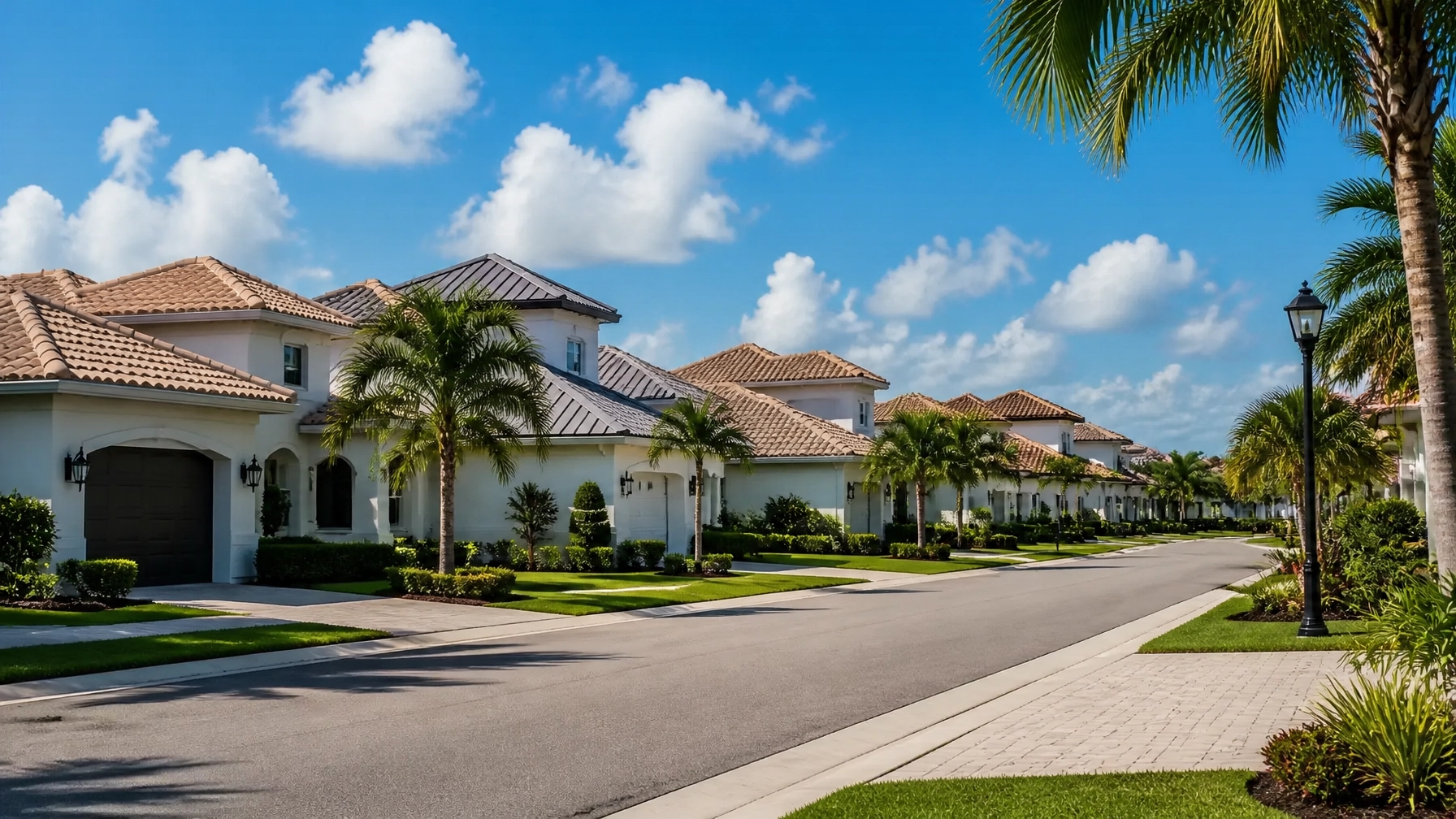
    FirstLine Roofing crew installs a modern standing seam metal roof on a coastal Florida residence, ensuring precision and compliance with local hurricane-resistant standards.

    Appearance & Curb Appeal

    Aesthetics often drive the final decision, especially in master-planned communities.

    The Mediterranean Aesthetic

    Concrete tile roofs remain the most recognizable architectural feature in communities like Heron Bay and Parkland Isles. They offer:

    • Classic Profiles: Whether it’s a high-barrel "S" tile or a flat "slate" look, tile provides deep shadow lines and a sense of permanence.
    • Color Variety: From terracotta and earth tones to modern grays and whites.

    The Modern Coastal Aesthetic

    Metal roofing has undergone a design revolution. It’s no longer just for commercial buildings or rural barns.

    • Standing Seam: Provides clean, vertical lines that complement "Modern Coastal" or "Contemporary" home styles.
    • Stone-Coated Steel: For homeowners who want the benefits of metal but the look of tile, stone-coated steel can mimic the profile of barrel tiles or wood shakes with remarkable accuracy.

    Weight & Structural Considerations

    One of the most overlooked factors in roof replacement is the weight of the material.

    Concrete Tile Weight: A concrete tile roof can weigh between 800 and 1,100 pounds per "square" (a 10' x 10' area). This is a massive load for a home’s structural frame. If your home was originally designed for shingles, you must have a structural engineer verify that your trusses can handle the weight of tile.

    Metal Roof Weight: Metal is incredibly lightweight, usually weighing between 50 and 150 pounds per square. This makes it an ideal candidate for "re-roofing" projects where you want to increase durability without stressing the home’s foundation or framing.

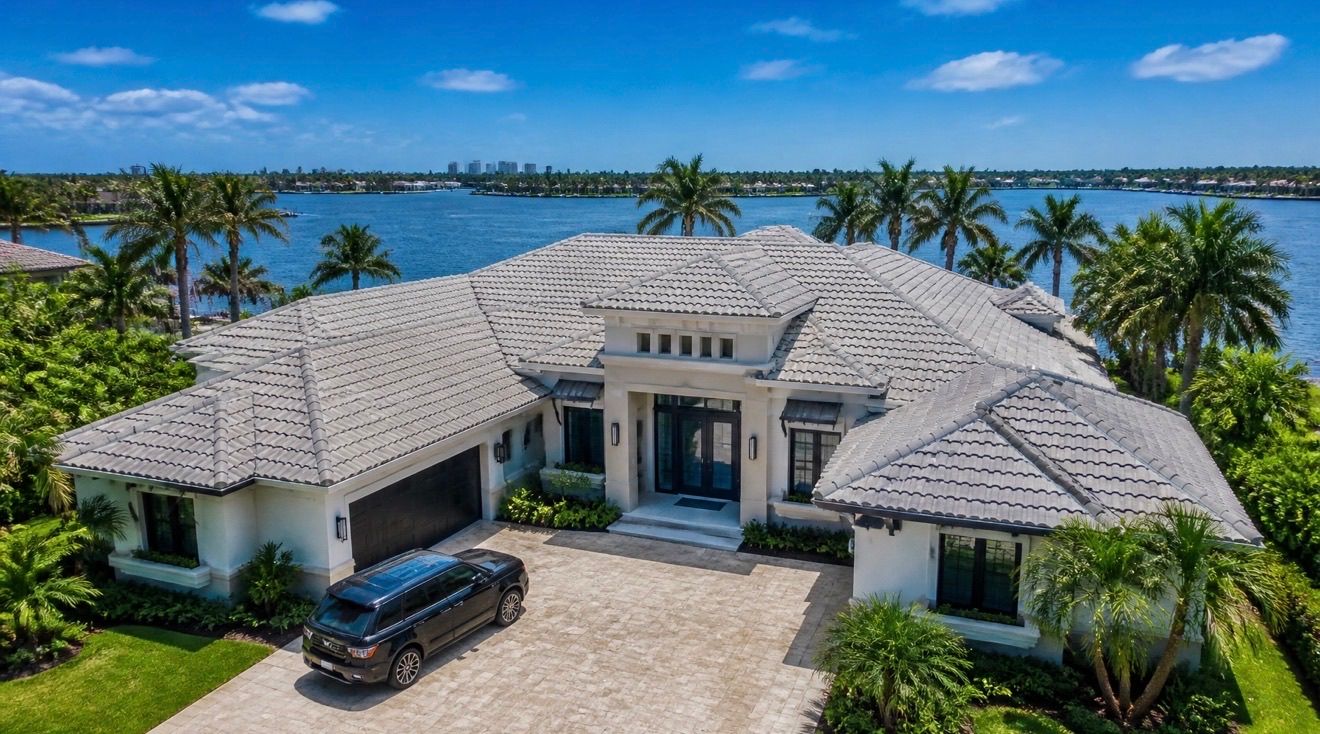
    Aerial view of a luxury waterfront home in South Florida featuring a premium gray concrete tile roof, showcasing the precision and curb appeal of tile systems.

    Energy Efficiency: Keeping the Attic Cool

    In the Florida heat, your roof is your primary defense against rising cooling costs.

    • Metal’s Reflectivity: Metal roofs are highly reflective. When coated with "Cool Roof" pigments, they reflect a significant portion of solar radiation back into the atmosphere rather than absorbing it into the attic.
    • Tile’s Thermal Mass: Tile works differently. Because of its density, it has high "thermal mass," meaning it takes a long time to heat up. Furthermore, the way tiles are laid creates a natural air gap between the tile and the deck, which acts as a buffer against heat transfer.

    Both systems, when paired with proper ventilation, can significantly reduce your home’s energy footprint.

    Maintenance & Long-Term Costs

    No roof in Florida is truly "maintenance-free."

    Maintenance for Tile:

    • Cracked Tiles: Walking on a tile roof (for AC repair or holiday lights) often results in cracked tiles that must be replaced immediately to protect the underlayment.
    • Organic Growth: Porous concrete tiles are prone to algae and mildew, requiring soft-wash cleaning every few years to maintain curb appeal.

    Maintenance for Metal:

    • Fastener Checks: For "exposed fastener" systems (common in commercial/agricultural), screws may need tightening over time. However, in "standing seam" systems, maintenance is minimal.
    • Debris Removal: Keeping valleys and gutters clear of pine needles and leaves is essential to prevent moisture traps.

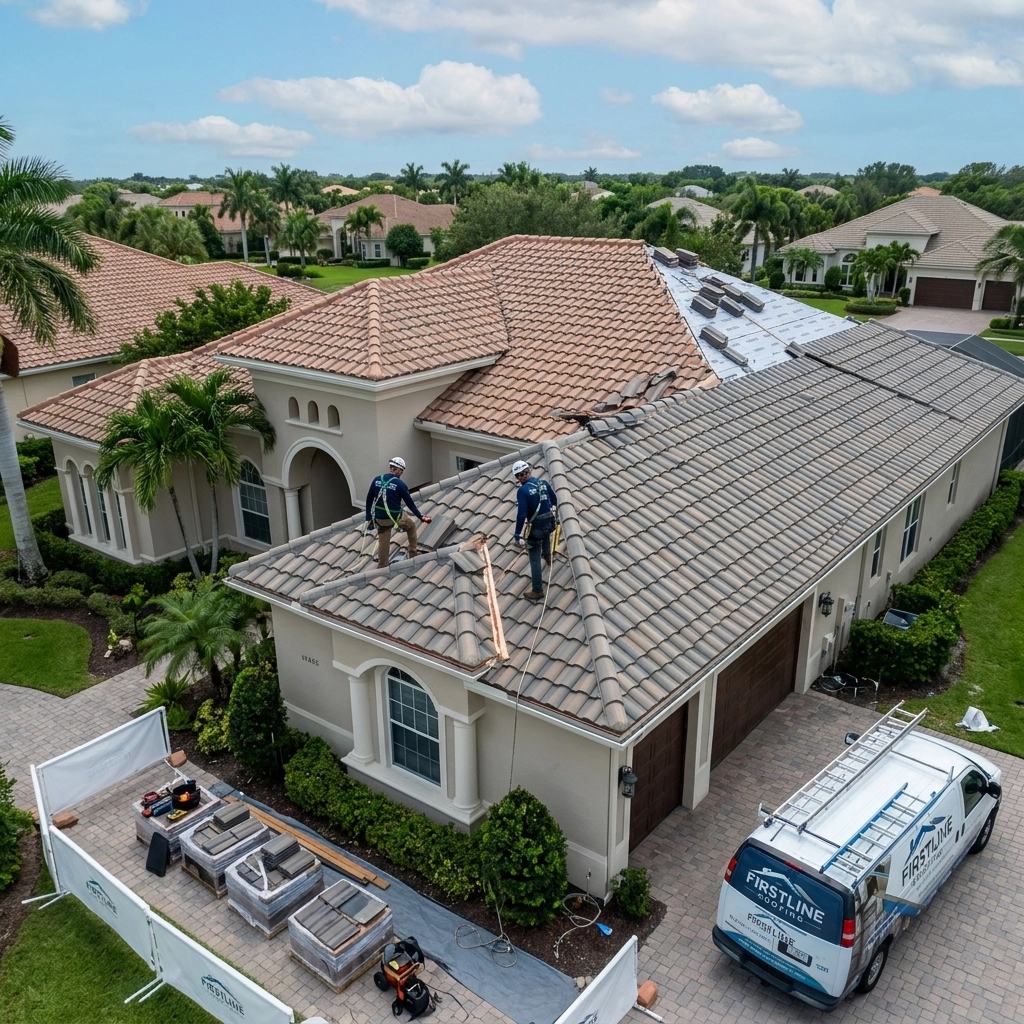
    FirstLine Roofing team members in safety harnesses inspecting a tile roof on a luxury South Florida home, demonstrating the importance of professional assessments.

    HOA & Insurance Considerations

    Before you fall in love with a specific material, check your local regulations.

    1. HOA Guidelines: Many upscale South Florida HOAs have "aesthetic harmony" clauses that mandate tile roofs. However, some are beginning to allow metal roofs if they meet specific color or profile requirements.
    2. Wind Mitigation: Replacing an old roof with a new metal or tile system almost always results in lower homeowner insurance premiums. Ensure your contractor provides a wind mitigation report upon completion.
    3. My Safe Florida Home: If you are participating in state grant programs, ensure the materials and the contractor meet the program's specific requirements.

    Which Roof Is Right for You?

    Choose Tile If:

    • You live in a community with strict Mediterranean architectural requirements.
    • You prefer a traditional, heavy-set look for your luxury home.
    • You are prepared for periodic maintenance and an eventual underlayment replacement in 20+ years.

    Choose Metal If:

    • You want the highest possible wind and impact resistance.
    • Your home’s structure cannot support the weight of tile.
    • You want a modern, sleek appearance with minimal long-term maintenance.
    • You are interested in the highest levels of solar reflectivity.

    Frequently Asked Questions

    Is a metal roof noisier when it rains?
    Not on a residential home. When installed over a solid wood deck with proper underlayment and attic insulation, a metal roof is no noisier than a tile or shingle roof.

    Will a metal roof attract lightning?
    No. While metal conducts electricity, it does not "attract" it. Because metal is non-combustible, it is actually safer than many other materials if a strike were to occur.

    Can I walk on my tile roof?
    It is highly discouraged. Tiles are brittle and easily cracked by foot traffic. If you must have work done (like solar panel cleaning or AC maintenance), ensure the technicians are trained on how to walk on tiles without causing damage.

    Schedule a Professional Consultation

    There is no "one-size-fits-all" answer to the metal vs. tile debate. The best way to determine the right path is through a professional evaluation of your home’s structure, your neighborhood’s requirements, and your budget.

    If you’re considering a roof replacement in Parkland, Coral Springs, Coconut Creek, or Boca Raton, contact FirstLine Roofing today. We provide detailed inspections and transparent recommendations to ensure your home is protected for decades to come.
  • South Florida Roof Maintenance Before Summer Storm Season

    South Florida Roof Maintenance Before Summer Storm Season

    As South Florida moves deeper into the summer storm season, homeowners in Parkland, Coral Springs, Boca Raton, and surrounding communities are entering a critical window for property protection. The transition from the dry winter months to the daily afternoon downpours and tropical systems typical of Broward and Palm Beach County puts immense stress on residential and commercial roofing systems.

    What often begins as a minor concern: a single cracked tile or a slightly lifted shingle: can rapidly escalate into a major structural issue once heavy rain and high winds arrive. At FirstLine Roofing, we focus on helping property owners identify these vulnerabilities before they lead to interior water damage or costly emergency repairs.

    Why Preventative Maintenance is Critical in South Florida

    The South Florida climate is uniquely harsh on roofing materials. Our roofs endure extreme UV exposure, high humidity, and significant thermal expansion and contraction. During the day, surface temperatures on a roof can exceed 150 degrees Fahrenheit, only to be rapidly cooled by a sudden thunderstorm.

    This constant "breathing" of the roof structure slowly weakens sealants, loosens fasteners, and can cause materials like concrete tiles or asphalt shingles to shift or crack over time. If these issues aren't addressed during a routine roof inspection, the first major storm of the season will likely find the path of least resistance into your home.

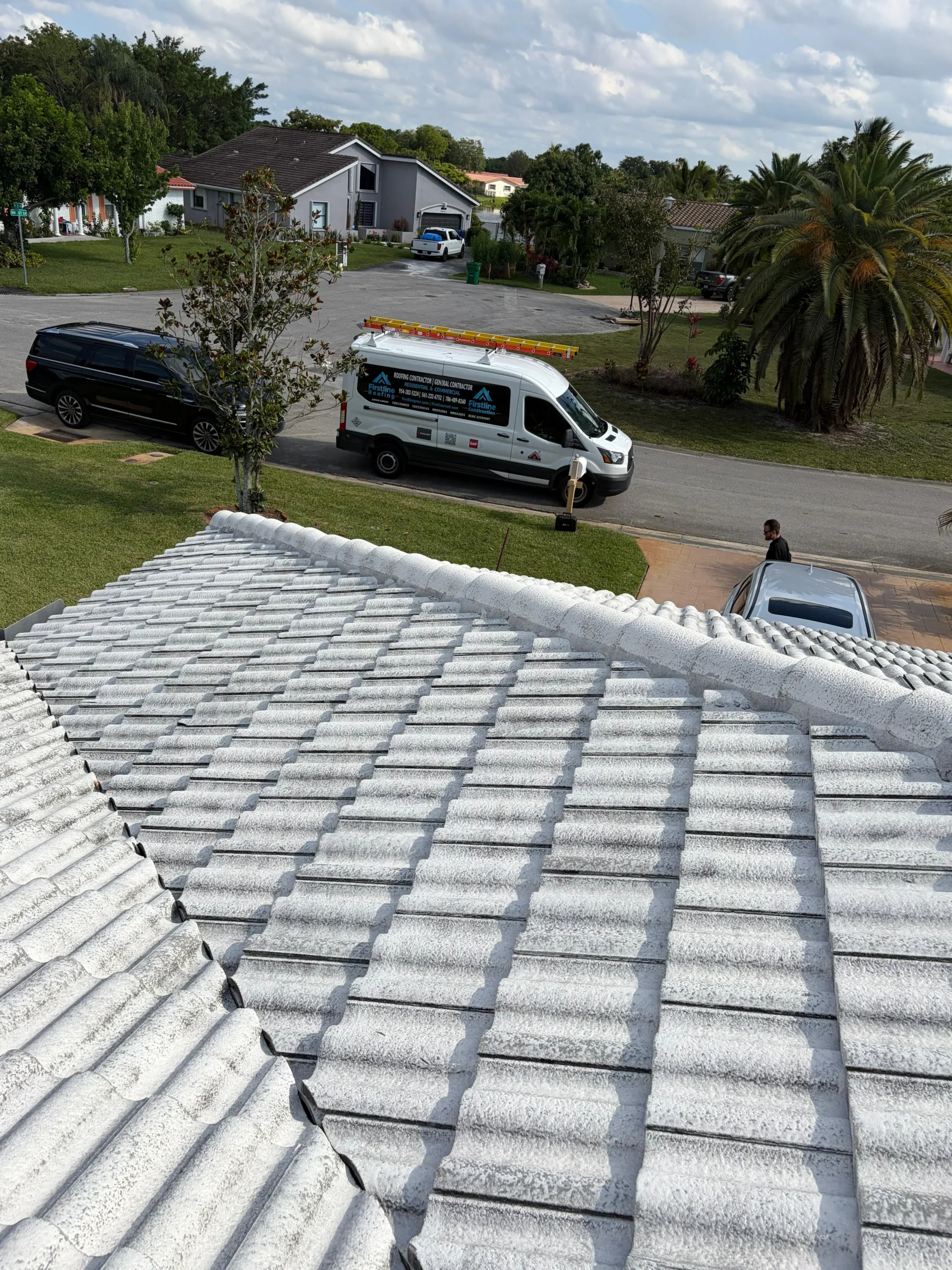
    A professional roofing inspection in progress, showing the detail-oriented approach required to identify hidden vulnerabilities on a white tile roof.

    Common Roofing Issues We’re Seeing Right Now

    During our recent assessments throughout South Florida, our teams have identified several recurring issues that homeowners should be aware of. While some are visible from the ground, many require a professional eye to detect.

    1. Cracked or Slipped Concrete Roof Tiles

    Tile roofing is a hallmark of South Florida architecture, prized for its durability and aesthetic. However, individual tiles can crack due to foot traffic, debris, or aging. Even more common is "slippage," where tiles shift out of place, exposing the underlying waterproof membrane (the underlayment) to direct sunlight and rain.

    2. Deteriorated Pipe Flashings and Penetrations

    The various pipes and vents protruding from your roof are sealed with lead or rubber boots and heavy-duty sealants. Over several years, the intense Florida sun causes these materials to become brittle and crack. These are among the most frequent sources of "mystery leaks" that appear during heavy summer rains.

    3. Flat Roof Blistering and Ponding Water

    Many homes and commercial properties in Boca Raton and Fort Lauderdale feature flat roofing systems over patios, garages, or entire structures. If these roofs exhibit "blistering" (bubbles in the membrane) or "ponding" (standing water that doesn't drain within 48 hours), the integrity of the system is likely compromised.

    4. Lifted Shingles from Prior Wind Events

    Even if we haven't had a major hurricane recently, the strong gusts from seasonal thunderstorms can lift the edges of architectural shingles. Once the factory seal is broken, the shingle can no longer effectively shed water or resist wind, making it a prime candidate for failure during the next storm.

    5. Failing Sealants and Rusted Components

    Sealants around chimneys, skylights, and wall-to-roof transitions have a limited lifespan: typically 3 to 5 years in South Florida. Similarly, metal components like drip edges can rust, especially in coastal areas like Deerfield Beach or Pompano Beach, leading to wood rot along the fascia and eaves.

    An example of roof fascia damage and exposed eaves, demonstrating the consequences of deferred maintenance and water intrusion.

    The Benefits of a Proactive Approach

    For homeowners in communities like Heron Bay, Parkland Isles, Boca Falls, and Coral Springs Country Club, proactive maintenance is an investment in the longevity of the property. Waiting until a leak is visible on your ceiling often means you are already facing thousands of dollars in hidden damage.

    Routine roof maintenance helps:

    • Extend the Life of Your Roofing System: Small repairs prevent systemic failures, potentially adding years to the life of your roof.
    • Reduce the Risk of Interior Water Damage: Preventing water from entering the building envelope protects your insulation, drywall, and personal belongings.
    • Identify Storm-Related Damage Early: If you have existing wind damage, identifying it early is crucial for proper documentation.
    • Prevent Hidden Wood Rot: Once water gets under the roofing material, it can sit against the plywood decking, leading to rot that compromises the structural integrity of the roof.
    • Improve Insurability: With the current state of the Florida insurance market, a well-maintained roof with documented inspections is a significant asset when renewing or shopping for coverage.

    What Homeowners Should Look For

    While we never recommend that homeowners climb onto their own roofs: especially those with steep pitches or fragile tiles: there are several signs of trouble you can spot from the ground or from inside your home.

    Interior Warning Signs

    • Ceiling Stains: Any yellow, brown, or gray spots on your ceiling or walls are a definitive sign of a leak.
    • Musty Odors: If your attic or a particular room smells damp or musty after a rainstorm, moisture may be trapped in the insulation.
    • Peeling Paint: Moisture trapped behind wall paint can cause it to bubble or peel, often near the tops of walls or around windows.

    Exterior Warning Signs

    • Visible Debris: If you see piles of leaves or branches in your roof valleys, these act as dams, forcing water under tiles or shingles.
    • Granules in Gutters: For shingle roofs, finding a large amount of sand-like granules in your downspouts indicates the shingles are reaching the end of their functional life.
    • Sagging Fascia: If the boards behind your gutters look like they are pulling away or rotting, water is likely getting behind the drip edge.

    FirstLine Roofing technicians performing a professional installation, highlighting the importance of using high-quality materials and skilled craftsmanship.

    Community Spotlight: Why Local Expertise Matters

    Roofing in South Florida isn't the same as roofing in other parts of the country. We operate under some of the strictest building codes in the world (the High-Velocity Hurricane Zone or HVHZ). Whether we are performing a roof repair in Parkland or a full roof replacement in Boca Raton, our team ensures every detail meets these rigorous standards.

    Communities such as Parkland Isles and the Coral Springs Country Club have specific architectural requirements and aging roofing systems that require specialized knowledge. Understanding the original construction methods used in these neighborhoods allows us to provide more accurate assessments and more durable repairs.

    Preparing for the Peak of Storm Season

    Beyond professional inspections, there are a few steps homeowners can take to prepare for the summer:

    1. Clean Your Gutters: Ensure water can flow freely off your roof and away from your foundation. Clogged gutters are a primary cause of fascia rot and basement/crawlspace dampness.
    2. Trim Overhanging Branches: High winds can turn heavy branches into battering rams. Keep trees trimmed at least 6 to 10 feet away from your roofline.
    3. Check Your Documentation: Know the age of your roof and keep a file of any past repairs. This is vital if you ever need to file a storm damage claim.

    A tile roof being prepared for a detailed maintenance assessment, showing the professional setup and safety measures used by FirstLine Roofing.

    Professional Roofing Services Throughout South Florida

    FirstLine Roofing provides comprehensive residential and commercial roofing services throughout Broward and Palm Beach Counties. Our service areas include:

    • Parkland & Coral Springs
    • Boca Raton & Delray Beach
    • Coconut Creek & Deerfield Beach
    • Fort Lauderdale & Pompano Beach

    Our commitment to professional communication, detailed documentation, and quality workmanship ensures that your property is prepared for whatever the South Florida summer brings. Catching a small issue today is always more cost-effective than dealing with an emergency in the middle of a tropical storm.

    If your roof has not been evaluated in the last year, now is the ideal time to schedule a consultation. Our team can provide a clear, objective assessment of your roof's current condition and help you develop a plan to keep your home protected.

    Contact FirstLine Roofing today to schedule your pre-storm roof evaluation.

  • The 15-Year Rule: Why Coral Springs Homeowners Are Replacing Roofs Sooner

    The 15-Year Rule: Why Coral Springs Homeowners Are Replacing Roofs Sooner

    If you live in Coral Springs, you’ve probably felt the shift in the air: and it’s not just the humidity. There is a growing sense of urgency among homeowners regarding their roofs. You might have neighbors who are replacing perfectly good-looking roofs, or perhaps you’ve received a "notice of non-renewal" from your insurance carrier.

    The culprit is often cited as the "15-Year Rule." While it sounds like a strict city ordinance, the reality is a bit more nuanced, involving state statutes, insurance underwriting, and the unique environmental demands of South Florida. At FirstLine Roofing, we are seeing more Coral Springs residents opting for a roof replacement earlier than they ever anticipated.

    Here is exactly what is happening, why it’s happening in our backyard, and what you need to do to protect your home and your wallet.

    What is the Florida 15-Year Rule?

    First, let’s clear up the terminology. The "15-Year Rule" primarily refers to Florida Statute 627.7011(5). This law was designed to offer some protection to homeowners, but it has also created a benchmark that insurance companies use to manage their risk.

    The law states that an insurance company cannot refuse to issue or renew a homeowners insurance policy solely because of the age of the roof if the roof is less than 15 years old. However, once that 15-year mark is hit, the gloves come off.

    If your roof is 15 years or older, your insurer can legally require a roof inspection to determine its condition. If that inspection suggests the roof has less than five years of "Remaining Useful Life" (RUL), the carrier can drop you, refuse to renew your policy, or force you to replace the roof to maintain coverage.

    Professional roof inspection in Coral Springs evaluating tile roof condition for insurance compliance.

    Why Coral Springs Homeowners Are Feeling the Pressure

    While the law applies statewide, Coral Springs homeowners face a unique set of challenges that make the 15-year mark feel like a hard deadline.

    1. The 2009 Building Code "Magic Date"

    In the roofing world, 2009 is a significant year. Following the heavy hurricane seasons of the mid-2000s, building codes were significantly tightened. Roofs installed after 2009 generally have better fastening patterns and secondary water barriers. If your roof was permitted before 2009, insurance companies view it as a high-risk liability, regardless of how many shingles are still attached. We often find that for these older systems, a roof inspection in Florida is the only way to prove to a carrier that the home is still insurable.

    2. The South Florida Climate

    We don't just have sun; we have a "solar oven" effect. The intense UV radiation in Coral Springs breaks down the adhesives in architectural shingles and the underlayment beneath tile roofing. While a roof in Georgia might last 25 years, a roof in Broward County is doing "dog years." By year 15, even if there isn't obvious storm damage roof repair needed, the structural integrity of the materials is often reaching its limit.

    3. The "Remaining Useful Life" (RUL) Hurdle

    This is the part that catches most people off guard. Your insurance company doesn't care if the roof looks "fine" from the driveway. They want a signed document from a licensed professional stating the RUL. If an inspector cannot honestly certify that the roof has at least five years of life left, you are essentially uninsurable in the private market. This forces many to seek a roof replacement in Florida much sooner than the manufacturer's warranty would suggest.

    The Shift from RCV to ACV

    One of the most urgent reasons to look at your roof age today is how you are covered. Many insurance companies are moving older roofs from Replacement Cost Value (RCV) to Actual Cash Value (ACV).

    • RCV: If a storm hits, the insurance company pays to replace the roof at today's prices (minus your deductible).
    • ACV: The insurance company pays the depreciated value of the roof.

    If you have a 17-year-old shingle roof and a hurricane hits, an ACV policy might only give you a fraction of what a new roof actually costs. Homeowners in Coral Springs are realizing that it is often more financially sound to invest in a new roofing system now while they can still get full RCV coverage, rather than being left with a massive out-of-pocket bill after a storm.

    FirstLine Roofing technician performing a detailed residential roof inspection

    Navigating Coral Springs Local Codes & HOAs

    Coral Springs isn't just any suburb; it has specific standards maintained by the city and various Homeowners Associations (HOAs). When you decide to replace your roof: whether due to age or storm damage: you have to navigate these local waters.

    Pre-Approved Tile Colors

    The City of Coral Springs actually maintains a list of pre-approved colors for tile roofs. If you want to switch from a traditional barrel tile to something more modern, you must ensure it fits within the city's aesthetic guidelines. At FirstLine Roofing, we assist homeowners in selecting materials that meet both the Broward County building codes and local architectural requirements.

    The 25% Rule

    Florida’s building code includes a "25% Rule." If more than 25% of a roof section is damaged or needs repair within a 12-month period, the entire roof must be brought up to current code. In many cases, this effectively means a full replacement. If your roof is already 15 years old and suffers minor storm damage, a repair might not even be a legal option.

    Roofing crew installing clay tiles on a Florida residential property

    Why a Professional Inspection is Non-Negotiable

    If your roof is approaching the 15-year mark, you shouldn't wait for a letter from your insurance company. By the time they contact you, you are usually on a very short 30-to-60-day deadline to either prove the roof is good or replace it entirely.

    A professional roof inspection from FirstLine Roofing provides you with the documentation you need. We look for:

    • Granule Loss: Significant balding on shingles.
    • Underlayment Condition: Especially critical for tile and metal roofing.
    • Fastener Back-out: Nails or screws that have loosened over time.
    • Sealant Failure: Cracking around vents and chimneys.

    If we find that your roof is in great shape, we can provide the "Remaining Useful Life" documentation that insurance companies require to maintain your coverage. If we find issues, we can help you plan a roof replacement on your own timeline, rather than under the duress of an insurance cancellation notice.

    Choosing the Right Material for Longevity

    When Coral Springs homeowners do replace their roofs, many are looking for ways to "beat" the 15-year rule in the future. While asphalt shingles are cost-effective, they are the most scrutinized by insurers.

    Increasingly, we are seeing a move toward standing seam metal roofs. Metal roofs are highly favored by insurance companies because of their superior wind resistance and longevity. A well-installed metal roof can often bypass the "15-year anxiety" because insurers recognize their 40-to-50-year lifespan.

    Roofing team installing a premium standing seam metal roof

    Alternatively, tile roofing remains a staple of Coral Springs luxury homes. While the tiles themselves last a long time, the underlayment is the weak point. Using premium, high-temperature self-adhered underlayments can extend the life of a tile system and make it much easier to get that "5+ years of RUL" certification down the road.

    Don't Wait for the Storm (or the Letter)

    The 15-year rule has effectively shortened the "expected" lifespan of a Florida roof in the eyes of the insurance industry. Being proactive is the only way to stay ahead of rising premiums and potential non-renewals.

    Whether you need a quick check-up to see if you have storm damage or you are ready to explore a full roof replacement, our team is here to help. We understand the specific codes of Coral Springs and the strict requirements of Florida insurance carriers.

    At FirstLine Roofing, we don't just "slap on shingles." We provide the technical expertise and documentation necessary to protect your home’s value and insurability.

    Is your roof hitting that 15-year milestone? Contact us today for a comprehensive evaluation and let’s make sure your home stays covered.

  • Real Roofing Starts Beneath the Surface: Why Proper Roof Preparation Matters in South Florida

    A professional roofing technician in South Florida meticulously preparing a residential roof deck. The scene shows the technician inspecting the wooden sheathing, with some sections of high-quality synthetic underlayment partially installed. The lighting is bright South Florida daylight with soft shadows.

    When homeowners in South Florida think about a new roof, they usually focus on the finished appearance: the curb appeal of barrel tiles, the sleek lines of standing seam metal roofing in Florida, or the classic look of architectural shingles. However, as experienced roofing contractors in Florida, we know that the most critical components of any roofing system are often the ones you never see after the job is finished.

    At FirstLine Roofing, we believe that long-term roof performance starts at the deck level. Proper preparation, attention to detail, and disciplined installation practices are what separate a roof that lasts for decades from one that becomes a future liability. In a region where weather can go from blistering heat to torrential downpours in minutes, what happens beneath the surface determines the integrity of your home.

    The South Florida Climate: A Constant Stress Test

    The unique environmental conditions of the Sunshine State place an extraordinary amount of stress on roofing materials. For homes and businesses, the roof is the first line of defense against a relentless barrage of natural elements.

    Intense UV Exposure and Thermal Expansion

    The South Florida sun is brutal. Constant UV radiation can degrade inferior materials, but it also causes significant "thermal shock." Materials expand in the midday heat and contract as they cool down at night or during a sudden rainstorm. Without proper structural preparation and high-quality fasteners, this constant movement can lead to fastener back-out and structural fatigue.

    High Humidity and Heavy Rain

    Humidity isn't just uncomfortable; it’s a threat to the substrate of your roof. Moisture can easily become trapped if the roof deck isn't properly dried and prepared before installation. During our frequent heavy rain events, even a minor oversight in flashing or underlayment can lead to significant water intrusion. This is why a professional roof inspection in Florida is vital: to identify these hidden vulnerabilities before they escalate.

    Tropical Storms and Hurricane Conditions

    We live in a High-Velocity Hurricane Zone (HVHZ). When tropical storms or hurricanes approach, the uplift forces on a roof are immense. If the roof deck wasn't properly re-fastened to modern codes during a roof replacement in Florida, the entire system is at risk of failure, regardless of how "hurricane-proof" the top layer claims to be.

    A high-resolution close-up of a premium self-adhered roofing underlayment being installed on a clean plywood roof deck. The image highlights the texture of the material and the precision of the installation around a roof penetration or valley.

    Why Roof Deck Preparation Is Critical

    Before any shingles, tiles, or metal panels are installed, the roof deck must be evaluated. This is the foundation of your roofing system, and a foundation must be rock-solid.

    1. Inspecting for Deteriorated or Damaged Decking

    During a tear-off, our crews meticulously inspect the existing plywood or tongue-and-groove decking. We look for soft spots, wood rot, delamination, and water stains. Installing new materials over compromised wood is a recipe for disaster. If we find damage, we replace the decking to ensure the new roof has a stable surface to grip.

    2. Re-fastening Decking to Modern Standards

    Building codes have evolved significantly. Many older homes have roof decks that were attached with staples or widely spaced nails. During a reroof, we re-fasten the entire deck using ring-shank nails with a much tighter spacing pattern. This significantly increases the roof’s resistance to wind uplift, often qualifying homeowners for insurance credits.

    3. Ensuring Proper Substrate Conditions

    The deck must be clean, dry, and level. Any protrusions, such as old nails or splinters, must be removed. A smooth substrate ensures that the underlayment: the secondary water barrier: can adhere or lay flat without being punctured or compromised.

    4. Installing Premium Underlayment Systems

    The underlayment is your "last line of defense." At FirstLine Roofing, we prioritize high-performance synthetic underlayments and self-adhered (peel-and-stick) membranes. These materials offer superior tear strength and waterproofing compared to traditional felt paper, which can brittle and crack over time in the Florida heat.

    The Importance of Skilled Roofing Labor

    Quality roofing is still a hands-on trade. No matter how advanced the material is, its performance depends entirely on the person installing it. This is why choosing the best roofing company in Florida matters.

    Experienced installers understand the nuances of:

    • Proper Fastening Methods: Ensuring nails are driven straight and to the correct depth.
    • Flashing Integration: Properly sealing transitions around chimneys, vents, and valleys where leaks are most likely to occur.
    • Water Management: Understanding how water flows off a roof and ensuring it is directed away from the structure.
    • South Florida Code Awareness: Staying compliant with local HVHZ requirements in Broward, Palm Beach, and Miami-Dade counties.

    Whether you are managing a large-scale project involving commercial roofing in Florida or protecting a luxury residence, disciplined installation practices are non-negotiable.

    FirstLine Roofing team members in safety harnesses inspecting and repairing a tile roof on a luxury South Florida home. Branded service truck with company logo is parked in the driveway.

    Roofing Systems Built for Local Demands

    We don't believe in a “one-size-fits-all” approach. Every home in South Florida has different structural needs and aesthetic goals.

    Luxury Tile and Metal Roofing

    For many homeowners in areas like Parkland and Boca Raton, tile roof repair in Florida or replacement is a common need. Tiles are heavy and require a robust deck and high-quality underlayment to support their weight and provide a long-term seal. Similarly, metal roofing offers incredible longevity but requires precise deck preparation to prevent "oil canning" and ensure proper thermal movement.

    Dealing with Storm Damage

    If your home has been affected by a hurricane or tropical storm, you may require storm damage roof repair. In these cases, the "beneath the surface" inspection is even more vital. Wind can cause "chatter," where the roof covering lifts and settles repeatedly, loosening the fasteners underneath without showing obvious surface damage.

    Serving Our South Florida Communities

    We are proud to provide expert roof repair in Florida and replacement services across the region. We understand the specific architectural styles and homeowner association requirements in:

    • Parkland: Known for luxury estates that require meticulous attention to detail and premium materials.
    • Coral Springs: Where diverse residential communities benefit from our comprehensive maintenance and repair programs.
    • Boca Raton: A city with high standards for aesthetics and structural integrity, where our professional communication and quality workmanship shine.

    If you are facing an urgent leak, we also provide emergency roof repair in Florida to stabilize your home before a permanent solution can be implemented.

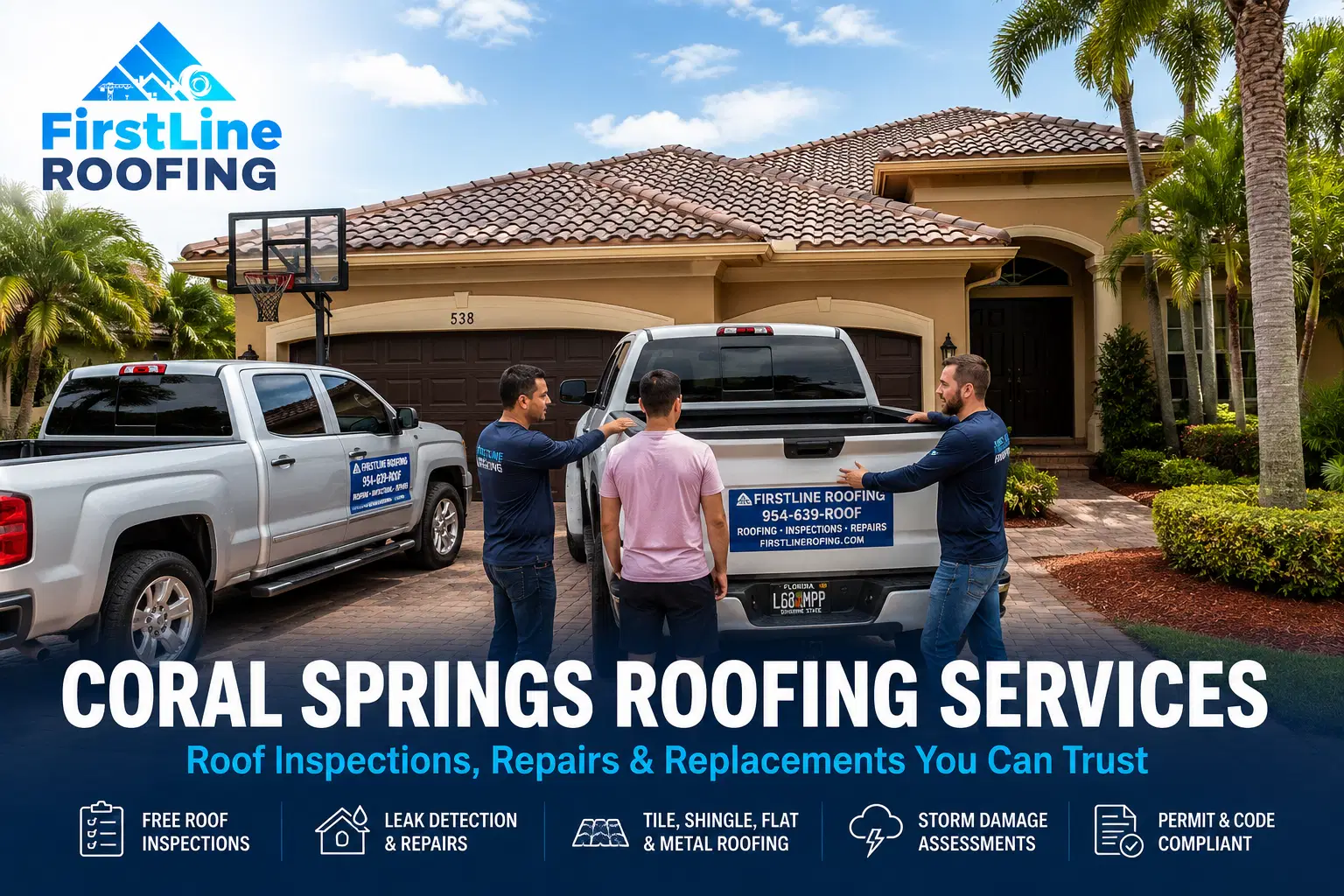
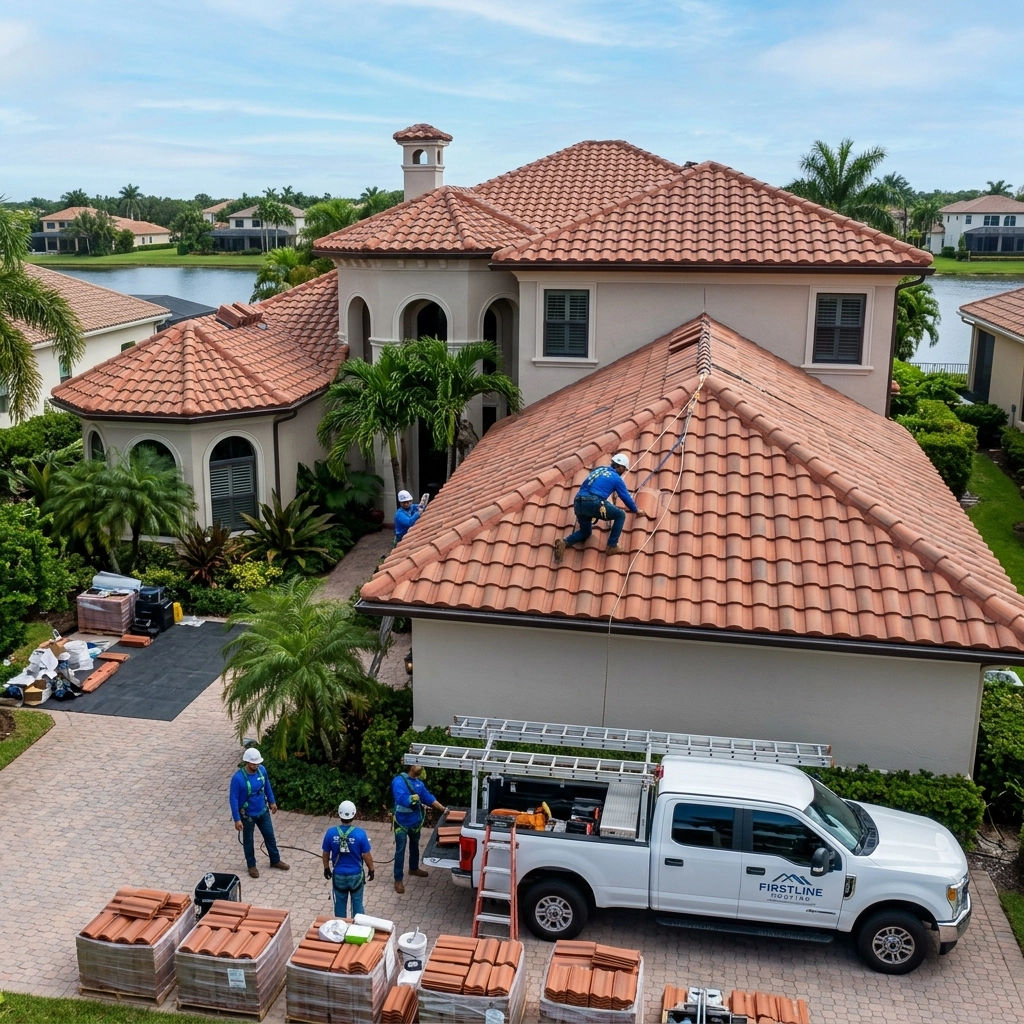
    Three FirstLine Roofing team members discuss project details next to branded trucks in the driveway of a tile-roofed South Florida home.

    Schedule a Professional Roof Evaluation

    A quality roof doesn’t just happen at the surface level. It starts underneath: with preparation, craftsmanship, and a commitment to doing the job the right way. If your roof is approaching the 15-to-20-year mark, or if you’ve noticed signs of wear such as loose tiles or granules in your gutters, it’s time for a professional assessment.

    FirstLine Roofing provides detailed roof inspections and long-term solutions for homeowners, property managers, and HOAs throughout South Florida. We focus on the details that matter, ensuring your property remains protected for years to come.

    Don't wait for a leak to reveal what's happening beneath your roof.

    Contact FirstLine Roofing today at (954) 282-5224 or visit our Service Areas page to learn more about how we can help protect your home.


  • Parkland Roofing Maintenance: What Homeowners Should Check Before Hurricane Season

    Parkland Roofing Maintenance: What Homeowners Should Check Before Hurricane Season

    South Florida roofs take a beating year-round. Between extreme UV exposure, heavy rain, humidity, wind, and hurricane season, roofing systems throughout Parkland experience constant wear that many homeowners never notice until a leak develops inside the home.

    In communities like Heron Bay, Parkland Isles, MiraLago, Watercrest, Cypress Head, and Parkland Golf & Country Club, many homes are now reaching the age where preventative roof maintenance becomes increasingly important. Many of these developments were completed in the early-to-mid 2000s, meaning those original roofing systems are now 20 years old or approaching that milestone.

    At FirstLine Roofing, we routinely perform roof inspections throughout Parkland and surrounding Broward County communities. One of the most common things we encounter is homeowners assuming their roof is in good condition simply because there are no visible interior leaks. Unfortunately, roofing issues often begin long before water staining appears on your ceiling.

    The Reality of South Florida Weather and Your Roof

    Living in Parkland offers a beautiful lifestyle, but the climate is one of the harshest in the country for building materials. Our roofs don't just face the occasional storm; they deal with:

    • Intense UV Radiation: The Florida sun literally "bakes" roofing materials. Over time, this causes tiles to become brittle and asphalt shingles to lose their protective granules.
    • Thermal Expansion: The rapid shift from 90-degree heat to a sudden afternoon downpour causes roofing materials to expand and contract quickly. This "thermal shock" can lead to hairline cracks in tiles and sealant failures.
    • High Humidity: Constant moisture promotes the growth of algae and moss, which can trap water against the roof surface and accelerate the deterioration of the underlying waterproofing layers.
    • Wind-Driven Rain: During a tropical storm or hurricane, rain isn't just falling: it's being pushed horizontally. If your flashing or underlayment is compromised, this pressure will find a way into your home.

    Common Roofing Issues Found in Parkland Homes

    Many homes throughout Parkland were built during major development phases. While the concrete and clay tile roofs popular in our HOAs are designed for durability, they are not invincible.

    FirstLine Roofing crew performing a detailed roof inspection on a South Florida home

    Some of the most common issues we find during a roof inspection in Florida include:

    • Cracked or Displaced Roof Tile: Often caused by previous foot traffic (from painters or AC technicians) or simply from years of expansion and contraction.
    • Deteriorated Underlayment: This is the most critical issue. Even if the tiles look perfect, the felt or synthetic underlayment beneath them eventually becomes brittle and fails.
    • Lifted Ridge Caps: The "caps" at the peak of your roof are highly susceptible to wind uplift. If the mortar or adhesive has failed, these can become projectiles during a storm.
    • Rusted or Improperly Installed Flashing: Flashing around chimneys, vents, and valleys is your roof's first line of defense at transition points. In South Florida, metal flashing can corrode or pull away from the structure.
    • Valley Wear and Debris Accumulation: Leaves and pine needles often collect in roof valleys, trapping moisture and rotting the underlayment.
    • Improperly Sealed Roof Penetrations: Plumbing stacks and attic vents require high-quality sealants that must be maintained.

    These issues may not be visible from the ground and often go unnoticed until active water intrusion develops, necessitating a more costly roof repair in Florida.

    Tile Roof Systems Require Specialized Attention

    Tile roofs are the gold standard for Parkland aesthetics and HOA requirements. However, there is a common misconception that the tile is the roof. In reality, the tile is a "shedding" layer. The real "roofing" happens at the underlayment level.

    FirstLine Roofing team consultation on-site with a homeowner in South Florida

    Over time, underlayment systems can deteriorate from UV exposure where tiles have shifted, or simply from reaching the end of their natural lifespan. When we talk about tile roofing, we emphasize the importance of the "Secondary Water Barrier." This is an additional layer of protection that has become a standard in the Florida Building Code for a reason: it keeps the water out even if tiles are blown off.

    For many Parkland homeowners, a "Lift and Relay" may be an option. This process involves carefully removing the existing tiles, replacing the aged underlayment with a modern, high-performance system, and then reinstalling the original tiles. This can be a cost-effective way to get another 20+ years of life out of your roof without the expense of all-new tiles.

    Why Preventative Roof Inspections Matter

    Wait-and-see is not a strategy when it comes to South Florida roofing. Routine inspections can help identify vulnerable areas before they become major repairs or interior damage claims.

    Preventative maintenance may help homeowners:

    1. Extend Roof Lifespan: Catching a small leak in a valley today can prevent the need for a full roof replacement five years early.
    2. Reduce Long-Term Repair Costs: Minor maintenance, such as resealing a pipe boot or replacing a few cracked tiles, is significantly cheaper than remediating mold and replacing drywall inside the home.
    3. Prepare for Hurricane Season: A secure roof is your home’s primary defense against storm damage. Identifying loose ridge caps or weak flashing now is essential for hurricane preparedness.
    4. Support Insurance Evaluations: Many Florida insurers are now requiring "Roof Condition Certifications" or "4-Point Inspections" for homes with roofs older than 15 years. Having a documented history of professional maintenance can be invaluable during a renewal.

    FirstLine Roofing crew working in harnesses on a South Florida roof

    The HVHZ Factor: Parkland and Broward County Codes

    Parkland is located within the High Velocity Hurricane Zone (HVHZ). This means our local building codes are among the strictest in the world. Any storm damage roof repair or replacement must comply with these stringent requirements, which dictate everything from the type of nails used to the specific wind-rating of the tiles.

    At FirstLine Roofing, we stay current on all local permitting and code requirements to ensure that every repair or replacement we perform is fully compliant and designed to withstand the next big storm. Whether you have a flat roofing system on a contemporary home or traditional architectural shingles, understanding these codes is vital.

    Choosing the Right Roofing Contractor

    Not all roofing contractors operate with the same level of experience, licensing, or construction knowledge. When looking for a partner to protect your home, always verify:

    • Proper Florida Licensing: Ensure they hold a current CCC (CGC) license.
    • Insurance Coverage: Confirm they carry both General Liability and Workers' Compensation specific to roofing.
    • Local Experience: Parkland homes have unique architectural styles and HOA requirements. Work with someone who understands the local landscape.
    • Technical Knowledge: They should be able to explain the "why" behind their recommendations, from the type of underlayment to the flashing details.

    FirstLine Roofing provides comprehensive roofing services, including inspections, repairs, replacements, and storm damage assessments throughout Broward, Palm Beach, and Miami-Dade County. We focus on professional communication, detailed documentation, and long-term roofing solutions.

    Final Thoughts

    Preventative roof maintenance is significantly less expensive than dealing with major water intrusion after a problem develops. For Parkland homeowners, taking the time to have a professional evaluation before the height of hurricane season is one of the smartest investments you can make in your property.

    As roofs throughout our community continue to age, early detection is becoming more important than ever. Don't wait for the first drip to fall from your ceiling: be proactive and ensure your home is ready for whatever the Florida weather brings.

    For more information on how to protect your home or to learn about our specific services, feel free to explore our website or contact our team for a professional evaluation.

  • Community Spotlight: FirstLine Roofing Attends Coral Springs ‘Workplace Wellness’ Breakfast

    Scott Gordon and the FirstLine Roofing team at the Coral Springs Chamber breakfast event.

    At FirstLine Roofing, we believe that professional roofing is about more than just high-quality materials and technical precision: it is about the people who make those installations possible. This morning, May 19, 2026, Scott Gordon and members of the FirstLine Roofing leadership team joined fellow business leaders at the Marriott Coral Springs for the “Wake Up Breakfast: Workplace Wellness – The ROI of Wellness,” hosted by the Coral Springs Coconut Creek Regional Chamber of Commerce.

    The event served as a vital forum for South Florida’s business community to discuss how health, safety, and employee well-being directly impact productivity, retention, and long-term operational success. For a company like FirstLine Roofing, which operates in the demanding physical environment of South Florida’s construction sector, these topics are not just abstract business concepts: they are foundational to how we serve our clients.

    A Focus on the ROI of Wellness

    The central theme of the breakfast was the “Return on Investment” (ROI) of workplace wellness. While wellness programs are often associated with corporate office environments, the speakers highlighted how these initiatives are perhaps even more critical in high-stakes, physically intensive industries.

    The program featured an esteemed panel of healthcare leaders and experts, including:

    • Dr. Jonathan Fields, who moderated the discussion with a focus on holistic and preventative health.
    • Representatives from Broward Health, Baptist Health South Florida, Memorial Healthcare System, and the University of Miami Sylvester Comprehensive Cancer Center.

    The consensus among the experts was clear: companies that prioritize the health of their workforce see measurable gains in performance. Wellness programs help reduce absenteeism, lower healthcare costs, and, most importantly, foster a culture where employees feel valued and protected.

    Panel discussion at the Coral Springs Chamber Workplace Wellness breakfast.

    Workplace Safety: The Roofing Perspective

    For a Coral Springs roofing contractor, "wellness" often translates directly into workplace safety. In the South Florida climate, the health of our crews is synonymous with the quality of the roofs we build.

    During the panel, several points resonated specifically with our operations at FirstLine Roofing:

    1. Heat Safety as a Wellness Pillar

    Florida roofers work in some of the most extreme conditions in the country. On a typical South Florida afternoon, a tile or asphalt shingle roof can reach temperatures exceeding 150°F. Research indicates that roofers are significantly more likely to suffer from heat-related illnesses than the average construction worker.

    At FirstLine, we view heat safety not just as a compliance requirement, but as a core wellness initiative. This includes:

    • Structured Hydration: Ensuring crews have constant access to cool water and electrolyte-replenishing drinks.
    • Acclimatization: Gradually introducing new team members to the South Florida heat to build physiological tolerance.
    • Mandatory Rest in Shade: Utilizing portable shade stations on job sites to allow the body to recover from direct sun exposure.

    2. Mental Acuity and Workmanship

    The panel discussed how physical fatigue and dehydration lead to a decline in cognitive function. In roofing, mental clarity is essential for safety and precision. Whether it is a complex commercial roofing project or a high-end residential roof replacement, a worker who is physically well-rested and hydrated is far more likely to maintain the attention to detail required for long-term roof durability.

    Wellness activity at the Coral Springs Chamber breakfast event.

    Investing in People to Serve Our Community

    The "ROI" mentioned by the Chamber speakers is something we see every day at FirstLine Roofing. When we invest in the wellness of our team, our customers in Coral Springs, Parkland, and throughout Broward County receive a superior product.

    • Higher Retention Rates: Professional roofing requires years of experience and specialized training. By prioritizing wellness, we retain our most skilled craftsmen, ensuring that our clients benefit from consistent expertise.
    • Fewer Safety Incidents: A healthy, alert crew is a safe crew. Reducing workplace injuries keeps our projects on schedule and minimizes liability for property owners.
    • Improved Communication: Wellness extends to the professional environment. A supported team communicates more effectively with homeowners and property managers, leading to a smoother, more transparent roofing process.

    The Wellness Business Expo

    Following the breakfast, the team attended the Wellness Business Expo. This portion of the event allowed us to connect with local vendors and community organizations dedicated to health and safety. Engaging with local partners like Broward Health and Memorial Healthcare System allows us to stay at the forefront of occupational health trends that we can implement on our own job sites.

    Participating in these Chamber events is a key part of our commitment to the Coral Springs business community. We believe that by working together with local healthcare providers and fellow business owners, we can raise the standard for what it means to be a professional contractor in South Florida.

    FirstLine Roofing team members demonstrating a commitment to safety and quality during community updates.

    Our Commitment to Professionalism

    At FirstLine Roofing, we don't just "do roofs": we manage high-value construction projects that protect your most important assets. Events like the Workplace Wellness breakfast reinforce our belief that professionalism starts from the ground up.

    Whether you are a homeowner in need of a roof inspection after a storm or a property manager planning a large-scale capital improvement, you deserve a roofing partner that operates with integrity, safety, and technical excellence.

    We want to thank the Coral Springs Coconut Creek Regional Chamber of Commerce for hosting such an insightful event. We look forward to applying the "ROI of Wellness" to our daily operations as we continue to provide premium roofing solutions across South Florida.

    Ready to Experience the FirstLine Difference?

    A healthy team is a high-performing team. If you are looking for a roofing contractor that prioritizes quality, safety, and professional communication, contact FirstLine Roofing today. From detailed leak investigations to full-scale roof replacements, we are here to protect your property with the highest standards of workmanship.

    Contact FirstLine Roofing at (954) 282-5224 or visit our Contact Page to schedule a professional evaluation.

  • How South Florida Heat and UV Exposure Shorten Roof Lifespans in Coral Springs

    How South Florida Heat and UV Exposure Shorten Roof Lifespans in Coral Springs

    Three FirstLine Roofing team members, wearing branded shirts, stand by company trucks outside a tile-roofed Coral Springs home, discussing project plans.

    South Florida roofs endure some of the harshest environmental conditions in the country. In Coral Springs, roofing systems are exposed to relentless UV radiation, extreme attic temperatures, seasonal storms, humidity, and rapid thermal expansion cycles nearly year-round. Over time, these conditions accelerate wear on roofing materials and can significantly reduce the lifespan of even well-built systems when maintenance and installation quality are overlooked.

    For homeowners in Coral Springs, understanding how heat and ultraviolet exposure affect a roof is critical for protecting both the property and long-term investment. Whether a home has asphalt shingles, concrete tile, flat roofing, or metal components, South Florida’s climate creates unique roofing challenges that require local expertise and proper long-term planning.

    At FirstLine Roofing, we regularly inspect roofing systems throughout Coral Springs and surrounding Broward County communities, and one of the most common issues we see is premature aging caused by heat and UV deterioration.

    Why South Florida Roofs Age Faster Than Roofs in Other States

    Roofing manufacturers often publish estimated product lifespans based on average environmental conditions. However, Florida is far from average. When a shingle is "rated" for 30 years, that testing often occurs in environments that don't experience 95-degree humidity for six months straight.

    In Coral Springs, roofs are exposed to:

    • Intense year-round sunlight: The angle of the sun in South Florida provides a more direct "hit" of radiation than in northern states.
    • High UV index levels: UV rays act as a slow-moving chemical catalyst, breaking down the bonds in roofing materials.
    • Elevated attic temperatures: Without proper ventilation, attics can become ovens, baking the roof from the inside out.
    • Rapid daily temperature fluctuations: A sudden afternoon downpour can drop roof temperatures by 50 degrees in minutes, causing massive structural stress.

    Many homeowners are surprised to learn that a roof rated for 30 years in milder climates may realistically perform much differently in South Florida conditions. In many cases, an asphalt shingle roof in Broward County may only reach a functional lifespan of 15 to 20 years before the risk of failure becomes too high.

    How UV Radiation Damages Roofing Materials

    Ultraviolet (UV) radiation is one of the most destructive forces affecting roofing systems in Florida. It isn't just about "fading" colors; it is about the molecular breakdown of the materials that keep your home dry. Over time, UV exposure breaks down the chemical composition of roofing materials, a process known as photo-oxidation. This process slowly weakens the roof’s ability to resist water intrusion, wind uplift, and structural movement.

    Asphalt Shingle Deterioration

    For asphalt shingle roofs, UV exposure is the primary driver of aging. Asphalt is a petroleum-based product that relies on "volatiles" or oils to remain flexible. UV rays pull these oils to the surface where they evaporate, leaving the shingle brittle.

    As this happens, you may notice:

    • Granule loss: Those little rocks on your shingles aren't just for color; they are the "sunscreen" for the asphalt. Once they fall off, the asphalt is unprotected.
    • Drying and brittleness: Brittle shingles cannot flex with the wind, making them prone to snapping during a storm.
    • Curling and Cracking: As the shingles dry out, they begin to shrink and pull away from the roof deck.

    This is one reason regular roof inspections are important in Coral Springs, particularly after years of sustained sun exposure.

    Close-up of asphalt shingles with UV-related granule loss on a Coral Springs roof, highlighting sun damage.

    The Impact on Flat and Low-Slope Systems

    Flat roofs, often found on commercial buildings or home additions in Coral Springs, are particularly vulnerable. Because they lack the pitch to shed water quickly, the combination of standing water and intense UV creates a "magnifying glass" effect that can delaminate membranes like TPO or modified bitumen if they aren't high-quality or properly coated.

    The Impact of Thermal Expansion and Heat Cycling

    South Florida roofs experience significant thermal movement throughout the day. This is a physical challenge as much as a chemical one. As roofing materials heat up under direct sunlight, they expand. As temperatures cool during the evening and overnight hours: or during a heavy tropical thunderstorm: those materials contract. This constant expansion and contraction process is known as thermal cycling.

    In many cases, leaks do not originate from the primary roofing material itself but rather from these stressed accessory components. When the roof expands and contracts, it puts immense pressure on:

    • Fasteners: Nails and screws can "back out" or loosen over time.
    • Sealants: Caulk and roof cements can crack and lose their bond.
    • Flashings: The metal transitions around chimneys and walls can pull away, creating gaps.

    In Florida, roofing systems are often exposed to temperatures exceeding 150 degrees on the roof surface during peak summer conditions. This makes the choice of high-quality underlayment and wind mitigation techniques essential for long-term survival.

    Tile Roof Performance: The Underlayment Challenge

    Concrete tile roofing remains one of the most popular roofing systems in Coral Springs due to its durability, appearance, and wind resistance. However, a common misconception is that because the tiles are "stone-like," they are invincible to the sun.

    While the tile itself may have a long lifespan, the surrounding roofing components often deteriorate much sooner. In a tile system, the tiles are the "armor," but the underlayment is the "waterproof skin." Because tiles are heavy and dark, they absorb heat and trap it against the underlayment.

    A satellite dish is mounted to a stucco exterior wall near a tile roof edge, showing visible signs of water damage and paint deterioration.

    Common tile roof issues include:

    • Underlayment deterioration: The felt or synthetic layers beneath the tile can "bake" and become brittle.
    • Cracked mortar: The mortar used to set ridge tiles can crack due to thermal expansion.
    • Failed flashing systems: Metal valleys and wall flashings are often the first places to leak.

    Many homeowners mistakenly assume a tile roof does not require maintenance because the tile itself appears visually intact. In reality, the waterproofing layer beneath the tile is what ultimately protects the structure. If you live in an area like Parkland or Coral Springs with older tile roofs, roof repair services often focus on replacing these hidden layers.

    Why Proper Attic Ventilation Matters

    Attic ventilation plays a major role in roof performance and longevity. It is the "lungs" of your home. Poor attic ventilation can trap excessive heat inside the roofing system, dramatically increasing attic temperatures and accelerating material deterioration from below.

    In Coral Springs homes, improperly ventilated attics can contribute to:

    • Premature shingle aging: Heat trapped in the attic "cooks" the shingles from the bottom up.
    • Increased cooling costs: Your AC has to work twice as hard to fight the heat radiating from the ceiling.
    • Decking deterioration: Excessive heat can cause the wood sheathing (plywood) to warp or degrade.

    Proper intake and exhaust ventilation help regulate attic temperatures and reduce heat buildup. When considering a roof replacement, we always evaluate whether the home needs updated ridge vents or off-ridge vents to meet modern standards.

    Installation Quality and Warning Signs

    Even the best roofing materials can fail prematurely when installation quality is poor. South Florida roofing contractors must adhere to strict building codes and permitting guidelines to ensure the system can handle the environment.

    A FirstLine Roofing technician in a safety harness performs a detailed roof inspection using a tablet.

    Homeowners should monitor for these warning signs:

    1. Granules in the Gutters: A sign that your shingles are losing their UV protection.
    2. Displaced or Loose Tiles: A sign that fasteners or mortar have failed.
    3. Interior Ceiling Stains: Even small spots can indicate a slow leak caused by failed flashings.
    4. Curling Shingle Edges: A classic sign of heat-related drying.
    5. Rusted Flashing: Indicates that the protective coating has worn away, leaving the metal vulnerable.

    Preventative Maintenance: Extending the Lifespan

    Routine roof maintenance is one of the most effective ways to extend roof lifespan in South Florida. We recommend an annual professional inspection to identify early deterioration before it becomes a major interior leak.

    Keeping roof valleys clean of debris is also vital. In Coral Springs, leaves and pine needles can trap moisture against the roof, which, when combined with high heat, creates a breeding ground for rot and mold. Addressing minor repairs early is often far less expensive than waiting for a total system failure.

    The Importance of Local Roofing Expertise

    Roofing in Coral Springs is very different from roofing in other regions of the country. Local experience matters because roofing systems must be designed specifically for Florida’s environmental conditions: from hurricane-related considerations to specific UV-resistant coatings.

    At FirstLine Roofing, our team works throughout Coral Springs and surrounding South Florida communities performing inspections, repairs, and reroofing projects designed specifically for the Florida sun. Whether you are dealing with a leak or planning for the future, we provide experienced expertise backed by real-world construction knowledge.

    If you are concerned about how the South Florida sun is affecting your home, we are here to help with a professional evaluation.

    Contact FirstLine Roofing today for a professional roof evaluation.

  • Coral Springs Roofing: Common Roof Problems Homeowners Should Not Ignore

    Coral Springs Roofing: Common Roof Problems Homeowners Should Not Ignore

    In Coral Springs, tile roofing is the standard on many residential properties. Concrete tile systems perform well in South Florida, but they also create a common misconception: because the tile surface often continues to look intact from the ground, homeowners may assume the roof is still watertight even when the waterproofing layers below are aging.

    Many property owners do not realize there is a problem until water intrusion reaches the interior. By that point, the issue may already involve failed underlayment, deteriorated flashing, compromised decking, insulation damage, or concealed microbial growth.

    At FirstLine Roofing, we often help Coral Springs homeowners evaluate tile roofs that appear serviceable on the surface but are experiencing failures in the components that actually keep water out. Understanding that distinction is critical when planning repairs, maintenance, or replacement.

    The Underlayment Gap in Coral Springs Tile Roofs

    Coral Springs tile roofs are exposed to year-round UV, humidity, wind-driven rain, and repeated thermal cycling. The tile itself may remain structurally sound for decades, but the underlayment beneath it typically ages much sooner.

    This is what we refer to as the underlayment gap. The visible roof covering still looks acceptable, while the true waterproofing layer has become brittle, slipped, torn, or otherwise compromised. In many cases, homeowners do not discover this until a leak develops during a heavy rain event.

    On tile roofing systems in Coral Springs, common problem areas include:

    • Cracked or displaced roof tiles: Often caused by foot traffic, impact, or movement over time.
    • Deteriorated roof-to-wall and transition flashing: Metal details can corrode, separate, or lose seal integrity.
    • Valley failures and debris-related drainage issues: Valleys collect runoff and often become the first place underlayment weakness shows up.
    • Penetration failures around vents and accessories: Sealants and flashings around roof penetrations can degrade in South Florida heat.
    • Underlayment deterioration beneath otherwise intact tile fields: One of the most common causes of leaks on older Coral Springs tile roofs.

    FirstLine Roofing service van on-site for a residential roof assessment in a South Florida neighborhood

    The Importance of Professional Roof Inspections

    One of the biggest mistakes homeowners make is waiting until visible interior damage appears before having the roof evaluated. Water intrusion often travels long distances along rafters or the roof deck before becoming visible on a ceiling, making the actual source difficult to identify without a proper roof inspection.

    A professional evaluation goes beyond a simple visual check from the driveway. In the humid climate of Broward County, small breaches in the building envelope can lead to hidden moisture buildup in the attic. This creates an environment where mold can thrive and structural timber can begin to soften long before you see a drip.

    A professional roof inspection should include:

    1. Detailed photo documentation: Providing a clear record of tile conditions, flashings, valleys, and penetrations.
    2. Flashing and penetration review: Checking vents, skylights, chimneys, and roof-to-wall transitions for failure points.
    3. Tile roof condition assessment: Distinguishing isolated tile damage from broader underlayment or system-age concerns.
    4. Drainage evaluation: Confirming valleys and water pathways are shedding water properly.
    5. Attic observations: When accessible, checking the underside of the deck for water staining, active moisture, or rusting fasteners.

    If you are looking for a detailed roofing evaluation, it is helpful to understand the local nuances. You can explore more about Coral Springs roofing 101 and navigating city guidelines to see how local standards affect your home's protection.

    Tile Roof Repairs vs. Tile Roof Replacement

    Not every tile roof requires replacement. In many cases, targeted roof repairs can safely extend service life when the issue is isolated and the surrounding underlayment remains in acceptable condition. Replacing a limited number of broken tiles, addressing a localized flashing defect, or correcting a single valley problem may be appropriate depending on the age and condition of the system.

    However, there are situations where roof replacement becomes the more practical long-term solution. This is especially true when the visible tile remains reusable or presentable, but the underlayment beneath large sections of the roof has reached the end of its service life. Once the waterproofing layer becomes brittle, widespread, repeated leak repairs often become less efficient and less predictable.

    Technician performing a precise repair on a residential tile roof, replacing tiles and flashing

    Homeowners should consider replacement when:

    • Underlayment systems have reached the end of their service life, even if the tile surface still looks acceptable.
    • Repairs are becoming frequent across multiple slopes, valleys, or transition areas.
    • Leak activity suggests a broader waterproofing failure rather than a single isolated defect.
    • Storm damage or age-related deterioration has affected the roof deck, flashing system, or attachment integrity.

    For those concerned about the costs associated with these major projects, programs like the My Safe Florida Home program can offer guidance on requirements and potential grants for hardening your home against storms.

    Roofing Considerations Unique to South Florida

    South Florida roofing systems must withstand conditions that many other parts of the country simply do not experience. Coral Springs homeowners should always consider the following technical factors:

    Wind Resistance and High-Velocity Hurricane Zones (HVHZ)

    Broward County is part of the HVHZ, meaning roofing materials and installation methods must meet some of the strictest wind-load requirements in the country. For tile roofs, this includes approved attachment methods, fastening requirements, and edge detailing designed to perform in hurricane-prone conditions.

    Proper Drainage and Vegetation

    Coral Springs is known for mature landscaping, but overhanging trees can contribute to debris buildup in valleys and drainage paths. When runoff is slowed or redirected, water can work its way beneath tile at vulnerable transitions. Visible staining at eaves or exterior corners often indicates a drainage-related issue that deserves closer evaluation.

    Exterior corner of a home showing water stains below the gutter indicating drainage issues

    Heat and UV Exposure

    The "thermal shock" of a cold rain hitting a roof that has been baking in 90-degree sun for six hours causes materials to expand and contract rapidly. Over years, this movement can back out fasteners and crack sealants. High-quality materials designed for UV resistance are non-negotiable in this region.

    Permitting and Code Compliance

    Every roof repair over a certain size and every full replacement in Coral Springs requires a permit. This ensures that the work is inspected by the city and meets current Florida Building Codes, which is vital for your home’s safety and its future resale value.

    Working With a Local Roofing Company That Understands Coral Springs Tile Roofs

    Choosing a roofing contractor is about more than pricing alone. Experience with Broward County roofing standards, local permitting requirements, and the technical behavior of South Florida tile roofing systems plays a major role in the success of your project.

    FirstLine Roofing works with Coral Springs homeowners who need clear answers about tile roof condition, underlayment life expectancy, flashing failures, and code-compliant replacement planning. Whether the issue involves an isolated leak or a larger aging system, the objective is the same: accurate diagnosis and long-term building envelope protection.

    Our specialized services include:

    • Tile roof repair: Tile replacement, localized flashing correction, and targeted leak repairs where appropriate.
    • Tile roof replacement: Full-system replacement when underlayment or attachment conditions justify broader work.
    • Preventative maintenance: Debris removal, condition monitoring, and proactive attention to vulnerable roof areas.

    Aerial view of a luxury waterfront home in South Florida with a premium gray concrete tile roof

    FAQ Section

    How long does a tile roof last in Coral Springs?
    The tile itself may last for decades, but the underlayment usually determines the functional service life of the system. In South Florida, many tile roofs begin showing underlayment-related issues well before the tile surface appears worn out.

    Why is my tile roof leaking if I do not see missing tiles?
    This is one of the most common Coral Springs tile roof questions. Leaks often come from failed underlayment, flashing transitions, valleys, penetrations, or wall intersections rather than from obvious missing tile.

    When does a tile roof repair stop making sense?
    Repairs may be reasonable when the issue is isolated. When leaks become recurring across multiple areas, the underlying problem is often broader underlayment failure, and replacement may become the more practical long-term option.

    Does a new tile roof help with insurance premiums in Coral Springs?
    In many cases, a new roof installed to current Florida code may improve wind mitigation eligibility. Homeowners should confirm specific premium impacts with their insurance agent or carrier.

    How often should a tile roof be inspected?
    A professional inspection every two years is a reasonable baseline for many homes, with additional evaluations after major wind events or if you notice water staining, broken tile, or drainage problems.

    Final Thoughts

    For many Coral Springs homes, tile roofing remains the standard. The challenge is that tile systems often age from the waterproofing layer below, not from the visible surface above. That underlayment gap is where many costly surprises begin.

    If you are dealing with a leak, recurring repairs, or an older tile roof that still looks good from the street, a professional evaluation can help clarify whether the issue is isolated or systemic. FirstLine Roofing provides detailed roof assessments focused on real tile roof conditions, not surface-level assumptions.

    Contact FirstLine Roofing today at (954) 282-5224 or visit our Coral Springs Roofing Services page to schedule your consultation.

    Licenses: CCC1334142 | CGC1530039

  • What Homeowners in Parkland Should Know Before Replacing a Tile Roof

    What Homeowners in Parkland Should Know Before Replacing a Tile Roof

    In communities like Parkland, a roof replacement is rarely just about curb appeal. While tile roofing remains one of the most recognizable architectural features throughout South Florida, the performance of the system underneath the tile is often what determines whether a roof lasts 15 years or 40.

    Many homeowners begin researching roof replacement after seeing cracked tiles, aging underlayment, recurring leaks, or insurance-related concerns. What often gets overlooked is that modern tile roof replacement involves far more than simply removing and reinstalling tile. Whether you are in Heron Bay, MiraLago, or Watercrest, understanding the technical nuances of your roof is the first step toward a successful project.

    Ventilation strategy, waterproofing transitions, fastening methods, underlayment selection, and even attic heat management all play a major role in how a roof performs in South Florida’s climate. For homes in Parkland, Coral Springs, Boca Raton, and throughout Broward County, roofing systems face a unique combination of environmental stressors:

    • Intense UV exposure
    • High humidity and thermal expansion
    • Hurricane-force wind events
    • Torrential seasonal rain
    • Long-term moisture intrusion risks

    A properly designed roofing system must account for all of them simultaneously.

    Why Tile Roofs Continue to Dominate South Florida

    Tile roofing remains one of the most practical long-term systems for South Florida homes, particularly in upscale communities where Mediterranean and coastal architectural styles are common. Concrete and clay tile systems perform exceptionally well in high-heat environments and salt-air conditions.

    Unlike many roofing materials, tile naturally creates an air space between the roof deck and the tile itself. That separation can help reduce attic heat transfer when the system is properly ventilated. In areas like Parkland, where attic temperatures can become extreme during summer months, this becomes increasingly important for energy efficiency and HVAC performance.

    However, the visible tile is only one component of the roof system. In many cases, the waterproofing layer beneath the tile becomes the actual determining factor in system longevity. Understanding Parkland roofing standards is essential before committing to a specific material.

    FirstLine Roofing crew in branded uniforms installing new clay tiles on a residential roof in South Florida

    The Underlayment Is Often More Important Than the Tile

    One of the biggest misconceptions homeowners have is assuming the tile itself is the primary waterproofing barrier. In reality, tile primarily serves as a durable protective surface and water-shedding system. The underlayment beneath it is what typically provides the true waterproofing protection.

    Older South Florida tile roofs often utilized hot mop systems or organic felts that degrade over time under extreme heat load. Modern systems have improved substantially. Today’s premium roof replacement assemblies often incorporate:

    1. Self-adhered membranes (Peel-and-Stick): These provide superior water resistance and wind performance compared to traditional felt.
    2. High-temperature synthetic underlayments: Designed specifically to withstand the intense heat trapped under tiles.
    3. Enhanced flashing systems: Protecting critical junctions where most leaks actually begin.

    Resources like Miami-Dade Product Control and the Florida Building Code establish rigorous testing and approval requirements for many roofing assemblies used throughout South Florida. These approvals help verify how materials perform under uplift pressure and severe weather conditions.

    Installation Quality Matters More Than Most Homeowners Realize

    Two tile roofs can look nearly identical from the ground while performing dramatically differently over time. Some of the most common long-term roofing failures in South Florida occur not because of the tile itself, but because of installation details surrounding valleys, roof-to-wall transitions, and flashing terminations.

    Areas around chimneys, skylights, and plumbing stacks often become the first points of failure when systems are not properly detailed. This is especially true for roofing in Parkland Isles, where multi-level roof designs and complex geometries are common. Proper flashing integration and water channel management are critical in preventing long-term hidden moisture intrusion.

    Aerial view of a luxury waterfront home in South Florida featuring a premium gray concrete tile roof

    Why Ventilation Is Frequently Overlooked

    Ventilation remains one of the least understood aspects of roofing in South Florida. A roof system does not operate independently from the attic below it. Poor ventilation can contribute to:

    • Trapped humidity and mold-related conditions
    • Elevated attic temperatures that bake the underlayment
    • Premature underlayment deterioration
    • HVAC inefficiency and higher cooling costs

    In South Florida’s climate, heat buildup inside attics can become substantial. A properly balanced ventilation strategy often includes intake and exhaust ventilation to ensure consistent airflow. Roof replacements provide one of the best opportunities to correct long-standing ventilation deficiencies that may have existed since the home was originally built.

    Wind Resistance and Fastening Systems

    As a Parkland roofing company, we emphasize that systems must be designed with hurricane conditions in mind. Wind uplift pressures can become significant during severe weather events, particularly in exposed neighborhoods and coastal regions.

    Modern fastening methods vary based on roof slope, tile profile, and local code requirements. Depending on the system, tile may utilize:

    • Mechanical fastening (screws or nails)
    • Two-component foam adhesion
    • Hybrid attachment methods

    The roofing assembly itself must function as a complete system. Organizations such as the National Roofing Contractors Association (NRCA) and the Insurance Institute for Business & Home Safety (IBHS) continue to emphasize the importance of system-based roof design in hurricane-prone regions.

    A FirstLine Roofing technician in a safety harness performs a detailed roof inspection using a tablet for photo documentation

    Concrete Tile vs. Clay Tile in South Florida

    Both concrete and clay tile systems are widely used throughout Parkland and surrounding communities.

    Concrete Tile

    Concrete tile remains extremely popular due to its durability, availability, and cost efficiency. Modern concrete tile systems have improved significantly in appearance and performance, offering a wide range of profiles from traditional "S-tile" to modern flat slate looks.

    Clay Tile

    Clay tile is often selected for its superior color longevity, reduced porosity, and premium aesthetics. Many luxury coastal homes throughout South Florida continue utilizing clay tile because of its natural ability to maintain its appearance over decades of intense sun exposure without fading.

    Insurance Considerations and Wind Mitigation

    Many South Florida homeowners first begin evaluating roof replacement after discussions with their insurance carrier. Older roofs may face underwriting concerns or inspection requirements related to age and condition.

    Programs like the My Safe Florida Home program have increased homeowner awareness regarding roof-to-wall attachments and secondary water barriers. For many homeowners, a roof replacement becomes an opportunity to improve both system performance and insurability through enhanced wind mitigation features.

    Photo taken from atop a white tile residential roof during a routine inspection with a FirstLine Roofing van parked at the curb

    Long-Term Maintenance and Inspection

    Even high-end tile roofs require periodic care. South Florida conditions can gradually impact flashing systems, sealants, and penetrations. Tree debris accumulation in valleys or clogged gutters can lead to moisture backing up under the tiles.

    Routine roof inspections become especially important after major wind events or prolonged rain seasons. The earlier minor issues: like a cracked tile or a loose flashing: are identified, the easier they are to correct before interior damage develops.

    Choosing the Right Roofing Contractor

    Tile roof replacement is one of the most technically demanding residential roofing projects in South Florida. Beyond appearance, the contractor should understand building envelope performance, Miami-Dade approvals, and flashing integration. This becomes increasingly important on larger custom homes where architectural complexity creates additional waterproofing challenges.

    The best roofing projects are rarely the ones completed fastest or cheapest. They are typically the ones designed carefully from the beginning with long-term performance and regional code compliance in mind.

    Final Thoughts

    For homeowners in Parkland and throughout South Florida, replacing a tile roof is a significant investment that impacts far more than aesthetics alone. When properly designed and installed, a tile roofing system can provide decades of durability and architectural value.

    Learn more at FirstLineRoof.com or contact FirstLine Roofing at (954) 282-5224 for a professional consultation.

    Licenses:
    CCC1334142
    CGC1530039


    FAQ Section

    How long does a tile roof typically last in South Florida?

    Many tile roofs can last several decades, though the lifespan often depends more on the waterproofing underlayment and installation quality than the tile itself. Most underlayments in Florida reach their limit between 20 and 25 years.

    Is concrete tile or clay tile better for South Florida?

    Both perform well. Clay tile typically offers superior color retention and lower porosity, making it less likely to absorb water or grow algae. Concrete tile remains a highly durable and cost-effective alternative.

    Why do tile roofs leak even when the tiles look fine?

    In many cases, leaks originate from aging underlayment that has become brittle, or from flashing failures in the valleys and around penetrations, rather than the tile itself breaking.

    Does roof ventilation really matter in Florida?

    Yes. Proper attic ventilation helps manage heat buildup, which can otherwise "cook" the underlayment from the inside out, leading to premature system failure.

    Are Miami-Dade approved roofing systems important outside Miami-Dade County?

    Yes. Many contractors throughout Broward and Palm Beach Counties prefer Miami-Dade approved systems because they represent the highest testing standards for wind and weather resistance in the country.

  • Roofing Considerations for Homes in Parkland Isles: What Homeowners Should Know

    Roofing Considerations for Homes in Parkland Isles: What Homeowners Should Know

    Roofing Parkland Isles: Essential Homeowner Guide | FirstLine Roofing Discover the unique roofing requirements for Parkland Isles homes. From tile underlayment lifespan to HOA standards and HVHZ codes, learn why preventative care matters.
    Maintaining a roof in Parkland Isles requires more than just curb appeal. This guide explores the technical realities of South Florida roofing, including underlayment failure, UV exposure, and the importance of routine inspections for luxury estates.

    Maintaining a home in an upscale community like Parkland Isles requires a proactive approach to property management. While the Mediterranean-inspired architecture and lush tropical landscaping define the aesthetic of our neighborhood, the roofing systems protecting these estates face some of the harshest environmental conditions in the United States.

    In communities like Parkland Isles, Heron Bay, and MiraLago, roofing standards are exceptionally high: not only due to strict HOA requirements but also because of the rigorous building codes enforced in Broward County. As a homeowner, it is easy to assume your roof is in good health because the tiles look intact from the street. However, in the South Florida climate, the visual condition of a tile roof rarely tells the whole story. The “invisible” components: specifically the underlayment and flashing: are often what determine whether your home remains dry during a tropical downpour or a major wind event.

    Understanding the lifespan of your roofing system and the specific challenges of the Parkland environment is essential for protecting your investment and ensuring long-term peace of mind.

    Understanding Roofing Expectations in Parkland Isles

    Parkland Isles is known for its pristine appearance and high property values. To maintain this, the Architectural Review Committee (ARC) maintains specific guidelines regarding the types of materials, profiles, and colors allowed for roof replacements. When searching for a Parkland roofing company, it is vital to partner with a contractor who understands how to navigate these local expectations.

    Curb appeal is a primary driver for many homeowners, but in an upscale community, quality workmanship is also a matter of protecting resale value. A roof that has been improperly repaired or features mismatched tiles stands out for the wrong reasons. Furthermore, South Florida roofing standards: particularly those aligned with Miami-Dade product approvals: ensure that your home is equipped to handle the high wind speeds of the High-Velocity Hurricane Zone (HVHZ).

    Working with a South Florida roofing contractor who prioritizes these standards means your roof will not only meet the aesthetic requirements of Parkland Isles but will also be legally compliant and structurally sound.

    FirstLine Roofing crew performing a professional tile roof installation on a luxury Florida home

    Common Roofing Issues Found in Parkland Isles

    Even in well-built communities like Parkland Isles and Watercrest, certain roofing issues are inevitable due to the passage of time and the intensity of the local climate.

    1. Aging Tile Underlayment

    The most common issue we see with Parkland Isles roofing is the failure of the underlayment beneath the tiles. Most original roofs in the area were installed using organic felt paper underlayment, which has a typical lifespan of 15 to 20 years. Once this material becomes brittle and cracks, water can seep through to the wood deck, even if the tiles on top look perfect.

    2. Flashing Deterioration and Failures

    Flashing is the metal transition material used around chimneys, vents, and where roof sections meet walls. Over time, UV exposure and the expansion and contraction caused by extreme attic heat buildup can cause sealants to fail and metal to corrode. This is a primary source of slow, “hidden” leaks.

    3. Tree Debris and Moisture Retention

    Parkland is famous for its canopy and lush greenery. However, tree debris accumulation in roof valleys and behind chimneys can trap moisture against the tile and underlayment. This not only leads to roof staining but can accelerate the rot of the underlying materials.

    4. Cracked Tiles from Foot Traffic

    Whether it’s a pressure cleaning crew, a satellite dish technician, or an HVAC professional, improper foot traffic is a leading cause of cracked tiles. If these cracks are not addressed during a routine tile roof repair in Parkland, they allow direct UV and water exposure to the underlayment.

    5. Improper Prior Repairs

    We often encounter homes where prior repairs were made using “mastic” or “caulk” as a quick fix. In the South Florida sun, these temporary solutions fail quickly. Proper repairs require removing the surrounding tiles, replacing the damaged underlayment, and installing new tiles with approved fasteners or foam adhesives.

    Why Tile Roof Systems in South Florida Require Long-Term Planning

    There is a significant difference between the lifespan of a tile and the lifespan of the roof system as a whole. While a concrete or clay tile may technically last 50 years, the tile roof underlayment in South Florida rarely does.

    The heat in Parkland is relentless. On a 90-degree day, your attic temperature can soar above 130 degrees. This heat “cooks” the underlayment from both sides: the sun beating down on the tiles and the radiant heat from the attic. Homeowners must plan for a “lift and reset” or a full roof replacement in Parkland FL once the underlayment reaches its expiration date.

    Investing in premium secondary water barriers, such as self-adhered (peel-and-stick) membranes, is the modern standard. These systems provide a much higher level of protection against wind uplift and water intrusion than the older felt systems commonly found in original Parkland Isles homes.

    A FirstLine Roofing technician performing a detailed tile roof repair to ensure long-term durability

    The Importance of Routine Roof Inspections in Parkland

    Preventative maintenance is the key to extending the life of your roof and avoiding costly interior damage. A professional roof inspection in Parkland should be more than just a quick walk-around.

    At FirstLine Roofing, our inspections include:

    • Detailed Photo Documentation: We provide homeowners with clear evidence of the roof’s condition, which is essential for insurance purposes and HOA approvals.
    • Attic Evaluation: We look for signs of moisture intrusion, light shining through, and proper ventilation. Poor ventilation leads to attic heat buildup, which shortens the life of your roofing materials.
    • Leak Detection: Identifying small flashing failures or slipped tiles before they become major leaks.
    • Debris Removal Advice: Identifying areas where organic growth or debris is compromising the drainage system of the roof.

    Catching a problem early: such as a single cracked tile or a failing valley: can often be addressed with a simple repair, saving you thousands of dollars in premature replacement costs.

    Miami-Dade Standards and South Florida Roofing Requirements

    Broward County operates under some of the strictest building codes in the world. Because Parkland is located within the High-Velocity Hurricane Zone (HVHZ), every material used on your roof must have a Miami-Dade Notice of Acceptance (NOA) or a Florida Product Approval.

    These standards dictate everything from the thickness of the metal flashing to the specific pattern of the nails used to secure your underlayment. When we perform a roof replacement, we ensure that every component of the system meets or exceeds these requirements. This not only ensures your home is safe but also makes it much easier to secure favorable rates on your homeowner’s insurance.

    FirstLine Roofing technician documenting roof conditions during a professional inspection in a Parkland community

    FAQ: Roofing in Parkland Isles

    How long do tile roofs last in Parkland Isles?

    While the tiles themselves are very durable, the underlayment typically lasts 18 to 25 years in South Florida. If your home was built in the early 2000s, your roof is likely entering the period where a professional evaluation is necessary.

    How often should roofs be inspected in South Florida?

    We recommend a professional inspection at least once a year and after any major wind event. This helps catch minor issues like slipped tiles or tree damage before they lead to leaks.

    When should tile roof underlayment be replaced?

    Underlayment should be replaced if it becomes brittle, shows signs of “alligatoring” (cracking), or if you are experiencing multiple leaks in different areas of the home.

    Are repairs enough or is full replacement sometimes necessary?

    If the damage is localized (like a broken tile from a fallen branch), a repair is usually sufficient. However, if the underlying felt is failing across the entire roof, continuing to “patch” the system is often a case of diminishing returns.

    What roofing materials perform best in South Florida?

    For Parkland Isles, concrete and clay tiles are the standard for durability and HOA compliance. However, modern metal roofing systems are becoming increasingly popular for their exceptional wind resistance and cooling properties, provided they meet community aesthetic standards.

    Schedule Your Parkland Isles Roof Consultation

    Your roof is the first line of defense against the South Florida elements. Whether you are concerned about the age of your underlayment, looking to address a specific leak, or planning for a full replacement to enhance your home’s value, FirstLine Roofing is here to provide expert, professional guidance.

    We specialize in the high-end roofing systems found in Parkland Isles, Heron Bay, and surrounding communities. Our approach is educational and thorough, ensuring you have all the information needed to make the best decision for your property.

    Contact FirstLine Roofing today to schedule a detailed roof evaluation and consultation.


    FirstLine Roofing
    Serving Broward, Palm Beach, and Miami-Dade Counties
    License #CCC1334142
    FirstLineRoof.com
    954-282-5224