
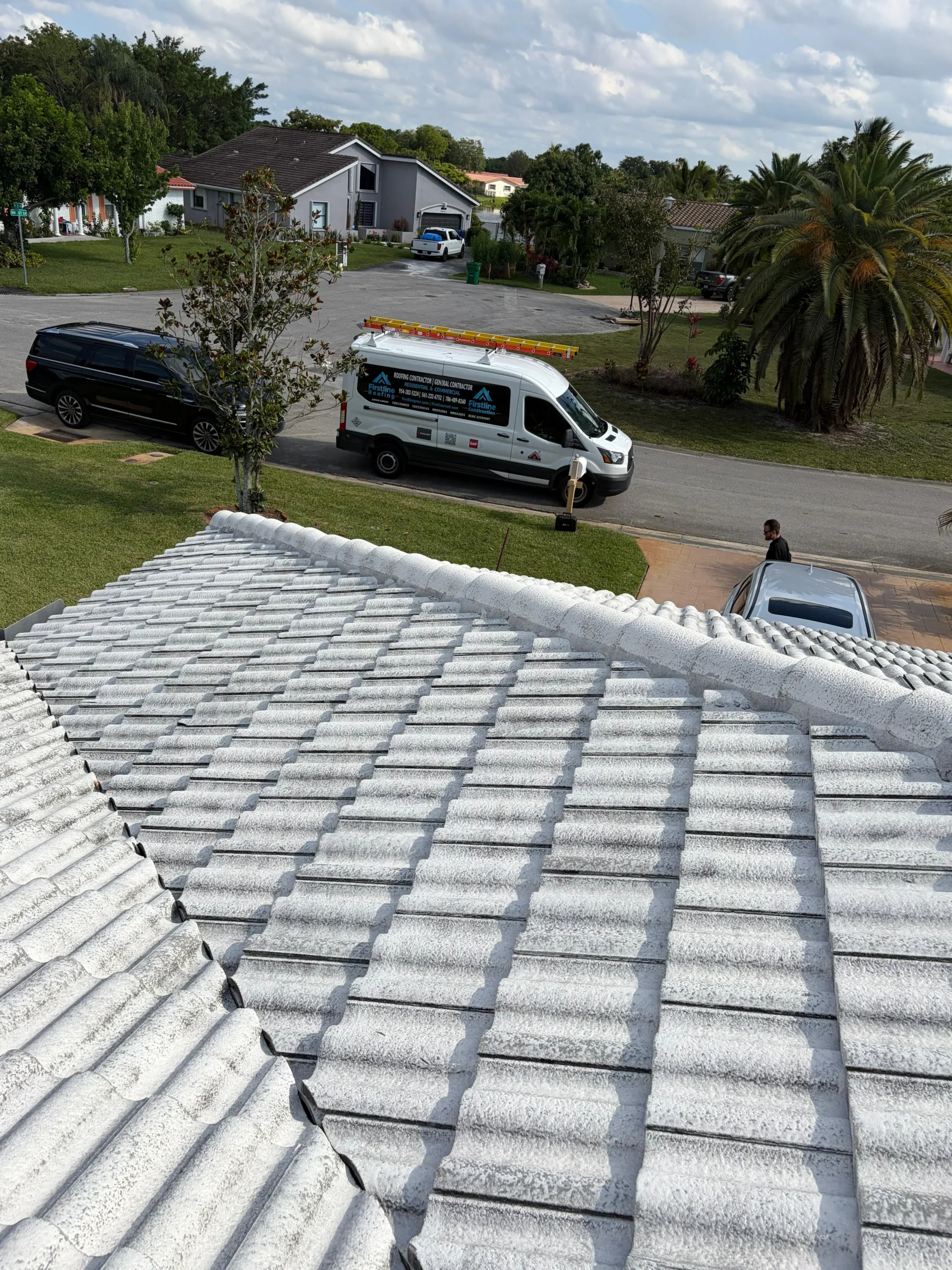
If you live in Coral Springs, you’ve probably felt the shift in the air: and it’s not just the humidity. There is a growing sense of urgency among homeowners regarding their roofs. You might have neighbors who are replacing perfectly good-looking roofs, or perhaps you’ve received a "notice of non-renewal" from your insurance carrier.
The culprit is often cited as the "15-Year Rule." While it sounds like a strict city ordinance, the reality is a bit more nuanced, involving state statutes, insurance underwriting, and the unique environmental demands of South Florida. At FirstLine Roofing, we are seeing more Coral Springs residents opting for a roof replacement earlier than they ever anticipated.
Here is exactly what is happening, why it’s happening in our backyard, and what you need to do to protect your home and your wallet.
What is the Florida 15-Year Rule?
First, let’s clear up the terminology. The "15-Year Rule" primarily refers to Florida Statute 627.7011(5). This law was designed to offer some protection to homeowners, but it has also created a benchmark that insurance companies use to manage their risk.
The law states that an insurance company cannot refuse to issue or renew a homeowners insurance policy solely because of the age of the roof if the roof is less than 15 years old. However, once that 15-year mark is hit, the gloves come off.
If your roof is 15 years or older, your insurer can legally require a roof inspection to determine its condition. If that inspection suggests the roof has less than five years of "Remaining Useful Life" (RUL), the carrier can drop you, refuse to renew your policy, or force you to replace the roof to maintain coverage.

Why Coral Springs Homeowners Are Feeling the Pressure
While the law applies statewide, Coral Springs homeowners face a unique set of challenges that make the 15-year mark feel like a hard deadline.
1. The 2009 Building Code "Magic Date"
In the roofing world, 2009 is a significant year. Following the heavy hurricane seasons of the mid-2000s, building codes were significantly tightened. Roofs installed after 2009 generally have better fastening patterns and secondary water barriers. If your roof was permitted before 2009, insurance companies view it as a high-risk liability, regardless of how many shingles are still attached. We often find that for these older systems, a roof inspection in Florida is the only way to prove to a carrier that the home is still insurable.
2. The South Florida Climate
We don't just have sun; we have a "solar oven" effect. The intense UV radiation in Coral Springs breaks down the adhesives in architectural shingles and the underlayment beneath tile roofing. While a roof in Georgia might last 25 years, a roof in Broward County is doing "dog years." By year 15, even if there isn't obvious storm damage roof repair needed, the structural integrity of the materials is often reaching its limit.
3. The "Remaining Useful Life" (RUL) Hurdle
This is the part that catches most people off guard. Your insurance company doesn't care if the roof looks "fine" from the driveway. They want a signed document from a licensed professional stating the RUL. If an inspector cannot honestly certify that the roof has at least five years of life left, you are essentially uninsurable in the private market. This forces many to seek a roof replacement in Florida much sooner than the manufacturer's warranty would suggest.
The Shift from RCV to ACV
One of the most urgent reasons to look at your roof age today is how you are covered. Many insurance companies are moving older roofs from Replacement Cost Value (RCV) to Actual Cash Value (ACV).
- RCV: If a storm hits, the insurance company pays to replace the roof at today's prices (minus your deductible).
- ACV: The insurance company pays the depreciated value of the roof.
If you have a 17-year-old shingle roof and a hurricane hits, an ACV policy might only give you a fraction of what a new roof actually costs. Homeowners in Coral Springs are realizing that it is often more financially sound to invest in a new roofing system now while they can still get full RCV coverage, rather than being left with a massive out-of-pocket bill after a storm.

Navigating Coral Springs Local Codes & HOAs
Coral Springs isn't just any suburb; it has specific standards maintained by the city and various Homeowners Associations (HOAs). When you decide to replace your roof: whether due to age or storm damage: you have to navigate these local waters.
Pre-Approved Tile Colors
The City of Coral Springs actually maintains a list of pre-approved colors for tile roofs. If you want to switch from a traditional barrel tile to something more modern, you must ensure it fits within the city's aesthetic guidelines. At FirstLine Roofing, we assist homeowners in selecting materials that meet both the Broward County building codes and local architectural requirements.
The 25% Rule
Florida’s building code includes a "25% Rule." If more than 25% of a roof section is damaged or needs repair within a 12-month period, the entire roof must be brought up to current code. In many cases, this effectively means a full replacement. If your roof is already 15 years old and suffers minor storm damage, a repair might not even be a legal option.

Why a Professional Inspection is Non-Negotiable
If your roof is approaching the 15-year mark, you shouldn't wait for a letter from your insurance company. By the time they contact you, you are usually on a very short 30-to-60-day deadline to either prove the roof is good or replace it entirely.
A professional roof inspection from FirstLine Roofing provides you with the documentation you need. We look for:
- Granule Loss: Significant balding on shingles.
- Underlayment Condition: Especially critical for tile and metal roofing.
- Fastener Back-out: Nails or screws that have loosened over time.
- Sealant Failure: Cracking around vents and chimneys.
If we find that your roof is in great shape, we can provide the "Remaining Useful Life" documentation that insurance companies require to maintain your coverage. If we find issues, we can help you plan a roof replacement on your own timeline, rather than under the duress of an insurance cancellation notice.
Choosing the Right Material for Longevity
When Coral Springs homeowners do replace their roofs, many are looking for ways to "beat" the 15-year rule in the future. While asphalt shingles are cost-effective, they are the most scrutinized by insurers.
Increasingly, we are seeing a move toward standing seam metal roofs. Metal roofs are highly favored by insurance companies because of their superior wind resistance and longevity. A well-installed metal roof can often bypass the "15-year anxiety" because insurers recognize their 40-to-50-year lifespan.

Alternatively, tile roofing remains a staple of Coral Springs luxury homes. While the tiles themselves last a long time, the underlayment is the weak point. Using premium, high-temperature self-adhered underlayments can extend the life of a tile system and make it much easier to get that "5+ years of RUL" certification down the road.
Don't Wait for the Storm (or the Letter)
The 15-year rule has effectively shortened the "expected" lifespan of a Florida roof in the eyes of the insurance industry. Being proactive is the only way to stay ahead of rising premiums and potential non-renewals.
Whether you need a quick check-up to see if you have storm damage or you are ready to explore a full roof replacement, our team is here to help. We understand the specific codes of Coral Springs and the strict requirements of Florida insurance carriers.
At FirstLine Roofing, we don't just "slap on shingles." We provide the technical expertise and documentation necessary to protect your home’s value and insurability.
Is your roof hitting that 15-year milestone? Contact us today for a comprehensive evaluation and let’s make sure your home stays covered.