
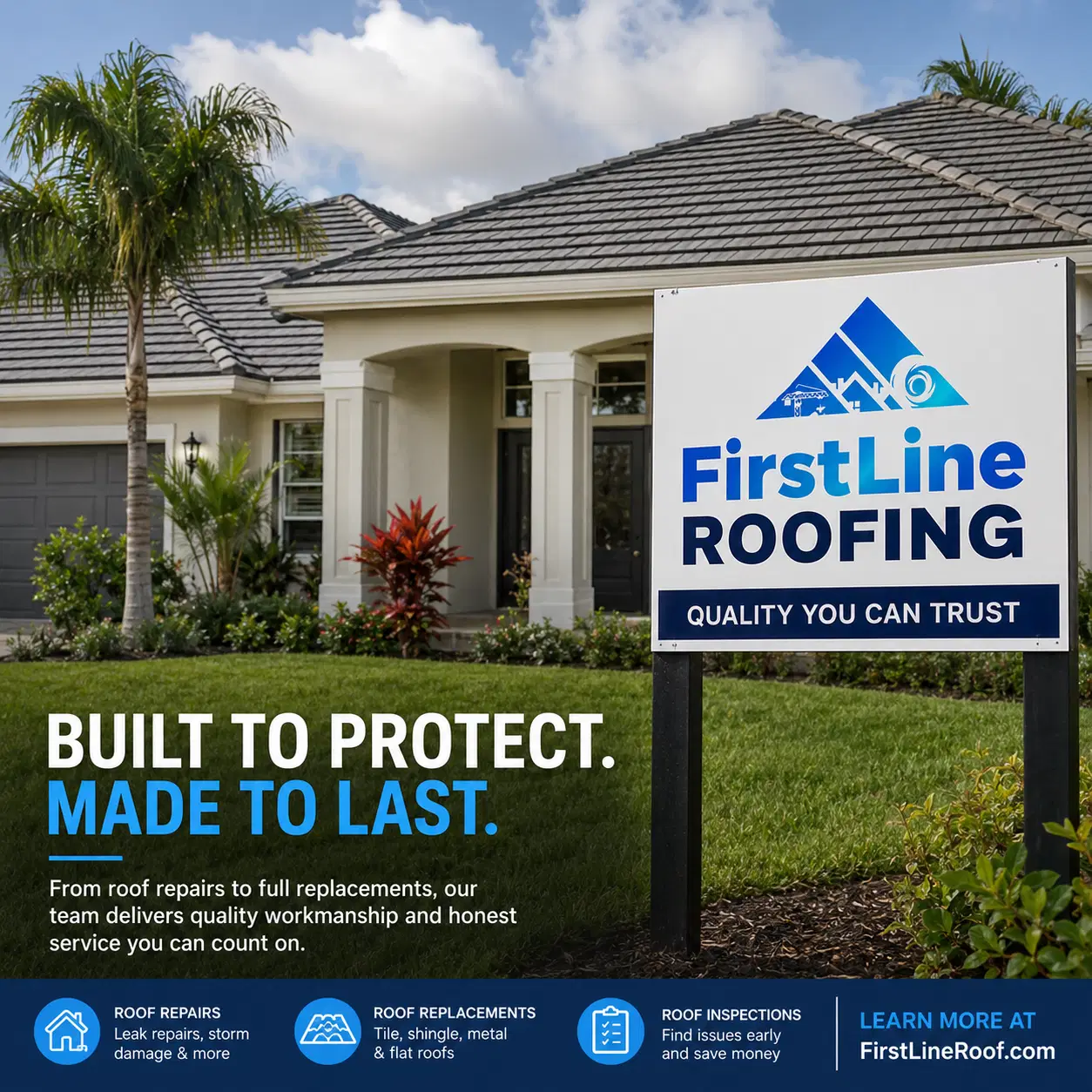
South Florida roofs take a beating year-round. Between extreme UV exposure, heavy rain, humidity, wind, and hurricane season, roofing systems throughout Parkland experience constant wear that many homeowners never notice until a leak develops inside the home.
In communities like Heron Bay, Parkland Isles, MiraLago, Watercrest, Cypress Head, and Parkland Golf & Country Club, many homes are now reaching the age where preventative roof maintenance becomes increasingly important. Many of these developments were completed in the early-to-mid 2000s, meaning those original roofing systems are now 20 years old or approaching that milestone.
At FirstLine Roofing, we routinely perform roof inspections throughout Parkland and surrounding Broward County communities. One of the most common things we encounter is homeowners assuming their roof is in good condition simply because there are no visible interior leaks. Unfortunately, roofing issues often begin long before water staining appears on your ceiling.
The Reality of South Florida Weather and Your Roof
Living in Parkland offers a beautiful lifestyle, but the climate is one of the harshest in the country for building materials. Our roofs don't just face the occasional storm; they deal with:
- Intense UV Radiation: The Florida sun literally "bakes" roofing materials. Over time, this causes tiles to become brittle and asphalt shingles to lose their protective granules.
- Thermal Expansion: The rapid shift from 90-degree heat to a sudden afternoon downpour causes roofing materials to expand and contract quickly. This "thermal shock" can lead to hairline cracks in tiles and sealant failures.
- High Humidity: Constant moisture promotes the growth of algae and moss, which can trap water against the roof surface and accelerate the deterioration of the underlying waterproofing layers.
- Wind-Driven Rain: During a tropical storm or hurricane, rain isn't just falling: it's being pushed horizontally. If your flashing or underlayment is compromised, this pressure will find a way into your home.
Common Roofing Issues Found in Parkland Homes
Many homes throughout Parkland were built during major development phases. While the concrete and clay tile roofs popular in our HOAs are designed for durability, they are not invincible.

Some of the most common issues we find during a roof inspection in Florida include:
- Cracked or Displaced Roof Tile: Often caused by previous foot traffic (from painters or AC technicians) or simply from years of expansion and contraction.
- Deteriorated Underlayment: This is the most critical issue. Even if the tiles look perfect, the felt or synthetic underlayment beneath them eventually becomes brittle and fails.
- Lifted Ridge Caps: The "caps" at the peak of your roof are highly susceptible to wind uplift. If the mortar or adhesive has failed, these can become projectiles during a storm.
- Rusted or Improperly Installed Flashing: Flashing around chimneys, vents, and valleys is your roof's first line of defense at transition points. In South Florida, metal flashing can corrode or pull away from the structure.
- Valley Wear and Debris Accumulation: Leaves and pine needles often collect in roof valleys, trapping moisture and rotting the underlayment.
- Improperly Sealed Roof Penetrations: Plumbing stacks and attic vents require high-quality sealants that must be maintained.
These issues may not be visible from the ground and often go unnoticed until active water intrusion develops, necessitating a more costly roof repair in Florida.
Tile Roof Systems Require Specialized Attention
Tile roofs are the gold standard for Parkland aesthetics and HOA requirements. However, there is a common misconception that the tile is the roof. In reality, the tile is a "shedding" layer. The real "roofing" happens at the underlayment level.

Over time, underlayment systems can deteriorate from UV exposure where tiles have shifted, or simply from reaching the end of their natural lifespan. When we talk about tile roofing, we emphasize the importance of the "Secondary Water Barrier." This is an additional layer of protection that has become a standard in the Florida Building Code for a reason: it keeps the water out even if tiles are blown off.
For many Parkland homeowners, a "Lift and Relay" may be an option. This process involves carefully removing the existing tiles, replacing the aged underlayment with a modern, high-performance system, and then reinstalling the original tiles. This can be a cost-effective way to get another 20+ years of life out of your roof without the expense of all-new tiles.
Why Preventative Roof Inspections Matter
Wait-and-see is not a strategy when it comes to South Florida roofing. Routine inspections can help identify vulnerable areas before they become major repairs or interior damage claims.
Preventative maintenance may help homeowners:
- Extend Roof Lifespan: Catching a small leak in a valley today can prevent the need for a full roof replacement five years early.
- Reduce Long-Term Repair Costs: Minor maintenance, such as resealing a pipe boot or replacing a few cracked tiles, is significantly cheaper than remediating mold and replacing drywall inside the home.
- Prepare for Hurricane Season: A secure roof is your home’s primary defense against storm damage. Identifying loose ridge caps or weak flashing now is essential for hurricane preparedness.
- Support Insurance Evaluations: Many Florida insurers are now requiring "Roof Condition Certifications" or "4-Point Inspections" for homes with roofs older than 15 years. Having a documented history of professional maintenance can be invaluable during a renewal.

The HVHZ Factor: Parkland and Broward County Codes
Parkland is located within the High Velocity Hurricane Zone (HVHZ). This means our local building codes are among the strictest in the world. Any storm damage roof repair or replacement must comply with these stringent requirements, which dictate everything from the type of nails used to the specific wind-rating of the tiles.
At FirstLine Roofing, we stay current on all local permitting and code requirements to ensure that every repair or replacement we perform is fully compliant and designed to withstand the next big storm. Whether you have a flat roofing system on a contemporary home or traditional architectural shingles, understanding these codes is vital.
Choosing the Right Roofing Contractor
Not all roofing contractors operate with the same level of experience, licensing, or construction knowledge. When looking for a partner to protect your home, always verify:
- Proper Florida Licensing: Ensure they hold a current CCC (CGC) license.
- Insurance Coverage: Confirm they carry both General Liability and Workers' Compensation specific to roofing.
- Local Experience: Parkland homes have unique architectural styles and HOA requirements. Work with someone who understands the local landscape.
- Technical Knowledge: They should be able to explain the "why" behind their recommendations, from the type of underlayment to the flashing details.
FirstLine Roofing provides comprehensive roofing services, including inspections, repairs, replacements, and storm damage assessments throughout Broward, Palm Beach, and Miami-Dade County. We focus on professional communication, detailed documentation, and long-term roofing solutions.
Final Thoughts
Preventative roof maintenance is significantly less expensive than dealing with major water intrusion after a problem develops. For Parkland homeowners, taking the time to have a professional evaluation before the height of hurricane season is one of the smartest investments you can make in your property.
As roofs throughout our community continue to age, early detection is becoming more important than ever. Don't wait for the first drip to fall from your ceiling: be proactive and ensure your home is ready for whatever the Florida weather brings.
For more information on how to protect your home or to learn about our specific services, feel free to explore our website or contact our team for a professional evaluation.