
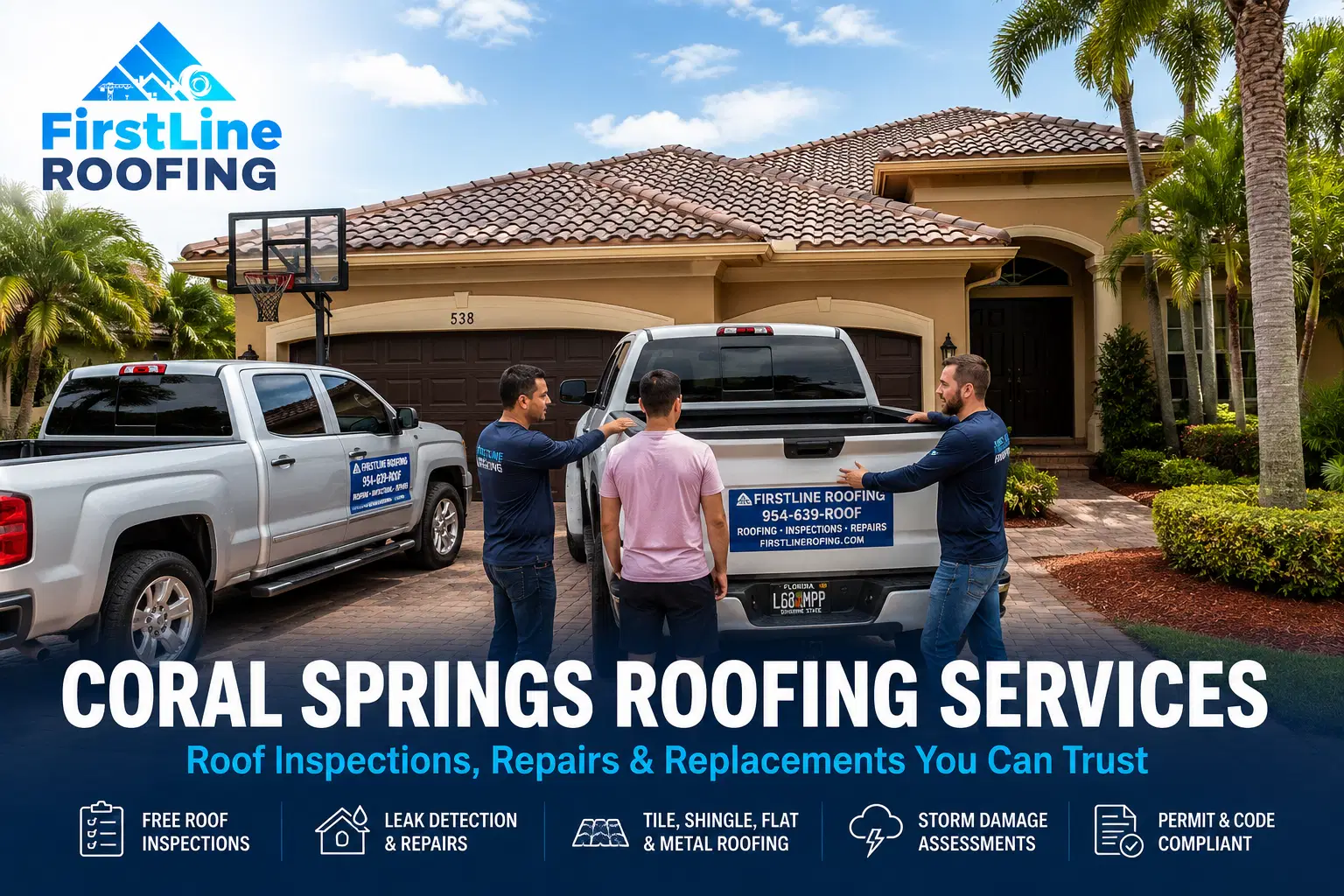
In Coral Springs, tile roofing is the standard on many residential properties. Concrete tile systems perform well in South Florida, but they also create a common misconception: because the tile surface often continues to look intact from the ground, homeowners may assume the roof is still watertight even when the waterproofing layers below are aging.
Many property owners do not realize there is a problem until water intrusion reaches the interior. By that point, the issue may already involve failed underlayment, deteriorated flashing, compromised decking, insulation damage, or concealed microbial growth.
At FirstLine Roofing, we often help Coral Springs homeowners evaluate tile roofs that appear serviceable on the surface but are experiencing failures in the components that actually keep water out. Understanding that distinction is critical when planning repairs, maintenance, or replacement.
The Underlayment Gap in Coral Springs Tile Roofs
Coral Springs tile roofs are exposed to year-round UV, humidity, wind-driven rain, and repeated thermal cycling. The tile itself may remain structurally sound for decades, but the underlayment beneath it typically ages much sooner.
This is what we refer to as the underlayment gap. The visible roof covering still looks acceptable, while the true waterproofing layer has become brittle, slipped, torn, or otherwise compromised. In many cases, homeowners do not discover this until a leak develops during a heavy rain event.
On tile roofing systems in Coral Springs, common problem areas include:
- Cracked or displaced roof tiles: Often caused by foot traffic, impact, or movement over time.
- Deteriorated roof-to-wall and transition flashing: Metal details can corrode, separate, or lose seal integrity.
- Valley failures and debris-related drainage issues: Valleys collect runoff and often become the first place underlayment weakness shows up.
- Penetration failures around vents and accessories: Sealants and flashings around roof penetrations can degrade in South Florida heat.
- Underlayment deterioration beneath otherwise intact tile fields: One of the most common causes of leaks on older Coral Springs tile roofs.

The Importance of Professional Roof Inspections
One of the biggest mistakes homeowners make is waiting until visible interior damage appears before having the roof evaluated. Water intrusion often travels long distances along rafters or the roof deck before becoming visible on a ceiling, making the actual source difficult to identify without a proper roof inspection.
A professional evaluation goes beyond a simple visual check from the driveway. In the humid climate of Broward County, small breaches in the building envelope can lead to hidden moisture buildup in the attic. This creates an environment where mold can thrive and structural timber can begin to soften long before you see a drip.
A professional roof inspection should include:
- Detailed photo documentation: Providing a clear record of tile conditions, flashings, valleys, and penetrations.
- Flashing and penetration review: Checking vents, skylights, chimneys, and roof-to-wall transitions for failure points.
- Tile roof condition assessment: Distinguishing isolated tile damage from broader underlayment or system-age concerns.
- Drainage evaluation: Confirming valleys and water pathways are shedding water properly.
- Attic observations: When accessible, checking the underside of the deck for water staining, active moisture, or rusting fasteners.
If you are looking for a detailed roofing evaluation, it is helpful to understand the local nuances. You can explore more about Coral Springs roofing 101 and navigating city guidelines to see how local standards affect your home's protection.
Tile Roof Repairs vs. Tile Roof Replacement
Not every tile roof requires replacement. In many cases, targeted roof repairs can safely extend service life when the issue is isolated and the surrounding underlayment remains in acceptable condition. Replacing a limited number of broken tiles, addressing a localized flashing defect, or correcting a single valley problem may be appropriate depending on the age and condition of the system.
However, there are situations where roof replacement becomes the more practical long-term solution. This is especially true when the visible tile remains reusable or presentable, but the underlayment beneath large sections of the roof has reached the end of its service life. Once the waterproofing layer becomes brittle, widespread, repeated leak repairs often become less efficient and less predictable.

Homeowners should consider replacement when:
- Underlayment systems have reached the end of their service life, even if the tile surface still looks acceptable.
- Repairs are becoming frequent across multiple slopes, valleys, or transition areas.
- Leak activity suggests a broader waterproofing failure rather than a single isolated defect.
- Storm damage or age-related deterioration has affected the roof deck, flashing system, or attachment integrity.
For those concerned about the costs associated with these major projects, programs like the My Safe Florida Home program can offer guidance on requirements and potential grants for hardening your home against storms.
Roofing Considerations Unique to South Florida
South Florida roofing systems must withstand conditions that many other parts of the country simply do not experience. Coral Springs homeowners should always consider the following technical factors:
Wind Resistance and High-Velocity Hurricane Zones (HVHZ)
Broward County is part of the HVHZ, meaning roofing materials and installation methods must meet some of the strictest wind-load requirements in the country. For tile roofs, this includes approved attachment methods, fastening requirements, and edge detailing designed to perform in hurricane-prone conditions.
Proper Drainage and Vegetation
Coral Springs is known for mature landscaping, but overhanging trees can contribute to debris buildup in valleys and drainage paths. When runoff is slowed or redirected, water can work its way beneath tile at vulnerable transitions. Visible staining at eaves or exterior corners often indicates a drainage-related issue that deserves closer evaluation.

Heat and UV Exposure
The "thermal shock" of a cold rain hitting a roof that has been baking in 90-degree sun for six hours causes materials to expand and contract rapidly. Over years, this movement can back out fasteners and crack sealants. High-quality materials designed for UV resistance are non-negotiable in this region.
Permitting and Code Compliance
Every roof repair over a certain size and every full replacement in Coral Springs requires a permit. This ensures that the work is inspected by the city and meets current Florida Building Codes, which is vital for your home’s safety and its future resale value.
Working With a Local Roofing Company That Understands Coral Springs Tile Roofs
Choosing a roofing contractor is about more than pricing alone. Experience with Broward County roofing standards, local permitting requirements, and the technical behavior of South Florida tile roofing systems plays a major role in the success of your project.
FirstLine Roofing works with Coral Springs homeowners who need clear answers about tile roof condition, underlayment life expectancy, flashing failures, and code-compliant replacement planning. Whether the issue involves an isolated leak or a larger aging system, the objective is the same: accurate diagnosis and long-term building envelope protection.
Our specialized services include:
- Tile roof repair: Tile replacement, localized flashing correction, and targeted leak repairs where appropriate.
- Tile roof replacement: Full-system replacement when underlayment or attachment conditions justify broader work.
- Preventative maintenance: Debris removal, condition monitoring, and proactive attention to vulnerable roof areas.

FAQ Section
How long does a tile roof last in Coral Springs?
The tile itself may last for decades, but the underlayment usually determines the functional service life of the system. In South Florida, many tile roofs begin showing underlayment-related issues well before the tile surface appears worn out.
Why is my tile roof leaking if I do not see missing tiles?
This is one of the most common Coral Springs tile roof questions. Leaks often come from failed underlayment, flashing transitions, valleys, penetrations, or wall intersections rather than from obvious missing tile.
When does a tile roof repair stop making sense?
Repairs may be reasonable when the issue is isolated. When leaks become recurring across multiple areas, the underlying problem is often broader underlayment failure, and replacement may become the more practical long-term option.
Does a new tile roof help with insurance premiums in Coral Springs?
In many cases, a new roof installed to current Florida code may improve wind mitigation eligibility. Homeowners should confirm specific premium impacts with their insurance agent or carrier.
How often should a tile roof be inspected?
A professional inspection every two years is a reasonable baseline for many homes, with additional evaluations after major wind events or if you notice water staining, broken tile, or drainage problems.
Final Thoughts
For many Coral Springs homes, tile roofing remains the standard. The challenge is that tile systems often age from the waterproofing layer below, not from the visible surface above. That underlayment gap is where many costly surprises begin.
If you are dealing with a leak, recurring repairs, or an older tile roof that still looks good from the street, a professional evaluation can help clarify whether the issue is isolated or systemic. FirstLine Roofing provides detailed roof assessments focused on real tile roof conditions, not surface-level assumptions.
Contact FirstLine Roofing today at (954) 282-5224 or visit our Coral Springs Roofing Services page to schedule your consultation.
Licenses: CCC1334142 | CGC1530039