
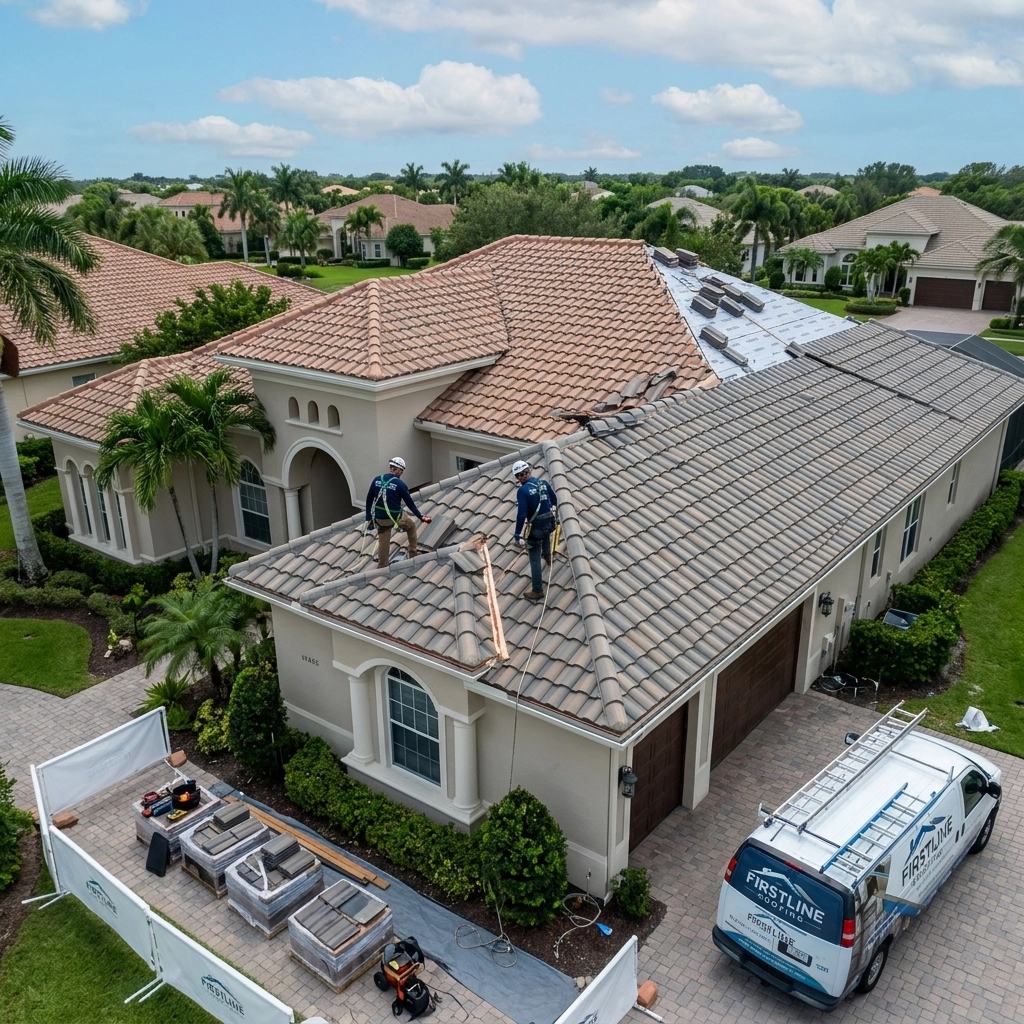
In communities like Parkland, a roof replacement is rarely just about curb appeal. While tile roofing remains one of the most recognizable architectural features throughout South Florida, the performance of the system underneath the tile is often what determines whether a roof lasts 15 years or 40.
Many homeowners begin researching roof replacement after seeing cracked tiles, aging underlayment, recurring leaks, or insurance-related concerns. What often gets overlooked is that modern tile roof replacement involves far more than simply removing and reinstalling tile. Whether you are in Heron Bay, MiraLago, or Watercrest, understanding the technical nuances of your roof is the first step toward a successful project.
Ventilation strategy, waterproofing transitions, fastening methods, underlayment selection, and even attic heat management all play a major role in how a roof performs in South Florida’s climate. For homes in Parkland, Coral Springs, Boca Raton, and throughout Broward County, roofing systems face a unique combination of environmental stressors:
- Intense UV exposure
- High humidity and thermal expansion
- Hurricane-force wind events
- Torrential seasonal rain
- Long-term moisture intrusion risks
A properly designed roofing system must account for all of them simultaneously.
Why Tile Roofs Continue to Dominate South Florida
Tile roofing remains one of the most practical long-term systems for South Florida homes, particularly in upscale communities where Mediterranean and coastal architectural styles are common. Concrete and clay tile systems perform exceptionally well in high-heat environments and salt-air conditions.
Unlike many roofing materials, tile naturally creates an air space between the roof deck and the tile itself. That separation can help reduce attic heat transfer when the system is properly ventilated. In areas like Parkland, where attic temperatures can become extreme during summer months, this becomes increasingly important for energy efficiency and HVAC performance.
However, the visible tile is only one component of the roof system. In many cases, the waterproofing layer beneath the tile becomes the actual determining factor in system longevity. Understanding Parkland roofing standards is essential before committing to a specific material.

The Underlayment Is Often More Important Than the Tile
One of the biggest misconceptions homeowners have is assuming the tile itself is the primary waterproofing barrier. In reality, tile primarily serves as a durable protective surface and water-shedding system. The underlayment beneath it is what typically provides the true waterproofing protection.
Older South Florida tile roofs often utilized hot mop systems or organic felts that degrade over time under extreme heat load. Modern systems have improved substantially. Today’s premium roof replacement assemblies often incorporate:
- Self-adhered membranes (Peel-and-Stick): These provide superior water resistance and wind performance compared to traditional felt.
- High-temperature synthetic underlayments: Designed specifically to withstand the intense heat trapped under tiles.
- Enhanced flashing systems: Protecting critical junctions where most leaks actually begin.
Resources like Miami-Dade Product Control and the Florida Building Code establish rigorous testing and approval requirements for many roofing assemblies used throughout South Florida. These approvals help verify how materials perform under uplift pressure and severe weather conditions.
Installation Quality Matters More Than Most Homeowners Realize
Two tile roofs can look nearly identical from the ground while performing dramatically differently over time. Some of the most common long-term roofing failures in South Florida occur not because of the tile itself, but because of installation details surrounding valleys, roof-to-wall transitions, and flashing terminations.
Areas around chimneys, skylights, and plumbing stacks often become the first points of failure when systems are not properly detailed. This is especially true for roofing in Parkland Isles, where multi-level roof designs and complex geometries are common. Proper flashing integration and water channel management are critical in preventing long-term hidden moisture intrusion.

Why Ventilation Is Frequently Overlooked
Ventilation remains one of the least understood aspects of roofing in South Florida. A roof system does not operate independently from the attic below it. Poor ventilation can contribute to:
- Trapped humidity and mold-related conditions
- Elevated attic temperatures that bake the underlayment
- Premature underlayment deterioration
- HVAC inefficiency and higher cooling costs
In South Florida’s climate, heat buildup inside attics can become substantial. A properly balanced ventilation strategy often includes intake and exhaust ventilation to ensure consistent airflow. Roof replacements provide one of the best opportunities to correct long-standing ventilation deficiencies that may have existed since the home was originally built.
Wind Resistance and Fastening Systems
As a Parkland roofing company, we emphasize that systems must be designed with hurricane conditions in mind. Wind uplift pressures can become significant during severe weather events, particularly in exposed neighborhoods and coastal regions.
Modern fastening methods vary based on roof slope, tile profile, and local code requirements. Depending on the system, tile may utilize:
- Mechanical fastening (screws or nails)
- Two-component foam adhesion
- Hybrid attachment methods
The roofing assembly itself must function as a complete system. Organizations such as the National Roofing Contractors Association (NRCA) and the Insurance Institute for Business & Home Safety (IBHS) continue to emphasize the importance of system-based roof design in hurricane-prone regions.

Concrete Tile vs. Clay Tile in South Florida
Both concrete and clay tile systems are widely used throughout Parkland and surrounding communities.
Concrete Tile
Concrete tile remains extremely popular due to its durability, availability, and cost efficiency. Modern concrete tile systems have improved significantly in appearance and performance, offering a wide range of profiles from traditional "S-tile" to modern flat slate looks.
Clay Tile
Clay tile is often selected for its superior color longevity, reduced porosity, and premium aesthetics. Many luxury coastal homes throughout South Florida continue utilizing clay tile because of its natural ability to maintain its appearance over decades of intense sun exposure without fading.
Insurance Considerations and Wind Mitigation
Many South Florida homeowners first begin evaluating roof replacement after discussions with their insurance carrier. Older roofs may face underwriting concerns or inspection requirements related to age and condition.
Programs like the My Safe Florida Home program have increased homeowner awareness regarding roof-to-wall attachments and secondary water barriers. For many homeowners, a roof replacement becomes an opportunity to improve both system performance and insurability through enhanced wind mitigation features.

Long-Term Maintenance and Inspection
Even high-end tile roofs require periodic care. South Florida conditions can gradually impact flashing systems, sealants, and penetrations. Tree debris accumulation in valleys or clogged gutters can lead to moisture backing up under the tiles.
Routine roof inspections become especially important after major wind events or prolonged rain seasons. The earlier minor issues: like a cracked tile or a loose flashing: are identified, the easier they are to correct before interior damage develops.
Choosing the Right Roofing Contractor
Tile roof replacement is one of the most technically demanding residential roofing projects in South Florida. Beyond appearance, the contractor should understand building envelope performance, Miami-Dade approvals, and flashing integration. This becomes increasingly important on larger custom homes where architectural complexity creates additional waterproofing challenges.
The best roofing projects are rarely the ones completed fastest or cheapest. They are typically the ones designed carefully from the beginning with long-term performance and regional code compliance in mind.
Final Thoughts
For homeowners in Parkland and throughout South Florida, replacing a tile roof is a significant investment that impacts far more than aesthetics alone. When properly designed and installed, a tile roofing system can provide decades of durability and architectural value.
Learn more at FirstLineRoof.com or contact FirstLine Roofing at (954) 282-5224 for a professional consultation.
Licenses:
CCC1334142
CGC1530039
FAQ Section
How long does a tile roof typically last in South Florida?
Many tile roofs can last several decades, though the lifespan often depends more on the waterproofing underlayment and installation quality than the tile itself. Most underlayments in Florida reach their limit between 20 and 25 years.
Is concrete tile or clay tile better for South Florida?
Both perform well. Clay tile typically offers superior color retention and lower porosity, making it less likely to absorb water or grow algae. Concrete tile remains a highly durable and cost-effective alternative.
Why do tile roofs leak even when the tiles look fine?
In many cases, leaks originate from aging underlayment that has become brittle, or from flashing failures in the valleys and around penetrations, rather than the tile itself breaking.
Does roof ventilation really matter in Florida?
Yes. Proper attic ventilation helps manage heat buildup, which can otherwise "cook" the underlayment from the inside out, leading to premature system failure.
Are Miami-Dade approved roofing systems important outside Miami-Dade County?
Yes. Many contractors throughout Broward and Palm Beach Counties prefer Miami-Dade approved systems because they represent the highest testing standards for wind and weather resistance in the country.