Florida summers bring intense heat, afternoon thunderstorms, high humidity, and the start of hurricane season. While many homeowners wait until they notice a leak, the smartest time to have your roof inspected is before minor issues become expensive repairs.
At FirstLine Roofing, we help homeowners throughout Coral Springs identify potential roofing problems early, extending the life of their roof and helping them avoid emergency repairs during storm season.
What Summer Does to Your Roof
Florida roofs experience some of the harshest conditions in the country.
Common issues include:
UV damage that dries and weakens shingles
Thermal expansion and contraction that loosens flashing
Wind-driven rain finding small openings around vents and penetrations
Cracked or slipped roof tiles
Deteriorated sealants around plumbing stacks and roof accessories
Clogged valleys and drainage areas causing water backup
Many of these problems aren’t visible from the ground but can become major leaks during the next heavy storm.
What We Look For During an Inspection
A professional inspection goes beyond simply looking for missing shingles.
Our inspections include:
Roofing material condition
Flashing integrity
Pipe boots and vent penetrations
Ridge caps and hips
Valleys
Underlayment exposure
Signs of previous repairs
Soft decking indicators
Gutters and drainage
Wind damage
Storm-related wear
Roof ventilation
Finding these issues early can often mean a simple repair instead of a full roof replacement.
Benefits of Preventative Maintenance
Routine inspections can help:
Extend roof life
Prevent interior water damage
Reduce emergency repair costs
Catch insurance-related storm damage sooner
Improve home value
Give homeowners peace of mind before hurricane season
For many Florida roofs, annual inspections are one of the highest-return maintenance items a homeowner can perform.
Why Choose FirstLine Roofing?
We understand South Florida construction, building codes, wind requirements, and roofing systems.
Whether your home has:
Asphalt shingles
Concrete tile
Clay tile
Standing seam metal
Flat roofing
Modified bitumen
TPO
our team provides honest recommendations based on the condition of your roof—not high-pressure sales tactics.
Schedule Your Coral Springs Roof Inspection
If it’s been more than a year since your last roof inspection—or your roof recently experienced heavy rain or high winds—now is the perfect time to have it evaluated.
A small repair today can prevent a much larger problem tomorrow.
Contact FirstLine Roofing today to schedule a professional roof inspection in Coral Springs.
Many homeowners believe that if they don’t see a water stain on the ceiling, their roof is in good condition. Unfortunately, that’s rarely the case.
In South Florida, roofing systems are subjected to some of the harshest conditions in the country. Intense UV exposure, heavy rainfall, tropical storms, humidity, and high winds all contribute to gradual deterioration. Small issues often develop silently and may go unnoticed until significant damage has already occurred.
At FirstLine Roofing, we’ve inspected countless roofs throughout Coral Springs and Broward County where a relatively inexpensive repair could have prevented thousands of dollars in structural and interior damage.
Here are five of the most common problems homeowners should never ignore.
1. Missing or Lifted Shingles
High winds don’t always remove an entire section of roofing.
Sometimes a single shingle becomes lifted just enough for wind-driven rain to reach the underlayment. Over time, that moisture can deteriorate the roofing system and eventually affect the roof decking.
Common signs include:
Shingles that appear raised
Missing tabs
Granules accumulating in gutters
Uneven roof appearance
Even one damaged shingle deserves attention before the next storm arrives.
2. Cracked or Slipped Roof Tiles
Tile roofs are extremely durable, but individual tiles can crack from age, foot traffic, falling debris, or storm activity.
A cracked tile may still appear to be protecting the home while allowing water underneath during heavy rain.
Professional inspections can identify damaged tiles before moisture reaches the underlayment and structural components.
3. Damaged Flashing
Flashing protects the areas where your roof meets walls, chimneys, skylights, plumbing vents, and other penetrations.
When flashing begins to rust, separate, or lose its seal, water often enters these vulnerable locations first.
Signs of flashing problems include:
Rust staining
Loose metal
Dried or cracked sealant
Interior leaks near walls or ceilings
Flashing failures are among the most common causes of roof leaks.
4. Fascia Deterioration
Your fascia does much more than improve curb appeal.
It supports your gutters, protects roof edges, and helps prevent moisture intrusion into the roof system.
In South Florida, prolonged moisture exposure can cause fascia boards to rot, especially if gutters overflow or previous repairs were not completed properly.
Ignoring fascia damage often leads to:
Loose gutters
Wood rot
Soffit damage
Pest intrusion
Additional roof repairs
Replacing deteriorated fascia early is significantly less expensive than repairing widespread structural damage later.
5. Small Roof Leaks
Not every roof leak announces itself with water pouring through the ceiling.
Many leaks begin slowly, allowing moisture to accumulate inside attic spaces or wall cavities where it remains hidden.
Over time, this can result in:
Mold growth
Wet insulation
Damaged drywall
Wood rot
Increased repair costs
Early leak detection is one of the best investments a homeowner can make.
Why South Florida Roofs Require Regular Inspections
Florida’s climate accelerates roofing wear.
Even roofs that appear to be in excellent condition from the ground may have storm-related damage that’s only visible during a professional inspection.
The National Weather Service records numerous severe thunderstorms and strong wind events across South Florida each year, making preventative maintenance increasingly important.
Routine inspections can identify developing problems before they require major repairs or full roof replacement.
What Happens During a FirstLine Roofing Inspection?
Our inspections are designed to provide homeowners with an honest assessment of their roof’s condition.
We evaluate:
Roofing materials
Flashing
Ridge caps
Valleys
Vent penetrations
Fascia and soffits
Gutters
Visible storm damage
Signs of previous repairs
Areas susceptible to water intrusion
If repairs are needed, we’ll explain exactly what we found and why. If your roof still has years of service life remaining, we’ll tell you that too.
Our goal is to help homeowners make informed decisions—not sell unnecessary work.
Protect Your Home Before Small Problems Become Major Repairs
Roofing issues rarely improve on their own.
A relatively minor repair completed today can often prevent extensive structural damage, interior water intrusion, and significantly higher repair costs down the road.
Whether your roof is shingle, tile, metal, or a flat roofing system, routine inspections are one of the best ways to maximize its lifespan and protect your investment.
If you live in Coral Springs or anywhere throughout Broward, Palm Beach, or Miami-Dade County, the team at FirstLine Roofing is ready to help.
Schedule a professional inspection and gain peace of mind knowing your roof is prepared for Florida’s challenging weather.
Why Homeowners Choose FirstLine Roofing
FirstLine Roofing provides professional roofing services throughout South Florida, including inspections, repairs, roof replacements, emergency leak response, and preventative maintenance for residential and commercial properties. Our team is committed to honest recommendations, quality workmanship, and exceptional customer service.
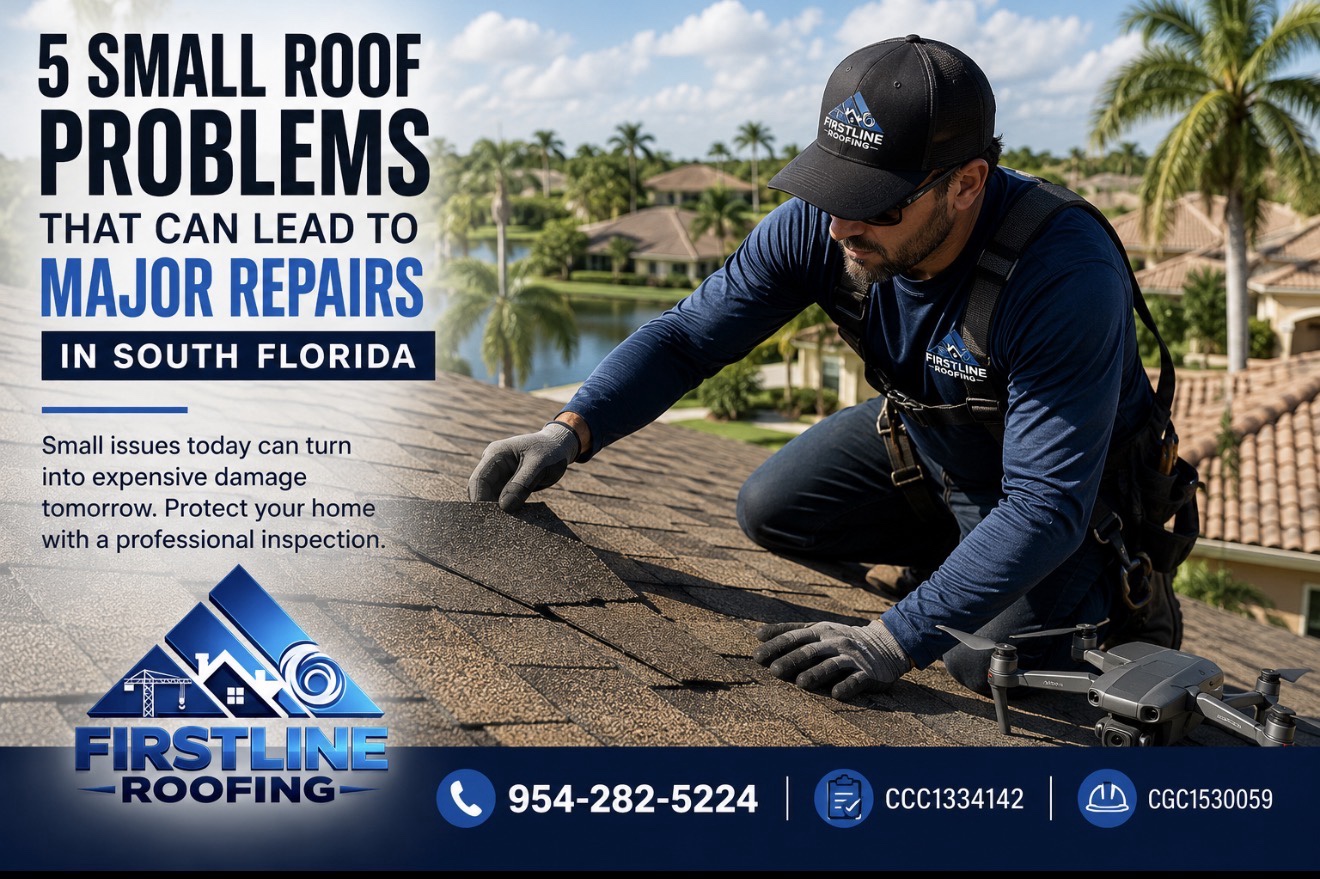
A professional roofer performing a detailed inspection on a residential roof in Coral Springs using a drone and safety equipment, with Florida palm trees and blue skies in the background. Include subtle FirstLine Roofing branding in the lower corner, along with:
South Florida’s rainy season puts every roofing system to the test. Heavy afternoon thunderstorms, prolonged humidity, intense UV exposure, and hurricane-season winds can accelerate wear on even well-built roofs. Many homeowners assume they’ll know when their roof needs attention because they’ll see water dripping from the ceiling. Unfortunately, by the time a leak becomes visible inside the home, damage has often been developing for weeks or even months.
At FirstLine Roofing, we inspect roofs throughout Coral Springs and Broward County every day. The good news is that most roofs provide warning signs long before major water intrusion occurs. Knowing what to look for can help you schedule repairs early, extend the life of your roof, and avoid much more expensive restoration work.
1. Missing, Cracked, or Displaced Roofing Materials
Whether you have concrete tile, asphalt shingles, or a metal roof, damaged roofing materials are one of the earliest signs your roof may be vulnerable.
Look for:
Missing shingles or tiles
Cracked or broken roof tiles
Lifted shingles after storms
Loose ridge caps
Bent or damaged metal panels
Even a single damaged area can allow wind-driven rain to reach the underlayment or roof deck. During South Florida’s rainy season, these small openings often become larger with every storm.
If you notice any visible damage from the ground, it’s a good idea to schedule a professional roof inspection rather than waiting for a leak to develop.
Related Service: Roof Repair
2. Water Stains on Ceilings or Walls
Not every roof leak produces active dripping water.
One of the earliest indicators is discoloration on ceilings or upper walls. You may notice:
Yellow or brown stains
Bubbling paint
Peeling drywall
Damp spots after heavy rain
These stains often indicate that water has already traveled through insulation or framing before becoming visible inside the home.
The source of the leak is frequently several feet away from where the stain appears, making professional leak detection especially important.
Related Service: Roof Leak Detection
3. Flashing Around Roof Penetrations Is Beginning to Fail
Some of the most common roof leaks occur around penetrations rather than in the field of the roof itself.
These areas include:
Plumbing vent pipes
Chimneys
Skylights
Roof-to-wall transitions
HVAC equipment
Solar mounting points
The metal flashing and sealants protecting these areas naturally expand and contract with temperature changes. Over time, they can loosen, crack, or deteriorate.
During heavy summer storms, these vulnerable locations are often the first places water enters the roofing system.
4. Gutters Are Overflowing or Filling with Roofing Debris
Your gutter system can tell you a great deal about the condition of your roof.
Watch for:
Excessive granules from shingles
Broken tile fragments
Pieces of sealant
Standing water
Gutters pulling away from the fascia
Overflowing gutters don’t just damage landscaping—they can force water back beneath roofing materials and increase the likelihood of fascia deterioration and roof leaks.
Keeping gutters clean during the rainy season is one of the simplest forms of preventative maintenance.
5. Your Roof Is More Than 15–20 Years Old
Age alone doesn’t mean a roof requires replacement, but older roofing systems deserve closer attention.
As roofs age, materials naturally become less flexible and more susceptible to:
UV deterioration
Thermal movement
Wind damage
Moisture intrusion
Sealant failure
Many roofs continue performing well beyond twenty years when properly maintained, but annual inspections become increasingly important as roofing systems age.
Routine inspections often identify small repairs that can significantly extend the life of the roof.
Why Summer Is the Best Time for a Roof Inspection
Many homeowners wait until hurricane season is fully underway before thinking about their roof.
Unfortunately, that’s also when roofing contractors are busiest responding to emergency leaks.
Scheduling an inspection during the early rainy season provides several advantages:
Identify small problems before they become emergencies.
Make repairs before severe weather arrives.
Extend the lifespan of your roofing system.
Reduce the likelihood of interior water damage.
Gain peace of mind before hurricane season peaks.
According to the National Weather Service, South Florida experiences frequent heavy rainfall and thunderstorms throughout the summer months, making proactive roof maintenance especially important.
Why Choose FirstLine Roofing?
FirstLine Roofing provides residential and commercial roofing services throughout Coral Springs, Parkland, Coconut Creek, Boca Raton, Deerfield Beach, and the surrounding South Florida communities.
Our services include:
Roof inspections
Roof repairs
Leak detection
Roof replacements
Tile roofing
Shingle roofing
Metal roofing
Flat roofing systems
Storm damage assessments
Our goal is simple: identify problems early, provide honest recommendations, and deliver quality workmanship that protects your home for years to come.
Schedule Your Roof Inspection Today
If your roof has been through another South Florida rainy season without an inspection, now is the ideal time to have it evaluated.
Whether you’ve noticed a small stain on the ceiling, suspect storm damage, or simply want peace of mind before hurricane season intensifies, the team at FirstLine Roofing is here to help.
A professional inspection today could prevent a much larger repair tomorrow.
The Parkland Chamber of Commerce recently announced that Scott Gordon, owner of FirstLine Construction Corp., has accepted the role of Ambassador Chair, a leadership position dedicated to welcoming new members, strengthening business relationships, and helping the Chamber continue to grow.
For Scott, this appointment is more than a professional milestone. It’s an opportunity to give back to the community that has been home to his family and business for more than two decades. Through his work with FirstLine Construction, Scott has built lasting relationships with homeowners, business owners, property managers, and fellow professionals throughout Parkland and South Florida. Learn more about our commitment to the community on our About FirstLine page: https://firstlineroof.com/about-us/
What Does the Ambassador Chair Do?
The Ambassador Committee serves as the welcoming arm of the Parkland Chamber of Commerce. Ambassadors are often the first people new members meet, helping introduce them to other business owners, answer questions, and encourage participation in Chamber events and programs.
As Ambassador Chair, Scott will help lead these efforts while working alongside a dedicated team of volunteers committed to making every new member feel welcome from day one.
One of the committee’s newest initiatives is the Ambassador Buddy Program, pairing experienced Chamber members with new businesses to help them build relationships and maximize the value of their membership.
Building a Stronger Local Business Community
Scott has always believed that successful businesses don’t grow in isolation. They grow through relationships, collaboration, trust, and a genuine commitment to helping others succeed.
That philosophy has guided FirstLine Construction since its founding and continues to shape the company’s approach today. Whether assisting homeowners with roofing projects, helping businesses recover after storm damage, or completing commercial construction throughout South Florida, the focus has always been on building long-term relationships—not simply completing projects.
If you’re looking for roofing or construction services in the area, visit our Parkland Roofing Services page to learn more about how FirstLine serves local homeowners and businesses: https://firstlineroof.com/service-areas/parkland-fl/
Looking Ahead
The Parkland Chamber continues to play an important role in supporting local businesses, encouraging economic development, and creating opportunities for networking, education, and collaboration.
Scott is excited to help welcome new members, strengthen engagement among existing members, and continue building a Chamber that reflects the strong sense of community Parkland is known for.
If you’re a local business owner who has considered joining the Chamber or becoming more involved, now is an excellent time to connect with other professionals who share a passion for supporting local business.
Scott would like to thank the Parkland Chamber Board of Directors, the Ambassador Committee, and the Chamber staff for their confidence and support.
He looks forward to serving the Chamber, welcoming new members, and helping continue to make Parkland one of South Florida’s strongest business communities.
For more local insights, roofing tips, construction news, and community updates, be sure to explore the FirstLine Roofing Blog: https://firstlineroof.com/blog/
Parkland is known for its beautiful neighborhoods, luxury homes, and meticulously maintained communities. Whether you live in Heron Bay, Parkland Golf & Country Club, Parkland Isles, MiraLago, Cascata, Watercrest, or another Parkland neighborhood, your roof is one of the most important investments protecting your home.
South Florida’s climate is unforgiving. Intense sunlight, heavy summer rain, hurricane-force winds, and year-round humidity gradually wear down every roofing system—even those that appear to be in excellent condition.
The good news? Most major roofing failures don’t happen overnight. They begin as small, often invisible issues that can be identified during a professional roof inspection.
Why Parkland Homes Need Regular Roof Inspections
Many Parkland homes feature premium concrete tile roofing systems, architectural shingles, metal roofing, or combinations of pitched and flat roof sections.
Each roofing system ages differently, but all are exposed to:
Extreme UV exposure
Wind-driven rain
Tropical storms
Hurricane seasons
Moisture intrusion
Tree debris
Thermal expansion and contraction
These conditions slowly impact not only the roofing material you see but also the waterproofing system beneath it.
Scheduling an annual inspection helps identify developing issues before they turn into interior leaks or costly structural repairs.
The Roof May Look Perfect—But Problems Can Be Hidden
One of the biggest misconceptions homeowners have is believing that if the roof looks good from the ground, everything is fine.
Many leaks actually originate from areas homeowners can’t safely inspect, including:
Valleys
Flashing around chimneys
Pipe penetrations
Roof-to-wall transitions
Skylights
Flat roof tie-ins
Aging underlayment beneath tile roofs
In many cases, homeowners don’t discover these problems until water stains appear inside the home.
Drone Technology Provides a Better Inspection
Modern drone inspections allow roofing professionals to evaluate an entire roofing system without unnecessary foot traffic across delicate roofing materials.
Drone inspections can identify:
Broken or displaced roof tiles
Lifted shingles
Damaged flashing
Ponding water
Valley deterioration
Storm debris
Cracked ridge caps
Areas requiring preventative maintenance
High-resolution aerial photography also provides homeowners with documentation of their roof’s condition, which can be valuable after severe weather or during insurance discussions.
Neighborhoods like Heron Bay, Parkland Golf & Country Club, MiraLago, Cascata, and Parkland Isles feature custom homes where roof systems often represent a significant investment.
Waiting until a leak develops can result in damage to:
Drywall
Insulation
Flooring
Cabinetry
Interior paint
Electrical systems
Personal belongings
Routine inspections often uncover issues while repairs are still relatively simple and cost-effective.
When Should You Schedule a Roof Inspection?
FirstLine Roofing recommends scheduling an inspection:
Once each year
After a hurricane or tropical storm
Following unusually strong wind events
Before purchasing a home
Before selling a home
Prior to installing solar panels
If your roof is more than 15 years old
Anytime you notice signs of moisture inside your home
Preventative maintenance remains one of the most cost-effective ways to extend the life of your roof.
Choosing the Right Roofing Contractor
Not every roofing contractor has experience working on the premium roofing systems commonly found throughout Parkland.
Look for a licensed contractor experienced with:
Concrete tile roofs
Standing seam metal roofs
Architectural shingles
Flat roofing systems
Roof leak diagnostics
Hurricane-resistant roofing assemblies
South Florida building codes
An experienced contractor can identify the source of a problem instead of simply treating the visible symptoms.
Most roofing professionals recommend a complete roof inspection at least once per year, along with additional inspections following significant storms or hurricanes. Early detection of damaged flashing, cracked tiles, deteriorated sealants, or aging underlayment can prevent much larger repairs in the future.
For additional homeowner guidance on protecting your home during hurricane season, visit the Florida Division of Emergency Management: https://www.floridadisaster.org/
You can also find roofing maintenance resources through the National Roofing Contractors Association: https://www.nrca.net/
Protect Your Parkland Home with Confidence
Your roof protects everything beneath it. Whether your home is five years old or twenty-five, regular inspections are one of the smartest investments you can make.
At FirstLine Roofing, we provide professional roof inspections, detailed evaluations, honest recommendations, and quality workmanship designed specifically for South Florida homes.
If you’re a Parkland homeowner and haven’t had your roof inspected recently, now is an excellent time to schedule an evaluation before small issues become major repairs.
If you’ve noticed small weeds or vegetation sprouting between the tiles on your roof, it’s more than just a cosmetic issue. While it may seem harmless, plant growth is often a sign that debris and moisture have been sitting on the roof long enough to create an environment where roots can develop. Left untreated, this can shorten the life of your roof and increase the likelihood of leaks.
At FirstLine Roofing, we regularly inspect tile roofs throughout Parkland, Coral Springs, Boca Raton, Deerfield Beach, Coconut Creek, Weston, and the surrounding South Florida communities, and this is one of the most common maintenance issues we find.
Why Are Plants Growing Between My Roof Tiles?
Tile roofs naturally have small spaces where wind can deposit dirt, pollen, leaves, and organic debris. Once moisture becomes trapped in these areas, seeds carried by the wind can germinate.
Common causes include:
Accumulated leaf debris
Nearby trees dropping seeds
Poor drainage along roof valleys
Shaded areas that remain damp
Lack of routine roof maintenance
Although the plant itself may appear small, its root system can work underneath or between the tiles, trapping additional moisture and causing long-term problems.
What Problems Can Weeds Cause on a Tile Roof?
Ignoring vegetation on your roof can lead to:
Broken or Displaced Roof Tiles
As roots expand, they can lift or shift roof tiles out of position. Even slight movement creates pathways for wind-driven rain.
Moisture Retention
Organic debris acts like a sponge, holding water against the roof system longer than intended. Over time, this can accelerate deterioration of the underlayment beneath the tile.
Blocked Water Flow
Roof valleys are designed to quickly carry water off the roof. Debris and vegetation can obstruct this flow, increasing the chance of water backing up beneath the tile system.
Hidden Roof Damage
Areas with vegetation often conceal cracked tiles, deteriorated flashings, or worn underlayment that would otherwise be visible during a routine inspection.
Should I Pull the Weeds Myself?
It depends.
While removing visible vegetation may seem straightforward, pulling aggressively can break tiles or dislodge them from their proper position. Walking on a tile roof without experience also increases the chance of cracking tiles or causing additional damage.
A professional inspection allows the vegetation to be removed safely while checking for:
Broken or cracked tiles
Underlayment exposure
Valley deterioration
Flashing issues
Evidence of previous leaks
How Often Should a Tile Roof Be Inspected?
In South Florida, we recommend having your roof professionally inspected at least once every year, and after any significant storm or hurricane.
Routine inspections help identify:
Loose or slipped tiles
Valley debris
Tree-related damage
Early underlayment wear
Small repairs before they become major leaks
Preventive maintenance is almost always less expensive than emergency repairs.
Frequently Asked Question
Does vegetation on my tile roof mean I already have a leak?
Not necessarily.
Small weeds do not automatically indicate an active leak, but they do signal that moisture and organic debris have been sitting on the roof for an extended period. That combination increases the risk of tile movement, underlayment deterioration, and future water intrusion if left unaddressed.
The best approach is to have the affected area inspected before a small maintenance issue becomes an expensive repair.
Serving Homeowners Across South Florida
FirstLine Roofing provides professional tile roof inspections, repairs, maintenance, and replacements throughout:
Parkland
Coral Springs
Boca Raton
Deerfield Beach
Coconut Creek
Weston
Fort Lauderdale
Delray Beach
Plantation
Sunrise
Tamarac
Pompano Beach
Whether your roof has vegetation, cracked tiles, or you’re simply due for an inspection, our experienced team can identify issues before they become costly problems.
A metal roof replacement is one of the best long-term investments a South Florida homeowner can make. However, many homeowners become concerned when they see their old roof removed, a waterproof underlayment installed, and then several days pass before the final metal roof panels arrive.
The truth is that the dry-in phase is one of the most important steps in the entire roofing process.
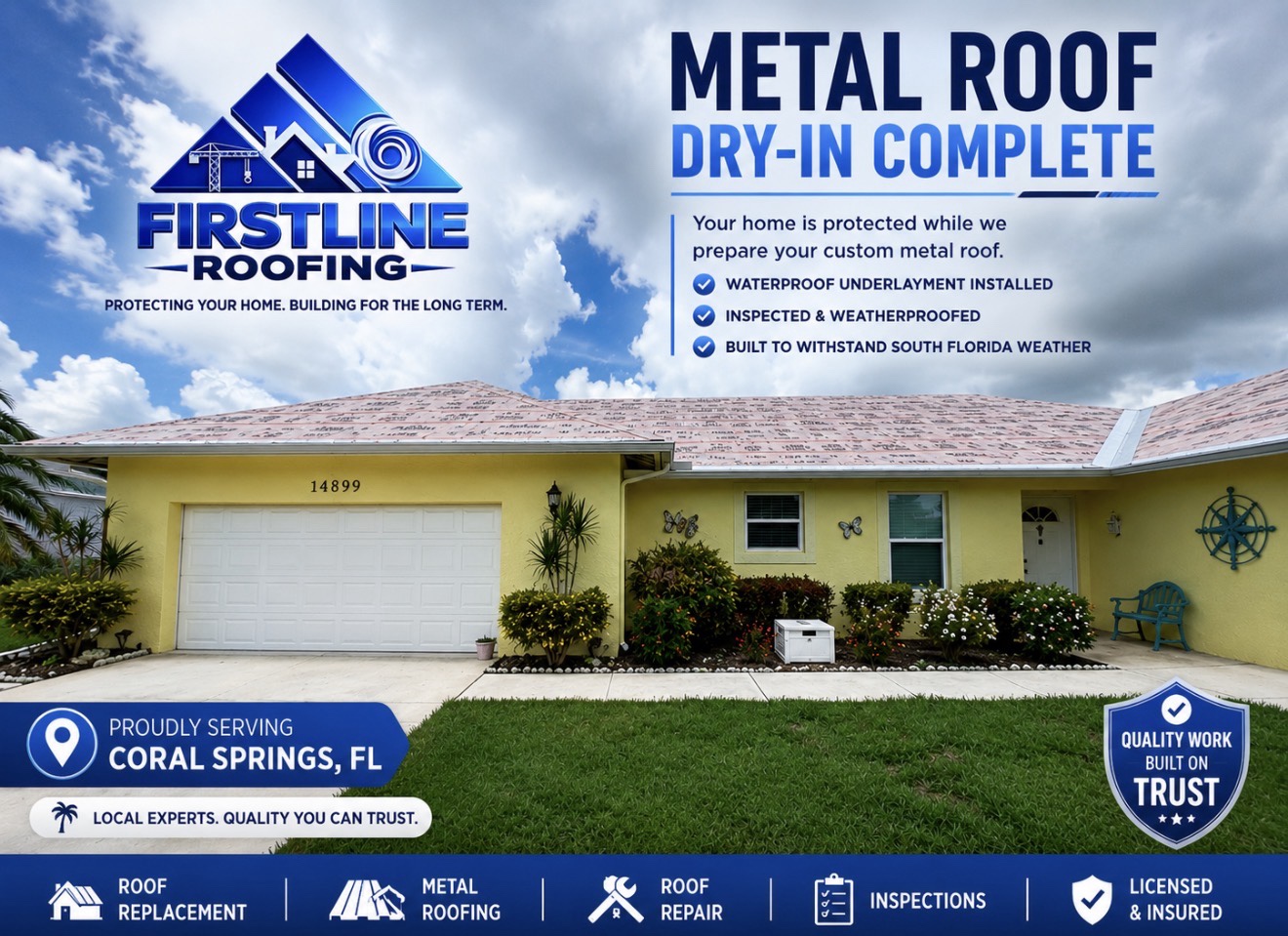
The home pictured above recently completed the dry-in stage of a new metal roofing system in Coral Springs, Florida. While the finished metal roof has not yet been installed, the structure is already protected by a high-performance waterproof underlayment designed to shield the home from South Florida’s unpredictable weather.
What Is a Metal Roof Dry-In?
A dry-in occurs after the existing roofing materials have been removed and the roof deck has been inspected and prepared.
During this stage, roofing contractors install the waterproofing components that protect the structure before the final metal panels are installed.
A typical metal roof dry-in may include:
Self-adhered waterproof underlayment
Drip edge metal
Valley protection
Flashing preparation
Roof penetration waterproofing
Temporary weatherproofing measures
This process creates a watertight barrier that protects the home while custom metal roofing materials are being fabricated and delivered.
Frequently Asked Question: Is My Home Protected During a Metal Roof Dry-In?
Yes.
When installed correctly, a roofing dry-in provides substantial weather protection for the home. The waterproof underlayment system is specifically designed to prevent water intrusion during construction.
In many cases, the dry-in system provides better protection than the aging roof that was removed.
However, homeowners should understand that the roofing system is not complete until the final metal panels, trim, flashing, and accessories have been installed and inspected.
Why Is There a Delay Between Dry-In and Final Metal Roof Installation?
Unlike asphalt shingles, many metal roofing systems are custom-manufactured to fit the exact dimensions of the home.
After measurements are confirmed, the panels are fabricated and prepared for installation.
Factors that can affect scheduling include:
Material production timelines
Custom color selections
Permit inspections
Weather conditions
Delivery schedules
This is completely normal and one reason why proper dry-in procedures are so important.
Benefits of Metal Roofing in Coral Springs
Metal roofing continues to gain popularity throughout Coral Springs because of its durability, efficiency, and long-term value.
Superior Longevity
A professionally installed metal roof can provide decades of protection and often outlast traditional roofing systems.
Excellent Wind Resistance
Many metal roofing systems are engineered to withstand South Florida’s challenging weather conditions, including high winds and severe storms.
Improved Energy Efficiency
Reflective metal roofing materials can help reduce heat absorption and lower cooling costs during South Florida’s hot summers.
Low Maintenance Requirements
Metal roofs generally require less maintenance than many conventional roofing materials while providing exceptional long-term performance.
Homeowners considering a metal roofing system can learn more about our professional metal roofing services here:
Once the dry-in stage has been inspected and approved, the final installation process begins.
This typically includes:
Starter trim installation
Eave and rake metal
Valley details
Standing seam or exposed-fastener metal panels
Ridge components
Pipe flashings
Final waterproofing details
These components work together to create a complete roofing system designed for long-term performance.
Why Flashing and Waterproofing Matter More Than Most Homeowners Realize
Many roofing leaks are not caused by the roofing material itself.
Most failures occur around:
Roof penetrations
Valleys
Roof-to-wall transitions
Skylights
Chimneys
Mechanical equipment
That is why experienced roofing contractors place significant emphasis on waterproofing details during the dry-in phase.
The quality of the dry-in often determines the long-term success of the entire roofing system.
Choosing the Right Metal Roofing Contractor in Coral Springs
Not every roofing company specializes in metal roofing installation.
When selecting a contractor, homeowners should look for:
Proper state licensing
Insurance coverage
Local experience
Metal roofing expertise
Knowledge of Florida building codes
Experience with South Florida weather conditions
You can also review roofing standards through the Florida Roofing and Sheet Metal Contractors Association and the Florida Building Code Information System.
Schedule a Roof Inspection in Coral Springs
Whether your roof is nearing the end of its service life or you are considering upgrading to a metal roofing system, a professional inspection can help identify concerns before they become costly repairs.
FirstLine Roofing provides metal roofing, tile roofing, roof repairs, inspections, and roof replacement services throughout Coral Springs and the surrounding areas.
Visit our Coral Springs roofing page to learn more about our services and schedule an inspection today.
If you’ve driven through communities like Heron Bay, Parkland Isles, MiraLago, Watercrest, or Cypress Head, you’ve likely noticed that concrete tile roofs dominate the skyline. Homeowners often ask:
Why do so many homes in Parkland have concrete tile roofs, and are they still the best option?
The answer is simple: concrete tile roofing remains one of the most durable, attractive, and weather-resistant roofing systems available for South Florida homes. While no roofing system lasts forever, tile roofs continue to be one of the best long-term investments for homeowners throughout Parkland and Broward County.
Why Concrete Tile Roofs Became the Standard in Parkland
Many of Parkland’s neighborhoods were developed during a period when builders emphasized durability, curb appeal, and long-term property value. Concrete tile roofing checked all of those boxes.
Unlike traditional asphalt shingles, concrete tile provides a distinctive architectural appearance that complements the Mediterranean, transitional, and luxury home styles found throughout Parkland. Homeowners associations also favor tile roofs because they create a consistent, upscale appearance throughout the community.
Many tile roofs installed in Parkland during the late 1990s and early 2000s are still performing well today, although many are reaching an age where regular inspections become increasingly important.
Built for South Florida Weather
One of the biggest reasons concrete tile remains popular is its ability to handle South Florida’s challenging climate.
Parkland homeowners face:
Intense UV exposure
Heavy seasonal rainfall
High humidity
Tropical storms
Hurricane-force winds
Properly installed tile roofing systems are designed to withstand these conditions while protecting the structure beneath. Modern installation methods and attachment systems have significantly improved the performance of tile roofs during severe weather events.
While no roof is completely storm-proof, concrete tile remains one of the strongest roofing options available for residential properties.
Exceptional Longevity
Many homeowners are surprised to learn that the concrete tiles themselves often outlast the waterproofing system beneath them.
The tiles can remain serviceable for decades, while components such as underlayment, flashings, and sealants eventually wear out due to age and exposure.
This is why many older tile roofs require reroofing even when the tiles still appear to be in excellent condition.
Regular inspections help identify these aging components before leaks develop inside the home.
Energy Efficiency Benefits
Concrete tile roofing also offers energy-saving advantages.
The profile of the tile creates an air gap between the roofing material and roof deck. This space helps reduce heat transfer into the attic, which can contribute to lower cooling demands during South Florida’s long summer months.
Combined with proper attic ventilation, tile roofing can help improve overall energy efficiency and homeowner comfort.
Common Issues Found on Aging Tile Roofs
Although tile roofs are extremely durable, they still require periodic maintenance.
Some of the most common issues we encounter during inspections in Parkland include:
Cracked tiles
Slipped tiles
Valley deterioration
Worn underlayment
Deteriorated flashing
Mortar cracking
Storm damage
Previous repair deficiencies
In many cases, roof leaks are not caused by the tile field itself but by aging waterproofing components around penetrations, valleys, and roof transitions.
This is why professional inspections are so valuable.
When Should a Tile Roof Be Inspected?
Many homeowners wait until a leak appears before calling a roofing contractor. Unfortunately, by that point, interior damage may have already occurred.
A professional roof inspection is recommended:
After major storms
Before hurricane season
When purchasing a home
Before listing a home for sale
If the roof is over 15 years old
If stains appear on ceilings or walls
Before insurance renewals
Routine inspections can identify minor issues before they become costly repairs.
Is Repair or Replacement the Better Option?
This is one of the most common questions homeowners ask.
The answer depends on several factors:
Roof age
Condition of the underlayment
Extent of damage
Availability of matching tile
Number of previous repairs
Overall roof performance
Many tile roofs can be successfully repaired and maintained for years. However, when the waterproofing system reaches the end of its service life, a full replacement often becomes the more practical long-term solution.
A qualified roofing contractor should evaluate the entire roofing system before making recommendations.
Why Local Roofing Experience Matters
Parkland communities feature a wide variety of tile profiles, HOA requirements, and architectural styles. Understanding these local conditions can make a significant difference when performing repairs or planning a roof replacement.
A contractor familiar with Parkland neighborhoods is often better equipped to identify common issues, locate matching materials, and navigate community requirements.
Whether your home is located in Heron Bay, Parkland Isles, MiraLago, Watercrest, Cypress Head, or another Parkland community, regular roof maintenance remains one of the best ways to protect your investment.
Protect Your Parkland Home with a Professional Roof Inspection
Concrete tile roofs have earned their reputation as one of the premier roofing systems in South Florida. Their durability, longevity, energy efficiency, and curb appeal make them an excellent choice for homeowners throughout Parkland.
However, even the best roofing systems require periodic inspections and maintenance.
If your tile roof is aging, has experienced recent storm activity, or simply hasn’t been inspected in several years, now is an excellent time to schedule a professional evaluation and ensure your home remains protected for years to come.
A roof replacement is one of the most important investments a homeowner can make. It protects your family, your belongings, and the structure of your home from South Florida’s intense sun, heavy rain, tropical storms, and hurricane threats.
Unfortunately, replacing a roof is rarely something homeowners look forward to.
At FIRSTLINE Roofing, we wanted to change that.
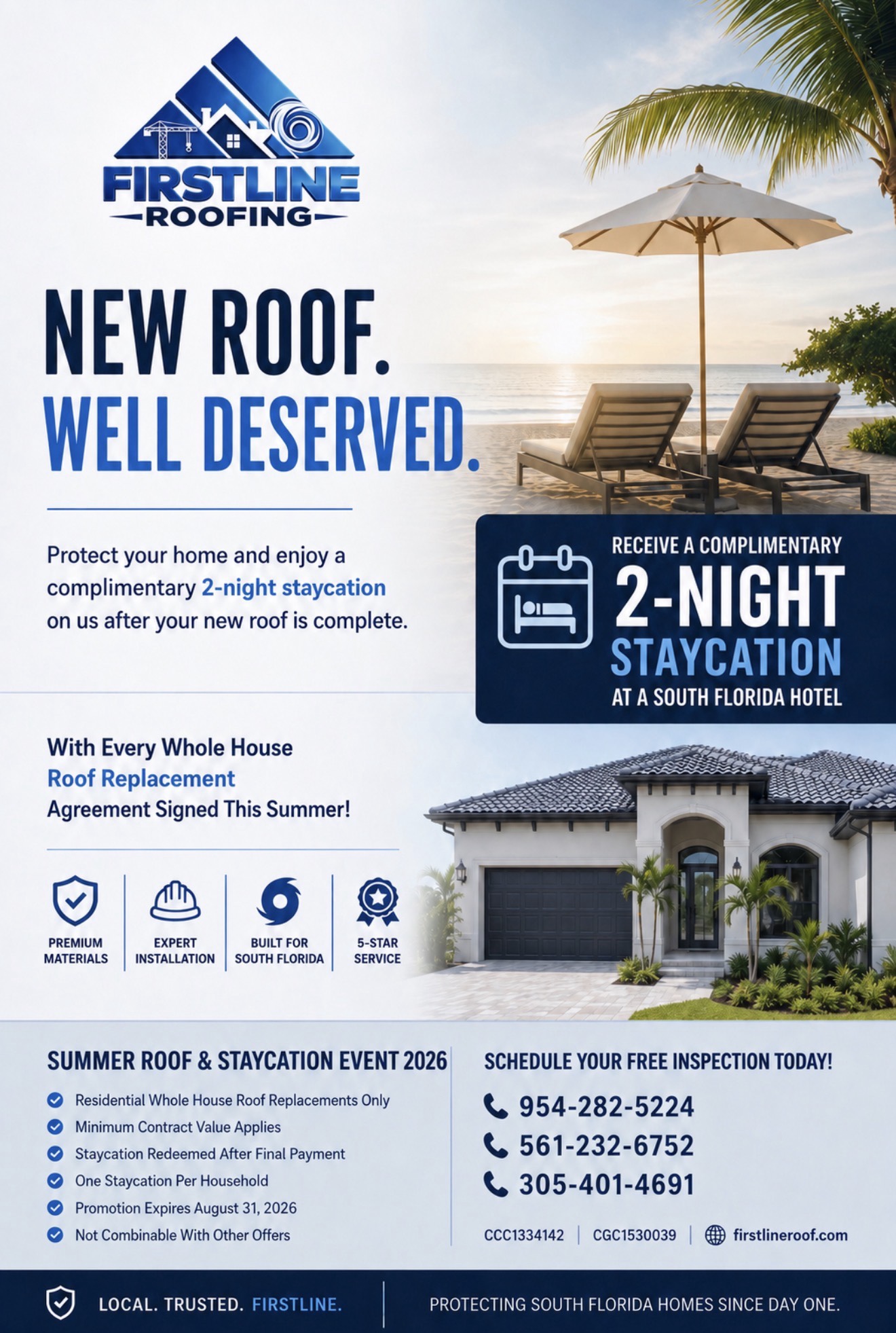
That’s why we’re introducing our Summer Roof & Staycation Event, giving qualifying homeowners a complimentary 2-night South Florida hotel stay when they complete a whole-house roof replacement this summer.
It’s our way of saying thank you while helping homeowners prepare for the busiest storm season of the year.
Why Summer Is One of the Best Times to Replace Your Roof
Many homeowners wait until they see an active leak before considering a roof replacement. The problem is that by the time water enters the home, damage may already exist beneath the roofing system.
Common issues we discover during inspections include:
Deteriorated underlayment
Cracked or slipped roof tiles
Worn shingles
Corroded flashings
Ponding water on low-slope sections
Storm-related damage that was previously unnoticed
Scheduling a roof replacement before major issues develop can help prevent costly interior repairs and emergency situations during hurricane season.
Learn more about our roof replacement services here:
South Florida homeowners understand how quickly weather conditions can change.
Strong winds, wind-driven rain, and extended storm activity place significant stress on aging roofing systems. Replacing an older roof before it fails can provide:
Improved wind resistance
Better waterproofing protection
Increased energy efficiency
Enhanced curb appeal
Greater peace of mind during storm season
According to the Federal Emergency Management Agency, strengthening your home’s exterior systems is one of the most effective ways to reduce storm-related property damage.
For additional hurricane preparedness information, visit:
FEMA Hurricane Preparedness Guide
A Different Kind of Roofing Promotion
Many roofing promotions focus exclusively on discounts.
While discounts can be helpful, we wanted to create something that felt more meaningful.
The reality is that a roof replacement is a major project. Homeowners spend time researching contractors, reviewing proposals, selecting materials, and preparing their homes.
Our Summer Roof & Staycation Event allows homeowners to enjoy a well-earned getaway after completing their roofing project.
It’s simple:
Qualifying Homeowners Receive:
Complimentary 2-night South Florida hotel stay
Residential whole-house roof replacement projects only
One staycation per household
Stay redeemed after project completion and final payment
Promotion available for a limited time
Why Homeowners Choose FIRSTLINE Roofing
When selecting a roofing contractor, experience and quality matter.
FIRSTLINE Roofing provides:
Residential roof replacements
Tile roofing systems
Metal roofing systems
Shingle roofing systems
Flat and low-slope roofing
Roof inspections
Storm damage evaluations
Our team focuses on quality workmanship, clear communication, and roofing systems designed specifically for South Florida’s climate.
Whether you’re replacing an aging tile roof, upgrading to metal roofing, or installing a new shingle system, our goal remains the same:
Protect your home with a roofing system built to last.
You can also review roofing best practices from the National Roofing Contractors Association at:
National Roofing Contractors Association Resources
Schedule Your Free Roof Inspection
If you’ve been considering a roof replacement, summer may be the perfect time to move forward.
You’ll not only improve your home’s protection before peak storm season, but you’ll also receive a complimentary South Florida staycation as part of our Summer Roof & Staycation Event.
Promotion applies to qualifying residential whole-house roof replacement projects. Terms and conditions apply. Contact FIRSTLINE Roofing for complete details.
Short Answer: A properly installed and maintained concrete tile roof in Parkland can last 30 to 50+ years, but the roofing system underneath the tile often requires attention long before the tile itself reaches the end of its service life.
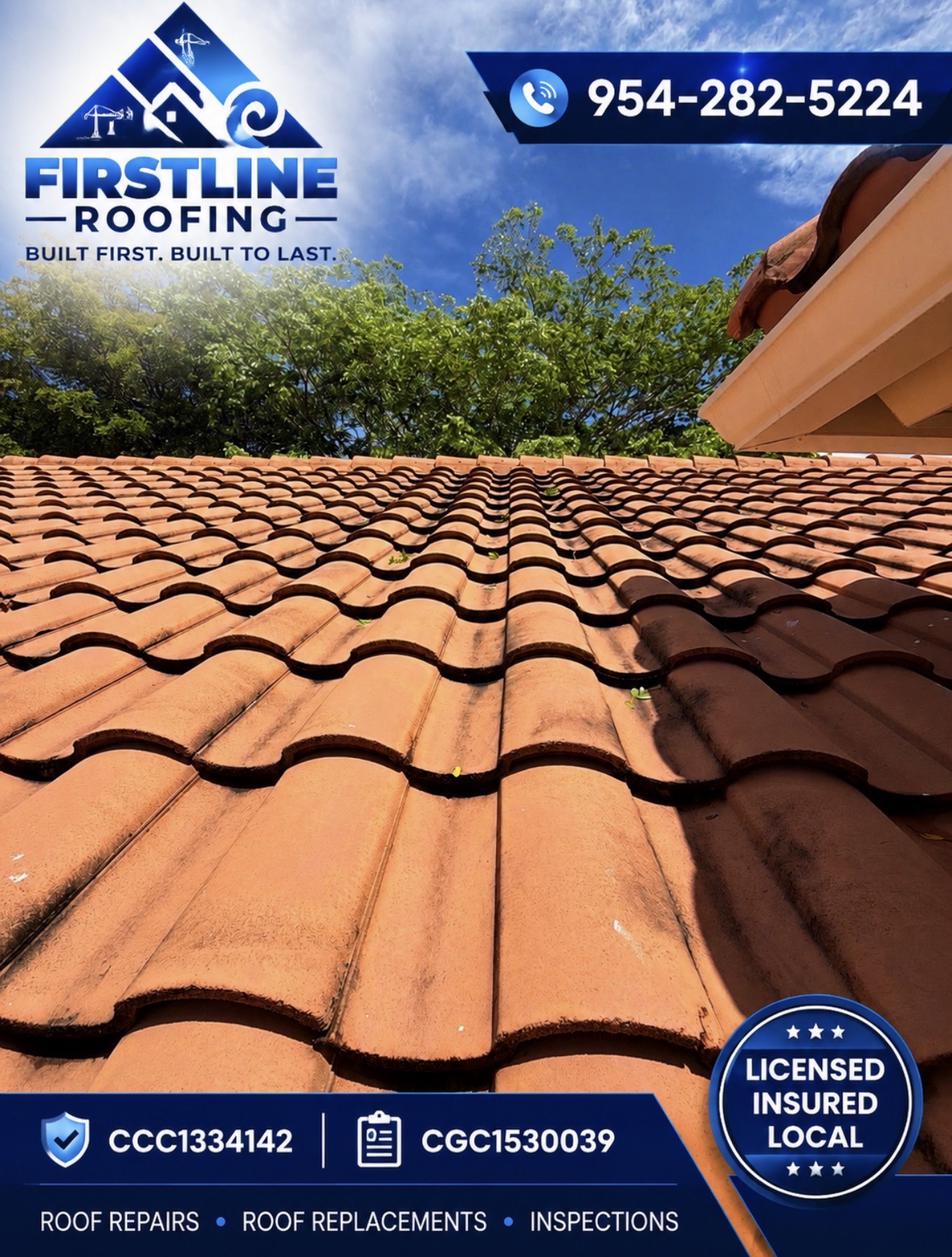
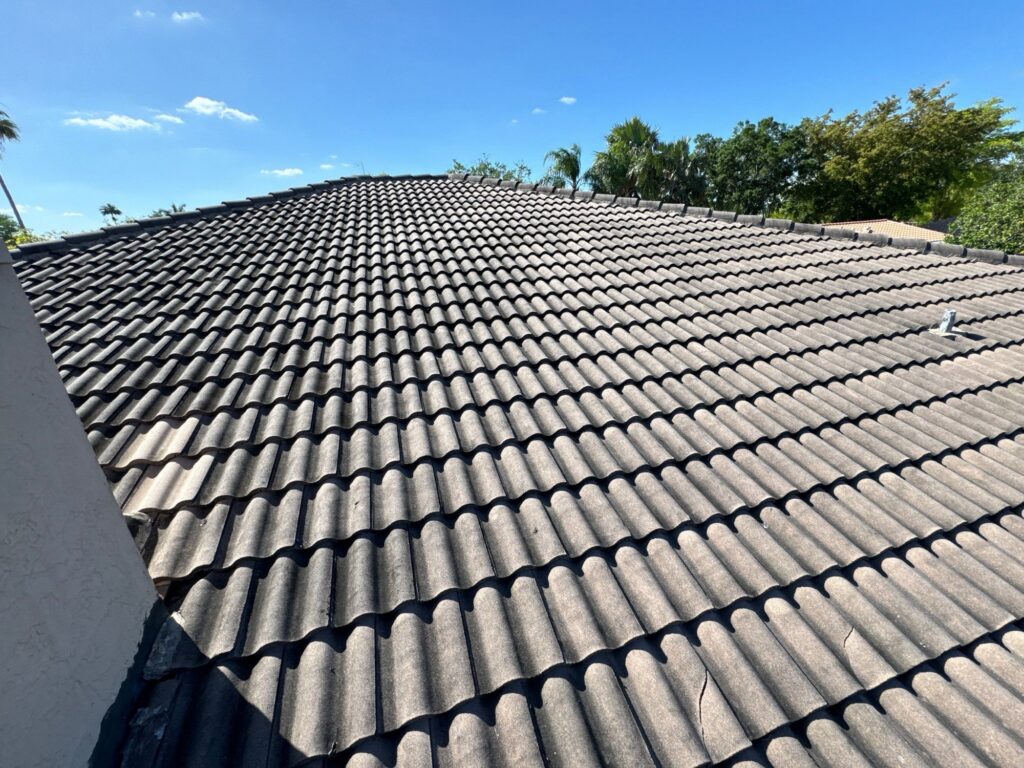
Looking at the roof above, this is a great example of a concrete tile roof that appears to be performing exactly as intended. The tile field remains uniform, the courses are straight, and there are no obvious signs of widespread displacement or failure. However, what many homeowners don’t realize is that the condition of the tile only tells part of the story.
What Actually Fails First on a Tile Roof?
In South Florida, the most common issues are not the concrete tiles themselves.
Instead, we typically see problems with:
Underlayment deterioration
Flashing failures
Valley wear
Pipe penetrations
Roof-to-wall transitions
Mechanical damage from foot traffic
This is why many Parkland homeowners are surprised when a roof looks great from the ground but still develops leaks.
How Often Should a Tile Roof Be Inspected?
For homes in Parkland, Heron Bay, Parkland Isles, MiraLago, Watercrest, and neighboring communities, we recommend:
Annual roof inspections
Additional inspections after major storms
Immediate inspections if water staining appears inside the home
A professional inspection can identify small issues before they become costly interior repairs.
You can learn more about our professional roof evaluation services on our Parkland roofing page:
What Are the Warning Signs That Your Tile Roof Needs Attention?
Watch for:
1. Slipped or Broken Tiles
Even a single displaced tile can allow water intrusion during heavy rain events.
2. Dark Ceiling Stains
Water often travels before becoming visible inside the home.
3. Cracked Mortar
Older ridge systems frequently develop cracks that allow moisture penetration.
4. Rusted Flashings
Metal components generally age faster than the tile system itself.
5. Roof Age Over 20 Years
Even if no leaks are present, preventive inspections become increasingly important as the roof ages.
Is It Better to Repair or Replace a Tile Roof?
The answer depends on:
Age of the roof
Condition of the underlayment
Availability of matching tile
Number and frequency of repairs
In many cases, targeted repairs can extend the service life of a tile roof significantly. In other situations, repeated leak issues indicate that a reroof may be the more economical long-term solution.
Our team frequently performs tile roof repairs throughout Parkland before recommending full replacement.
Concrete tile remains one of the most popular roofing systems in South Florida because it offers:
Excellent wind resistance
Long service life
Strong curb appeal
Energy efficiency benefits
Compatibility with HOA requirements
The Florida climate can be demanding, but tile roofing continues to be one of the best-performing residential roofing systems available.
For additional information about maintaining tile roofs in Florida’s climate, homeowners can review guidance from the:
External Link: Florida Roofing and Sheet Metal Contractors Association
and
External Link: Tile Roofing Industry Alliance
The Bottom Line
A concrete tile roof can last decades in Parkland, but longevity depends on much more than the tile itself. Regular inspections, prompt repairs, and proper maintenance of flashings and underlayment are essential to protecting your home.
If your roof is approaching 20 years old, has experienced recent storm activity, or you’re noticing signs of wear, a professional inspection can help identify issues before they become expensive repairs.