
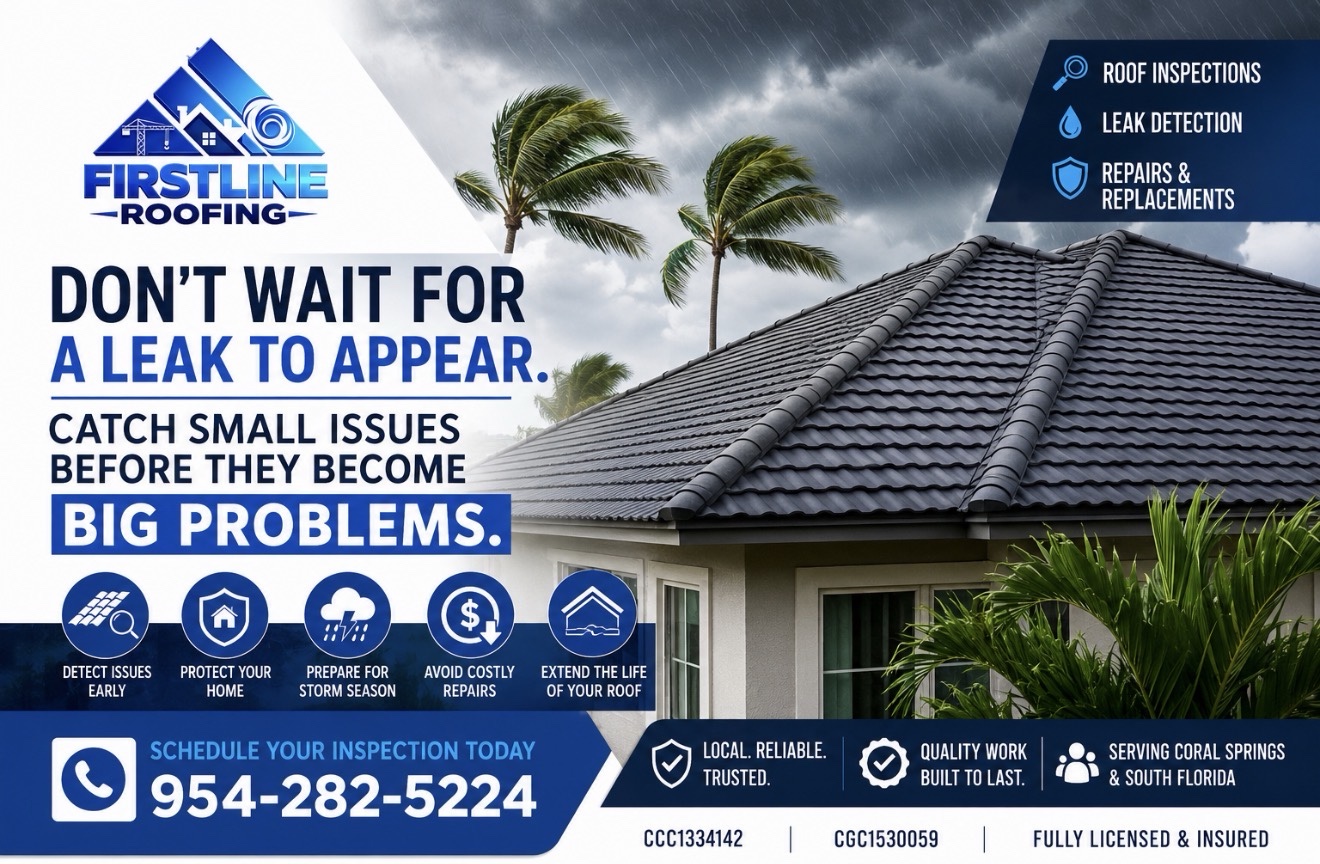
South Florida’s rainy season puts every roofing system to the test. Heavy afternoon thunderstorms, prolonged humidity, intense UV exposure, and hurricane-season winds can accelerate wear on even well-built roofs. Many homeowners assume they’ll know when their roof needs attention because they’ll see water dripping from the ceiling. Unfortunately, by the time a leak becomes visible inside the home, damage has often been developing for weeks or even months.
At FirstLine Roofing, we inspect roofs throughout Coral Springs and Broward County every day. The good news is that most roofs provide warning signs long before major water intrusion occurs. Knowing what to look for can help you schedule repairs early, extend the life of your roof, and avoid much more expensive restoration work.
1. Missing, Cracked, or Displaced Roofing Materials
Whether you have concrete tile, asphalt shingles, or a metal roof, damaged roofing materials are one of the earliest signs your roof may be vulnerable.
Look for:
- Missing shingles or tiles
- Cracked or broken roof tiles
- Lifted shingles after storms
- Loose ridge caps
- Bent or damaged metal panels
Even a single damaged area can allow wind-driven rain to reach the underlayment or roof deck. During South Florida’s rainy season, these small openings often become larger with every storm.
If you notice any visible damage from the ground, it’s a good idea to schedule a professional roof inspection rather than waiting for a leak to develop.
Related Service: Roof Repair
2. Water Stains on Ceilings or Walls
Not every roof leak produces active dripping water.
One of the earliest indicators is discoloration on ceilings or upper walls. You may notice:
- Yellow or brown stains
- Bubbling paint
- Peeling drywall
- Damp spots after heavy rain
These stains often indicate that water has already traveled through insulation or framing before becoming visible inside the home.
The source of the leak is frequently several feet away from where the stain appears, making professional leak detection especially important.
Related Service: Roof Leak Detection
3. Flashing Around Roof Penetrations Is Beginning to Fail
Some of the most common roof leaks occur around penetrations rather than in the field of the roof itself.
These areas include:
- Plumbing vent pipes
- Chimneys
- Skylights
- Roof-to-wall transitions
- HVAC equipment
- Solar mounting points
The metal flashing and sealants protecting these areas naturally expand and contract with temperature changes. Over time, they can loosen, crack, or deteriorate.
During heavy summer storms, these vulnerable locations are often the first places water enters the roofing system.
4. Gutters Are Overflowing or Filling with Roofing Debris
Your gutter system can tell you a great deal about the condition of your roof.
Watch for:
- Excessive granules from shingles
- Broken tile fragments
- Pieces of sealant
- Standing water
- Gutters pulling away from the fascia
Overflowing gutters don’t just damage landscaping—they can force water back beneath roofing materials and increase the likelihood of fascia deterioration and roof leaks.
Keeping gutters clean during the rainy season is one of the simplest forms of preventative maintenance.
5. Your Roof Is More Than 15–20 Years Old
Age alone doesn’t mean a roof requires replacement, but older roofing systems deserve closer attention.
As roofs age, materials naturally become less flexible and more susceptible to:
- UV deterioration
- Thermal movement
- Wind damage
- Moisture intrusion
- Sealant failure
Many roofs continue performing well beyond twenty years when properly maintained, but annual inspections become increasingly important as roofing systems age.
Routine inspections often identify small repairs that can significantly extend the life of the roof.
Why Summer Is the Best Time for a Roof Inspection
Many homeowners wait until hurricane season is fully underway before thinking about their roof.
Unfortunately, that’s also when roofing contractors are busiest responding to emergency leaks.
Scheduling an inspection during the early rainy season provides several advantages:
- Identify small problems before they become emergencies.
- Make repairs before severe weather arrives.
- Extend the lifespan of your roofing system.
- Reduce the likelihood of interior water damage.
- Gain peace of mind before hurricane season peaks.
According to the National Weather Service, South Florida experiences frequent heavy rainfall and thunderstorms throughout the summer months, making proactive roof maintenance especially important.
Why Choose FirstLine Roofing?
FirstLine Roofing provides residential and commercial roofing services throughout Coral Springs, Parkland, Coconut Creek, Boca Raton, Deerfield Beach, and the surrounding South Florida communities.
Our services include:
- Roof inspections
- Roof repairs
- Leak detection
- Roof replacements
- Tile roofing
- Shingle roofing
- Metal roofing
- Flat roofing systems
- Storm damage assessments
Our goal is simple: identify problems early, provide honest recommendations, and deliver quality workmanship that protects your home for years to come.
Schedule Your Roof Inspection Today
If your roof has been through another South Florida rainy season without an inspection, now is the ideal time to have it evaluated.
Whether you’ve noticed a small stain on the ceiling, suspect storm damage, or simply want peace of mind before hurricane season intensifies, the team at FirstLine Roofing is here to help.
A professional inspection today could prevent a much larger repair tomorrow.
Internal Links
- https://firstlineroof.com/roof-repair/
- https://firstlineroof.com/roof-inspection/
- https://firstlineroof.com/roof-leak-detection/
- https://firstlineroof.com/contact/
External References
- National Weather Service: https://www.weather.gov/
- Florida Division of Emergency Management: https://www.floridadisaster.org/