
If you live in South Florida, you probably feel like the rain hasn’t stopped lately.
Between afternoon thunderstorms, prolonged periods of rainfall, and unpredictable weather patterns, homeowners throughout Coral Springs, Parkland, Tamarac, and surrounding Broward County communities are dealing with an increasingly frustrating situation: discovering a roof leak when the weather doesn’t seem to provide an opportunity to repair it.
You notice a ceiling stain. Water begins dripping around a light fixture. Maybe a previous roof repair starts leaking again.
Naturally, you want the problem fixed immediately.
But that raises an important question:
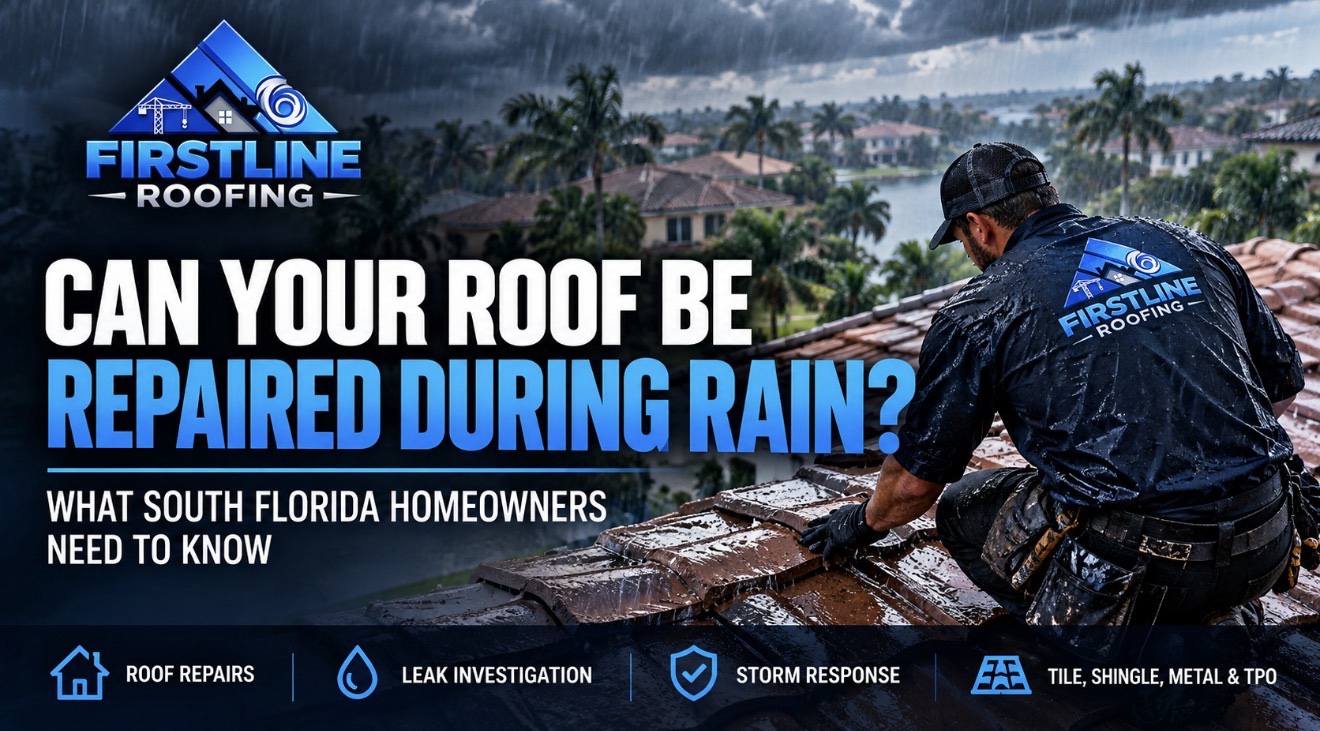
Can a roofing contractor actually repair your roof while it’s raining?
The answer depends on the roofing system, the type of repair, weather conditions, safety considerations, and the materials required.
At FirstLine Roofing, we believe understanding the difference between temporary emergency protection and a properly completed permanent repair can help homeowners make better decisions and avoid additional damage.
Whether you own a home in Coral Springs, Parkland, or Tamarac, the priority should always be identifying the source of water intrusion, protecting the property, and completing repairs under appropriate conditions.
Why Extended Rainfall Makes Roof Repairs More Difficult
Roofing involves much more than replacing a broken tile or applying sealant to a suspicious area.
A properly performed roof repair may require removing existing roofing materials, inspecting the underlying assembly, preparing surfaces, replacing damaged components, and restoring the system’s ability to manage water.
Many roofing products require specific installation conditions.
Adhesives, sealants, underlayments, coatings, and other materials may have manufacturer requirements concerning moisture, temperature, surface preparation, and curing.
Installing materials under unsuitable conditions can compromise their intended performance.
Wet roofing surfaces also create significant safety hazards, particularly on steep slopes and concrete or clay tile roofs.
The urgency of a roof leak does not eliminate the need for proper installation procedures.
Sometimes the appropriate immediate response is temporary protection followed by a permanent repair when conditions permit.
Can Roofers Perform Repairs During Light Rain?
Certain inspections and emergency protective measures may be possible during limited wet-weather conditions.
However, that doesn’t mean every roofing repair should proceed while rain is falling.
A professional roofing contractor must evaluate several factors, including:
- Roof slope and accessibility
- Type and condition of roofing material
- Wind and lightning activity
- Surface moisture
- Manufacturer installation requirements
- Existing structural or decking damage
- Whether opening the roofing assembly could expose additional areas to water
For example, removing multiple rows of roof tiles during unpredictable thunderstorms could expose the underlying assembly to additional moisture.
Similarly, applying products that require dry substrates to wet surfaces may result in an unreliable repair.
The goal should be to address the problem without creating a larger one.
Emergency Roof Protection vs. Permanent Roof Repairs
One of the most important distinctions homeowners should understand is the difference between temporary protection and permanent roofing repairs.
Temporary Emergency Roof Protection
When active water intrusion occurs during prolonged rainfall, the immediate objective may be reducing additional water entering the structure.
Depending on conditions, temporary protective measures may include appropriate coverings, securing affected components, or other short-term weatherproofing methods.
These measures must be evaluated for safety and suitability.
Temporary protection is not a substitute for identifying and correcting the underlying roofing deficiency.
Permanent Roof Repairs
Permanent repairs should address the actual source of failure.
Depending on the roofing system, this may require removing surrounding materials, inspecting the underlayment and flashing, correcting damaged components, and rebuilding the affected area.
Homeowners experiencing roof leaks can learn more about FirstLine Roofing’s roof repair services.
Why Tile Roof Repairs Can Be Challenging During Rain
Concrete and clay tile roofs are common throughout South Florida, particularly in communities such as Heron Bay, MiraLago, Watercrest, Parkland Isles, and numerous neighborhoods throughout Coral Springs and Tamarac.
One misconception homeowners sometimes have is that the visible roof tile is the entire waterproofing system.
It isn’t.
A tile roof is an assembly consisting of multiple components, including the roof covering, underlayment, flashing, penetrations, valleys, and attachment systems.
When water intrusion originates beneath the tile covering, a proper repair may require carefully removing surrounding tiles to access the affected area.
During ongoing rainfall, opening that assembly can expose additional components to moisture.
This is particularly important when repairs involve underlayment transitions or flashing details.
Simply replacing a cracked tile may not correct the actual source of water intrusion.
Learn more about tile roofing systems and services.
What About Asphalt Shingle Roof Repairs?
Asphalt shingle roofs present different challenges.
Localized repairs may involve replacing damaged shingles, correcting flashing deficiencies, repairing roof penetrations, or addressing isolated areas of deterioration.
However, wet conditions can interfere with safe access and appropriate surface preparation.
Some shingle installation details also depend on manufacturer-specified sealing and fastening methods.
A contractor should determine whether the repair can be performed correctly under existing weather conditions rather than assuming that all roofing materials can be installed in the same manner.
Flat and Low-Slope Roofing Systems Require Special Attention
Commercial buildings and some residential properties throughout South Florida use low-slope roofing systems.
These may include TPO, PVC, modified bitumen, and other approved roof assemblies.
Repairs to these systems can involve specialized installation procedures.
Depending on the material, proper repairs may require clean and appropriately prepared surfaces, compatible adhesives, controlled welding conditions, or specific installation temperatures.
Standing water, saturated insulation, and moisture trapped within the roofing assembly may also require further evaluation.
A roof surface that appears dry does not necessarily mean the underlying materials are dry.
What Should You Do If Your Roof Is Actively Leaking?
Discovering an active roof leak during several consecutive days of rainfall can be stressful.
However, there are practical steps homeowners can take while arranging professional assistance.
Document the Damage
Photograph visible ceiling stains, dripping water, affected walls, and damaged finishes.
Documenting when the leak occurs and whether wind or rainfall intensity appears to influence it may help during the evaluation.
Protect Interior Belongings
When safe, relocate furniture, electronics, and personal belongings away from affected areas.
Avoid Electrical Hazards
Water intrusion near electrical fixtures, outlets, or equipment should be treated as a potential electrical hazard.
Avoid contact with affected electrical components and obtain assistance from a qualified professional.
Do Not Climb Onto a Wet Roof
Wet tile, shingles, and metal roofing surfaces can be extremely hazardous.
Homeowners should avoid attempting rooftop repairs during rainfall or thunderstorms.
Arrange Professional Evaluation
Even when permanent repairs cannot immediately proceed, contacting a roofing contractor allows the condition to be assessed and appropriate next steps to be planned.
Why Interior Water Damage Should Be Addressed Immediately
A roofing problem can quickly become an interior restoration problem.
Once water enters a structure, moisture can migrate into drywall, insulation, ceiling assemblies, framing, and other building materials.
Even after visible dripping stops, some materials may retain moisture.
The U.S. Environmental Protection Agency recommends drying wet materials promptly, generally within 24 to 48 hours where feasible, to help prevent mold growth.
This doesn’t mean every roof leak causes mold.
It means moisture conditions should be evaluated rather than ignored while waiting for exterior repairs.
Because FirstLine Construction Corp. operates in roofing, restoration, and general construction, our team understands how exterior water intrusion can affect the surrounding building assembly.
Why Some Roof Leaks Are Difficult to Diagnose
One of the challenges with intermittent roof leaks is that the location of interior damage doesn’t necessarily identify the exact point where water entered.
Water may travel along roof decking, framing, penetrations, or other building components before becoming visible.
For example, a ceiling stain near a wall intersection could originate from a flashing deficiency, roof penetration, valley, or another area farther upslope.
A proper inspection should distinguish between observed damage and the suspected source of intrusion.
If you’ve experienced this type of problem, our article about roof leaks after heavy rain in South Florida explains why some leaks occur without obvious exterior damage.
Should You Schedule a Roof Inspection While It’s Still Raining?
Absolutely. Contacting a roofing contractor does not mean someone must immediately climb onto an unsafe roof.
An initial evaluation may include reviewing interior damage, discussing when the leak occurs, inspecting accessible attic conditions, and examining photographs or other available information.
A complete exterior inspection can be performed when conditions permit.
The important distinction is between scheduling an evaluation and performing unsafe work during severe weather.
Waiting until the rainy season ends before reporting an active leak can unnecessarily delay the response.
Does Repeated Rain Mean Your Roof Needs Replacement?
Not necessarily.
An isolated flashing failure, damaged penetration, or localized roofing deficiency may be repairable when the surrounding roofing system remains serviceable.
Conversely, widespread deterioration, recurring failures, or compromised underlying components may justify evaluating a larger scope of work.
A roof should not be recommended for replacement simply because it developed a leak during an extended period of rainfall.
The appropriate recommendation depends on the roof’s actual condition, the cause of failure, and whether a durable repair is feasible.
For property owners considering a larger project, FirstLine provides roof replacement services throughout South Florida.
Why Local Roofing Experience Matters
Roofing systems in South Florida operate under demanding environmental conditions.
Intense UV exposure, high temperatures, humidity, heavy rainfall, and tropical weather all influence roofing performance.
Understanding these conditions is particularly important when evaluating repairs during extended periods of wet weather.
A roof in Coral Springs may have different materials, geometry, and drainage characteristics than a roof in Parkland or Tamarac, even though all three communities experience similar regional weather patterns.
FirstLine Roofing serves homeowners and commercial property owners throughout these communities.
For local roofing information, explore our Tamarac roofing services and Coral Springs roofing services.
The best roofing recommendation should always be based on the actual building and roofing system rather than a generic solution.
Frequently Asked Questions About Roof Repairs During Rain
Can a roofer stop a leak while it’s raining?
In some circumstances, temporary protective measures may be possible. However, safety conditions, roof accessibility, and the type of roofing system determine what work can reasonably be performed.
Can roofing sealant be applied to wet surfaces?
Certain specialty products are manufactured for specific wet-weather applications. Many other products require dry, properly prepared surfaces. Manufacturer requirements should always determine whether an application is appropriate.
Should I wait until the rain stops before calling a roofer?
No. Contacting a roofing contractor promptly allows the problem to be documented, evaluated, and scheduled appropriately.
Can repeated rainfall make an existing roof leak worse?
Yes. Continued water intrusion can increase moisture exposure and affect additional building materials. However, the extent of damage depends on the leak, construction, and duration of exposure.
Can a small roof leak cause interior damage?
Yes. Even localized water intrusion can affect insulation, drywall, framing, and finishes depending on how water travels through the structure.
Does a leaking roof automatically need replacement?
No. The decision should be based on the condition of the roofing system and whether a properly designed repair can provide a reasonable long-term solution.
Roof Repair Services in Coral Springs, Parkland, Tamarac, and South Florida
Extended periods of rainfall can make roofing problems more difficult to address, but rushing into an improperly performed repair isn’t the answer.
The appropriate approach is to identify the source, assess immediate risks, protect the property where feasible, and complete permanent repairs under suitable conditions.
FirstLine Roofing provides residential and commercial roofing services throughout Coral Springs, Parkland, Tamarac, Coconut Creek, Boca Raton, Deerfield Beach, and surrounding South Florida communities.
Our roofing capabilities include:
- Concrete and clay tile roofing
- Asphalt shingle roofing
- Metal roofing
- TPO and PVC roofing
- Modified bitumen roofing
- Roof coatings
- Roof inspections and leak investigations
- Residential and commercial roof repairs
- Complete roof replacements
Experiencing a roof leak during South Florida’s ongoing rainy weather?
Contact FirstLine Roofing to discuss your concerns and arrange a professional evaluation.
FirstLine Roofing
954-282-5224
Florida Certified Roofing Contractor: CCC1334142
Florida Certified General Contractor: CGC1530039
Serving Broward, Palm Beach, and Miami-Dade counties.
First in. Last out. Built by FirstLine.