
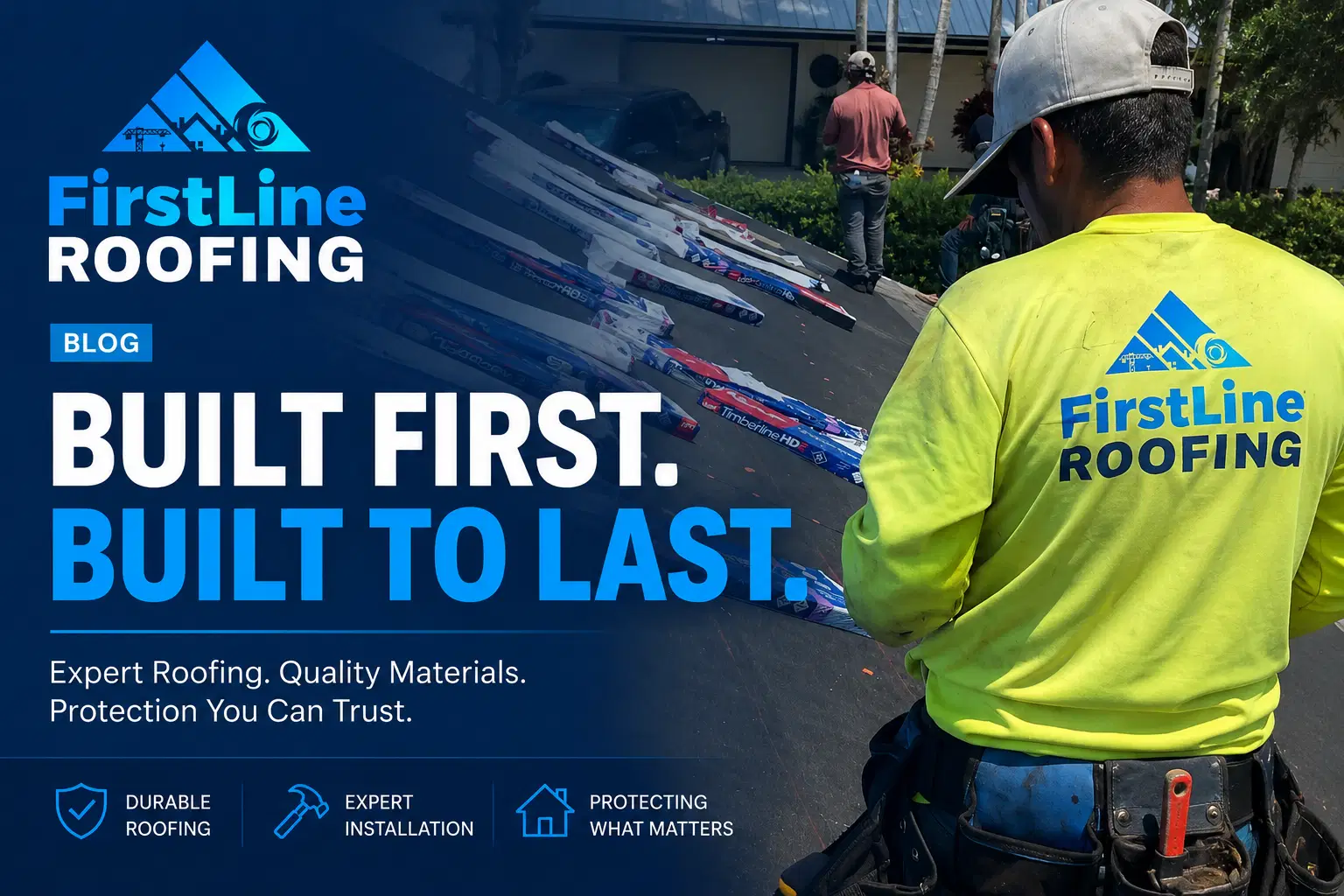

South Florida roofs endure some of the harshest environmental conditions in the country. In Coral Springs, roofing systems are exposed to relentless UV radiation, extreme attic temperatures, seasonal storms, humidity, and rapid thermal expansion cycles nearly year-round. Over time, these conditions accelerate wear on roofing materials and can significantly reduce the lifespan of even well-built systems when maintenance and installation quality are overlooked.
For homeowners in Coral Springs, understanding how heat and ultraviolet exposure affect a roof is critical for protecting both the property and long-term investment. Whether a home has asphalt shingles, concrete tile, flat roofing, or metal components, South Florida’s climate creates unique roofing challenges that require local expertise and proper long-term planning.
At FirstLine Roofing, we regularly inspect roofing systems throughout Coral Springs and surrounding Broward County communities, and one of the most common issues we see is premature aging caused by heat and UV deterioration.
Why South Florida Roofs Age Faster Than Roofs in Other States
Roofing manufacturers often publish estimated product lifespans based on average environmental conditions. However, Florida is far from average. When a shingle is "rated" for 30 years, that testing often occurs in environments that don't experience 95-degree humidity for six months straight.
In Coral Springs, roofs are exposed to:
- Intense year-round sunlight: The angle of the sun in South Florida provides a more direct "hit" of radiation than in northern states.
- High UV index levels: UV rays act as a slow-moving chemical catalyst, breaking down the bonds in roofing materials.
- Elevated attic temperatures: Without proper ventilation, attics can become ovens, baking the roof from the inside out.
- Rapid daily temperature fluctuations: A sudden afternoon downpour can drop roof temperatures by 50 degrees in minutes, causing massive structural stress.
Many homeowners are surprised to learn that a roof rated for 30 years in milder climates may realistically perform much differently in South Florida conditions. In many cases, an asphalt shingle roof in Broward County may only reach a functional lifespan of 15 to 20 years before the risk of failure becomes too high.
How UV Radiation Damages Roofing Materials
Ultraviolet (UV) radiation is one of the most destructive forces affecting roofing systems in Florida. It isn't just about "fading" colors; it is about the molecular breakdown of the materials that keep your home dry. Over time, UV exposure breaks down the chemical composition of roofing materials, a process known as photo-oxidation. This process slowly weakens the roof’s ability to resist water intrusion, wind uplift, and structural movement.
Asphalt Shingle Deterioration
For asphalt shingle roofs, UV exposure is the primary driver of aging. Asphalt is a petroleum-based product that relies on "volatiles" or oils to remain flexible. UV rays pull these oils to the surface where they evaporate, leaving the shingle brittle.
As this happens, you may notice:
- Granule loss: Those little rocks on your shingles aren't just for color; they are the "sunscreen" for the asphalt. Once they fall off, the asphalt is unprotected.
- Drying and brittleness: Brittle shingles cannot flex with the wind, making them prone to snapping during a storm.
- Curling and Cracking: As the shingles dry out, they begin to shrink and pull away from the roof deck.
This is one reason regular roof inspections are important in Coral Springs, particularly after years of sustained sun exposure.

The Impact on Flat and Low-Slope Systems
Flat roofs, often found on commercial buildings or home additions in Coral Springs, are particularly vulnerable. Because they lack the pitch to shed water quickly, the combination of standing water and intense UV creates a "magnifying glass" effect that can delaminate membranes like TPO or modified bitumen if they aren't high-quality or properly coated.
The Impact of Thermal Expansion and Heat Cycling
South Florida roofs experience significant thermal movement throughout the day. This is a physical challenge as much as a chemical one. As roofing materials heat up under direct sunlight, they expand. As temperatures cool during the evening and overnight hours: or during a heavy tropical thunderstorm: those materials contract. This constant expansion and contraction process is known as thermal cycling.
In many cases, leaks do not originate from the primary roofing material itself but rather from these stressed accessory components. When the roof expands and contracts, it puts immense pressure on:
- Fasteners: Nails and screws can "back out" or loosen over time.
- Sealants: Caulk and roof cements can crack and lose their bond.
- Flashings: The metal transitions around chimneys and walls can pull away, creating gaps.
In Florida, roofing systems are often exposed to temperatures exceeding 150 degrees on the roof surface during peak summer conditions. This makes the choice of high-quality underlayment and wind mitigation techniques essential for long-term survival.
Tile Roof Performance: The Underlayment Challenge
Concrete tile roofing remains one of the most popular roofing systems in Coral Springs due to its durability, appearance, and wind resistance. However, a common misconception is that because the tiles are "stone-like," they are invincible to the sun.
While the tile itself may have a long lifespan, the surrounding roofing components often deteriorate much sooner. In a tile system, the tiles are the "armor," but the underlayment is the "waterproof skin." Because tiles are heavy and dark, they absorb heat and trap it against the underlayment.

Common tile roof issues include:
- Underlayment deterioration: The felt or synthetic layers beneath the tile can "bake" and become brittle.
- Cracked mortar: The mortar used to set ridge tiles can crack due to thermal expansion.
- Failed flashing systems: Metal valleys and wall flashings are often the first places to leak.
Many homeowners mistakenly assume a tile roof does not require maintenance because the tile itself appears visually intact. In reality, the waterproofing layer beneath the tile is what ultimately protects the structure. If you live in an area like Parkland or Coral Springs with older tile roofs, roof repair services often focus on replacing these hidden layers.
Why Proper Attic Ventilation Matters
Attic ventilation plays a major role in roof performance and longevity. It is the "lungs" of your home. Poor attic ventilation can trap excessive heat inside the roofing system, dramatically increasing attic temperatures and accelerating material deterioration from below.
In Coral Springs homes, improperly ventilated attics can contribute to:
- Premature shingle aging: Heat trapped in the attic "cooks" the shingles from the bottom up.
- Increased cooling costs: Your AC has to work twice as hard to fight the heat radiating from the ceiling.
- Decking deterioration: Excessive heat can cause the wood sheathing (plywood) to warp or degrade.
Proper intake and exhaust ventilation help regulate attic temperatures and reduce heat buildup. When considering a roof replacement, we always evaluate whether the home needs updated ridge vents or off-ridge vents to meet modern standards.
Installation Quality and Warning Signs
Even the best roofing materials can fail prematurely when installation quality is poor. South Florida roofing contractors must adhere to strict building codes and permitting guidelines to ensure the system can handle the environment.

Homeowners should monitor for these warning signs:
- Granules in the Gutters: A sign that your shingles are losing their UV protection.
- Displaced or Loose Tiles: A sign that fasteners or mortar have failed.
- Interior Ceiling Stains: Even small spots can indicate a slow leak caused by failed flashings.
- Curling Shingle Edges: A classic sign of heat-related drying.
- Rusted Flashing: Indicates that the protective coating has worn away, leaving the metal vulnerable.
Preventative Maintenance: Extending the Lifespan
Routine roof maintenance is one of the most effective ways to extend roof lifespan in South Florida. We recommend an annual professional inspection to identify early deterioration before it becomes a major interior leak.
Keeping roof valleys clean of debris is also vital. In Coral Springs, leaves and pine needles can trap moisture against the roof, which, when combined with high heat, creates a breeding ground for rot and mold. Addressing minor repairs early is often far less expensive than waiting for a total system failure.
The Importance of Local Roofing Expertise
Roofing in Coral Springs is very different from roofing in other regions of the country. Local experience matters because roofing systems must be designed specifically for Florida’s environmental conditions: from hurricane-related considerations to specific UV-resistant coatings.
At FirstLine Roofing, our team works throughout Coral Springs and surrounding South Florida communities performing inspections, repairs, and reroofing projects designed specifically for the Florida sun. Whether you are dealing with a leak or planning for the future, we provide experienced expertise backed by real-world construction knowledge.
If you are concerned about how the South Florida sun is affecting your home, we are here to help with a professional evaluation.
Contact FirstLine Roofing today for a professional roof evaluation.