

Many South Florida homes feature a combination of tile roofing and low-slope roofing systems. While this design is common and effective when installed correctly, one area consistently demands extra attention from roofing professionals: the transition where a flat roof meets a tile roof.
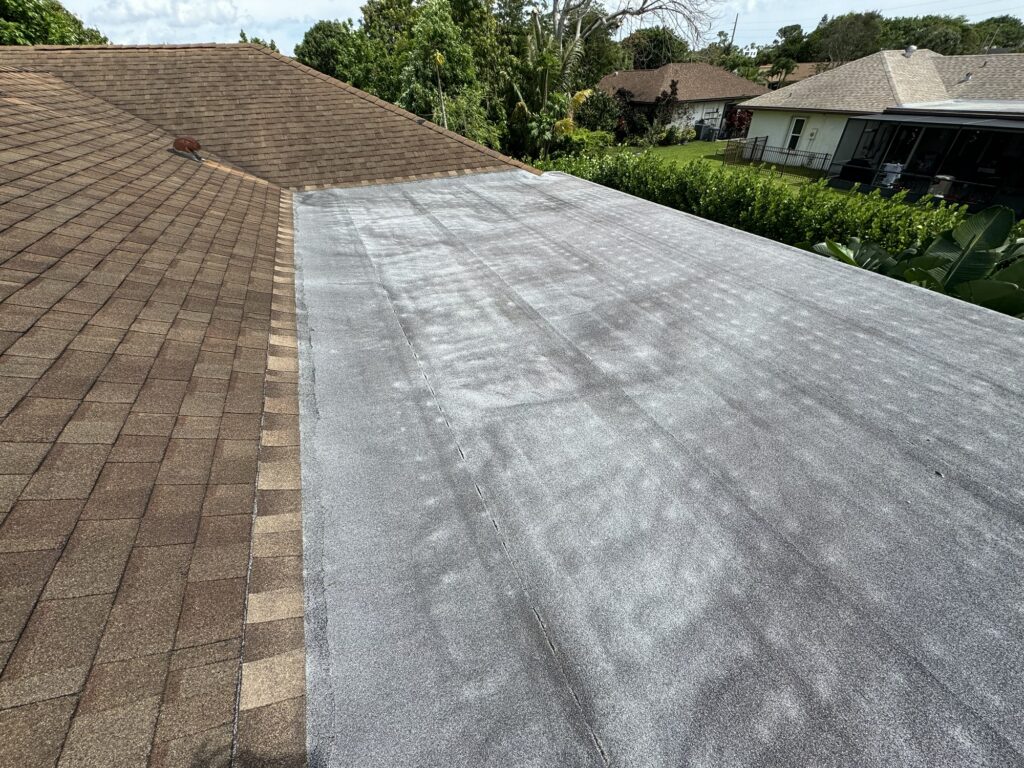
The roof shown above is a perfect example of a roofing configuration we frequently inspect throughout Parkland, Coral Springs, Boca Raton, Deerfield Beach, Coconut Creek, Pompano Beach, Fort Lauderdale, and surrounding South Florida communities.
At first glance, the roof appears relatively typical. A granulated modified bitumen flat roof section transitions into a concrete tile roof system above. While no active leaks or obvious failures can be confirmed from the image alone, this transition area is often one of the most vulnerable sections of the entire roofing system.
Why Flat-to-Tile Roof Transitions Require Special Attention
Every roofing material manages water differently.
Concrete tile roofs are designed as water-shedding systems. Rainwater flows over the tile surface while the underlayment beneath provides the primary waterproof barrier.
Flat roofing systems, such as modified bitumen, rely on sealed membranes, flashing details, and proper drainage to remain watertight.
When these two roofing systems meet, proper flashing and waterproofing become critical. If transition details are improperly installed, damaged, or deteriorated over time, water can find its way beneath the roofing materials and into the structure.
Homeowners often assume a leak is coming from damaged tiles when the actual source is a failed transition detail hidden beneath the roofing system.
What We Can Observe from This Roof
Based solely on visible conditions in the image:
- The lower roof section appears to be a modified bitumen roofing system.
- The upper roof section is a concrete tile roof.
- Significant water runoff from the upper roof drains toward the lower roof area.
- The transition between the systems likely relies on flashing and waterproofing components that are not visible from this vantage point.
No active leaks, damage, or failures can be confirmed from the photograph alone. However, this type of configuration should be included in every routine roof inspection because transition areas frequently become maintenance items as roofs age.
Common Problems Found at Roof Transitions
Flashing Deterioration
Flashing serves as the waterproof bridge between roofing systems.
Over time, flashing can:
- Corrode
- Separate from adjoining materials
- Crack due to thermal movement
- Experience sealant failure
The National Roofing Contractors Association (NRCA) identifies flashing systems as one of the most critical components in preventing roof leaks.
Water Backup During Heavy Rain
South Florida storms can produce large volumes of rain in short periods.
When drainage pathways become restricted or overwhelmed, water can back up into vulnerable transition areas.
This becomes especially important during tropical weather events monitored by the National Hurricane Center.
Aging Flat Roof Materials
Modified bitumen roofing systems provide excellent protection when maintained properly. However, age-related deterioration can eventually lead to:
- Granule loss
- Surface cracking
- Open seams
- Membrane shrinkage
- Flashing deterioration
When these issues develop near roof transitions, leaks often follow.
Underlayment Failure Beneath Tile Roofs
Many homeowners are surprised to learn that the waterproofing beneath the tile is often more important than the tile itself.
As underlayment systems age, water intrusion becomes more likely, particularly near roof-to-roof transitions.
When evaluating older systems, homeowners should consider whether repairs or a complete roof replacement may provide the best long-term value.
Why South Florida Homes Are Unique
Roofs in South Florida face some of the harshest environmental conditions in the country.
Factors include:
- Intense UV exposure
- Extreme summer heat
- High humidity
- Tropical storms
- Hurricanes
- Wind-driven rain
According to the National Weather Service, wind-driven rain can force water into areas that would normally remain dry during standard rainfall events.
These conditions place additional stress on transition details and flashing systems.
Warning Signs Homeowners Should Watch For
Transition-related leaks often provide subtle warning signs before major damage occurs.
Interior Ceiling Stains
Water stains near rooms located beneath roof transitions should always be investigated.
Musty Odors
Hidden moisture often creates persistent odors long before visible damage appears.
Peeling Paint
Moisture intrusion can cause paint to bubble, blister, or peel.
Water During Severe Storms
Many transition leaks occur only during heavy wind-driven rain.
Homeowners frequently report:
“The roof only leaks during certain storms.”
This is often a flashing or transition issue rather than a problem with the primary roofing materials.
The Importance of Routine Roof Inspections
One of the best ways to avoid expensive repairs is through proactive maintenance.
Professional inspections can identify:
- Flashing concerns
- Drainage issues
- Membrane deterioration
- Tile displacement
- Underlayment concerns
- Storm-related damage
At FirstLine Roofing, we recommend periodic roof inspections to identify potential issues before they become costly interior repairs.
For homeowners experiencing active leaks, our roof repair services can help address problems before they spread further into the structure.
Repair or Replace?
Not every issue requires a complete roof replacement.
Depending on the age and condition of the roof, solutions may include:
- Flashing repairs
- Modified bitumen repairs
- Drainage improvements
- Transition waterproofing upgrades
- Tile reset work
- Underlayment repairs
For roofs approaching the end of their service life, a complete roof replacement may be the most cost-effective long-term solution.
Homeowners with tile systems should also consider reviewing available options for tile roofing systems and modern waterproofing technologies.
Choosing the Right Roofing Contractor
Mixed roof systems require experience with multiple roofing disciplines.
A contractor must understand:
- Tile roofing systems
- Low-slope roofing systems
- Flashing design
- Drainage requirements
- Florida code requirements
- Wind-resistance standards
Resources such as the Florida Building Code and the Miami-Dade Product Approval System provide guidance on approved roofing materials and installation requirements used throughout South Florida.
Frequently Asked Questions
Are flat-to-tile roof transitions common leak areas?
Yes. They are among the most common areas where roofing systems experience water intrusion due to the complexity of combining different roofing materials.
Does a tile roof guarantee waterproof protection?
No. Tile roofs are water-shedding systems. The underlayment beneath the tile provides much of the actual waterproof protection.
How often should roof transitions be inspected?
Most South Florida homeowners should have their roof professionally inspected annually and after major storm events.
Can flashing be repaired without replacing the entire roof?
Often, yes. The appropriate repair depends on the age and condition of the roofing system.
Does ponding water always indicate roof failure?
Not necessarily. However, ponding water should always be evaluated because it can accelerate roof deterioration.
What roofing systems are most common for South Florida flat roofs?
Modified bitumen, TPO, and other low-slope roofing systems are commonly used depending on the structure and application.
Protect Your Roof Before Small Problems Become Expensive Repairs
The roof shown in this image highlights one of the most overlooked areas of many South Florida homes: the transition between flat and tile roofing systems.
While no visible damage can be confirmed from the image alone, these transition areas deserve regular attention because they often become the source of leaks as roofing systems age.
Whether you need a professional roof inspection, targeted roof repair, assistance with tile roofing, or a complete roof replacement, FirstLine Roofing provides roofing solutions throughout Broward County, Palm Beach County, and Miami-Dade County.
A proactive inspection today can often prevent a costly leak tomorrow.