
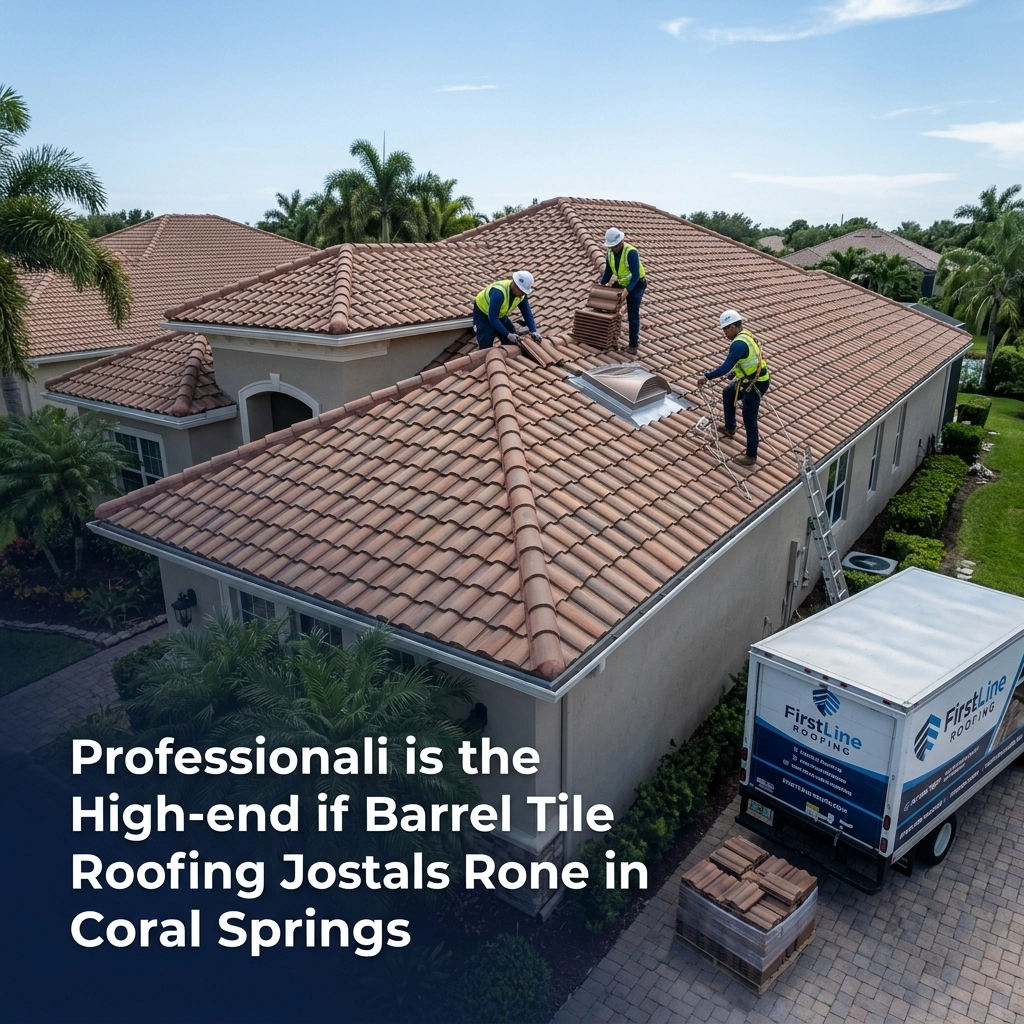
If you live in Coral Springs, you already know that our "City in the Country" has a very specific look and feel. Between the manicured medians and the strict architectural standards, it is one of the most beautiful places to live in South Florida. However, those high standards mean that when it’s time for a roof repair in Florida or a full replacement, you aren’t just dealing with hammers and nails: you’re dealing with a significant amount of bureaucracy.
Navigating the City of Coral Springs Building Department can feel like a full-time job. From color restrictions to structural engineering requirements, there is a lot to get right before the first shingle or tile is ever laid. At FirstLine Roofing, we’ve spent years working directly with the city’s permitting office at 9500 W. Sample Road, and we’ve learned exactly what they look for.
Here is everything you need to know about roofing in Coral Springs without the headache.
The Coral Springs Aesthetic: More Than Just a Pretty Roof
In many Florida cities, you can pick any roof color that doesn’t blind your neighbors. In Coral Springs, it’s a bit different. The city has a specific vision for its residential neighborhoods, primarily focused on maintaining property values through architectural consistency.
Clay and Cement Tile Guidelines
For the vast majority of single-family homes in Coral Springs, tile roofing is the standard. However, you can’t just pick any shade of Mediterranean blue or bright white. The city has a pre-approved list of colors and styles for clay and cement tiles.
Typically, the city leans toward earth tones: terracottas, browns, and muted grays. If you choose a color that falls within the "standard" approved palette, your permit process is relatively straightforward. If you decide to go "off-menu" with a custom color, prepare for a longer wait time.

The ARC Process: When You Want Something Different
If you want a roof that doesn't fit the standard mold: such as a specific non-approved color or a change in material: you will likely have to face the ARC (Architectural Review Committee).
The ARC is responsible for ensuring that any changes to a home’s exterior remain "harmonious" with the rest of the neighborhood. This is particularly relevant if you are considering metal roofing.
The Metal Roof Hurdle
While metal roofs are becoming incredibly popular across Florida for their longevity and wind resistance, they are generally not permitted for single-family homes in Coral Springs without specific ARC approval. The city historically prefers the look of tile. If you have your heart set on a standing seam metal roof, your contractor will need to submit a formal request to the ARC, which includes providing samples, photos of the home, and often appearing at a hearing to explain how the roof will fit the community's aesthetic.
Where Can You Have Shingles?
One of the most common questions we get as roofing contractors in Florida is: "Can I just switch to shingles to save money?"
In Coral Springs, the answer depends entirely on where you live. Most of the city requires tile, but there are exactly 10 subdivisions where asphalt shingles are traditionally permitted. These include:
- Forest Hills
- Cypress Glen
- Ramblewood
- Maplewood
- Coral Springs Hills
- The Dells
- Country Club
- Running Brook Hills
- North Springs
- Oak Wood
If you aren’t in one of these specific areas, switching from tile to architectural shingles is a major uphill battle that requires a variance and substantial justification.
Switching from Tile to Shingles? You Need an Engineer
Even if you live in one of the subdivisions where shingles are allowed, you can’t just swap them out. If your home was originally engineered to hold the weight of a heavy tile roof, and you want to switch to a lighter material like shingles, the city requires a signed and sealed letter from a structural engineer.
Why? Because the "uplift" calculations change. A heavy tile roof stays down partly due to its weight. A lighter shingle roof reacts differently to high winds. The city wants to ensure that the roof deck and the trusses are compatible with the new system to prevent failure during a hurricane. This is a critical step in a professional roof inspection in Florida.

Navigating the Permitting Process
In Coral Springs, the building department is thorough. They require a complete package before they even look at your application. This includes:
- The Building Permit Application (notarized).
- Product Approvals (NOAs) for every single component (the tiles, the underlayment, the nails).
- A copy of the signed contract.
- The "Roof Calculations" package (HVC).
How to File
There are three ways to get your paperwork to the city:
- Online: The fastest way, using the city’s e-Permit portal.
- Email: You can submit PDF packages via email for certain smaller scopes.
- In-Person: You can head down to City Hall at 9500 W. Sample Road. While this is the "old school" way, sometimes it’s the best way to get a quick answer on a specific architectural question.
Why Local Knowledge Matters
Hiring a roofer who doesn't frequently work in Coral Springs is a recipe for delays. We often see out-of-area contractors fail inspections because they didn't realize Coral Springs requires specific "in-progress" inspections that other cities might skip.
For example, the city is very strict about the "Tin Tag" or "Mop" inspection, where they verify the underlayment is installed correctly before the final tiles go on. If a contractor covers it up too early, the city may force them to tear it off so they can see what's underneath.

Insurance and the "15-Year Rule"
Beyond the city rules, Coral Springs homeowners are also dealing with insurance pressure. Many carriers are now requiring a full roof replacement if a roof is over 15 years old, regardless of its actual condition.
If you receive a notice from your insurance company, the first step should always be a professional roof inspection in Florida. We can often provide a condition report or help you understand if a repair is viable or if the city's strict guidelines will make a replacement more cost-effective in the long run. You can also look into the My Safe Florida Home program to see if you qualify for grants to help offset these costs.
Final Thoughts for Homeowners
A new roof is the most significant investment you will make in your home. In a city as detail-oriented as Coral Springs, you need a partner who understands the nuances of the local code. Whether you are dealing with storm damage or simply planning for the future, don't let the paperwork intimidate you.
If you have questions about whether your specific subdivision allows shingles, or if you need help navigating an ARC hearing for a new metal roof, we are here to help. At FirstLine Roofing, we don't just build roofs; we manage the entire process from the first permit application to the final city sign-off.
Ready to get started? Contact us today for a comprehensive roof evaluation and let us handle the Coral Springs red tape for you.