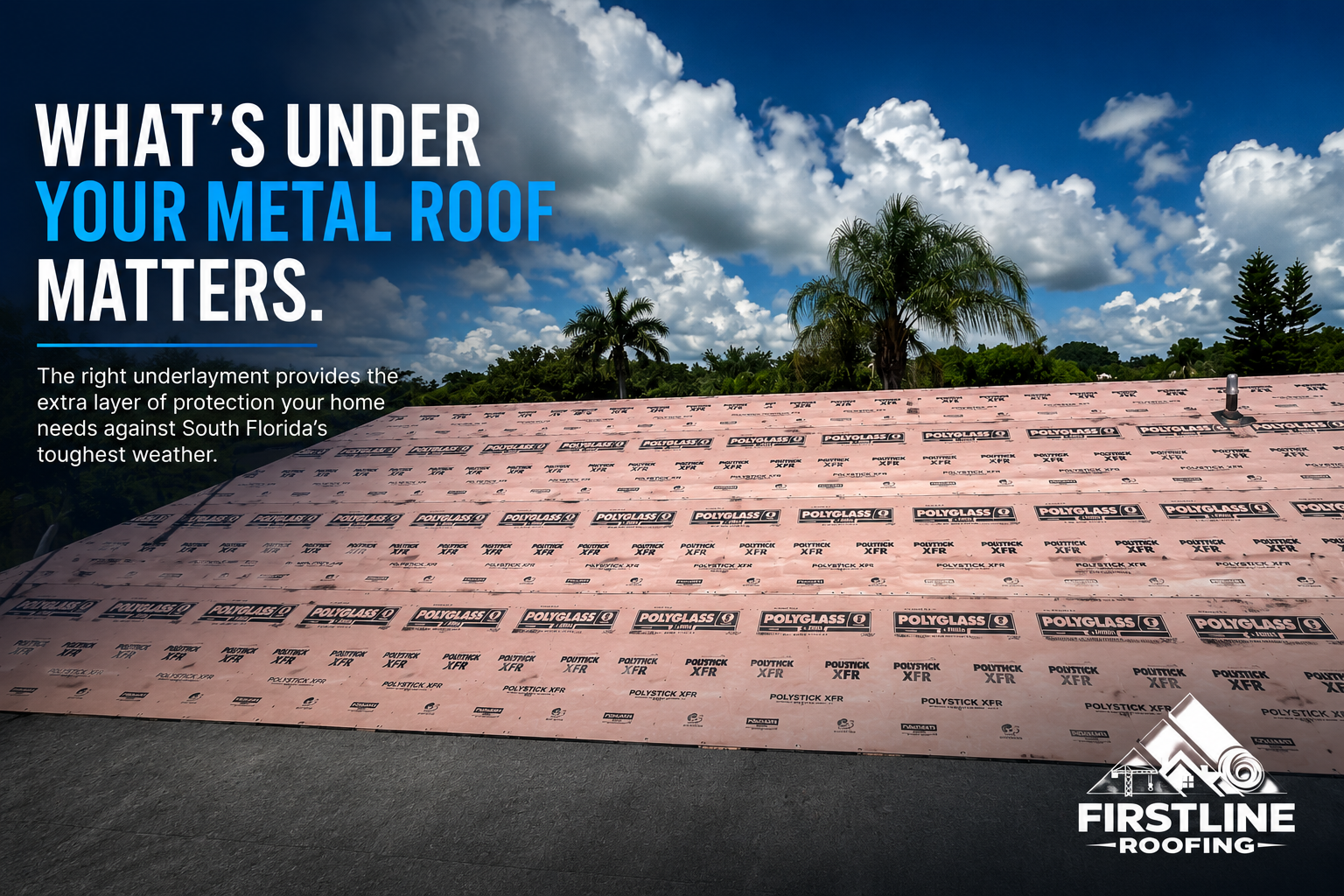
When homeowners invest in a metal roof, most of the attention goes to the finished product. People compare colors, panel profiles, warranties, and aesthetics. While those factors are important, one of the most critical components of a metal roofing system is something you’ll likely never see once the project is complete.
The underlayment.
In fact, the quality of the underlayment installed beneath a metal roof often plays a major role in determining how well the system performs over the next several decades.
At FirstLine Roofing, we frequently explain to homeowners that a roof system is only as strong as the layers beneath it. The visible metal panels may be the first line of defense against South Florida’s harsh weather, but the underlayment serves as a critical waterproofing barrier that protects the structure when wind-driven rain, condensation, or extreme weather conditions challenge the roofing system.
What Is Roof Underlayment?
Roof underlayment is a protective layer installed directly over the roof deck and beneath the finished roofing material.
Its primary purpose is to provide secondary water protection in the event moisture bypasses the exterior roofing system.
For metal roofing applications, underlayment serves several important functions:
- Water resistance
- Temporary dry-in protection during construction
- Additional hurricane protection
- Protection against wind-driven rain
- Condensation management
- Enhanced durability and longevity
While many homeowners never see this layer after installation, roofing professionals understand that the underlayment often determines how well a roof performs during severe weather events.
Why Metal Roofs Require Specialized Underlayment
Metal roofing systems perform differently than tile or shingle roofs.
Metal panels expand and contract throughout the day as temperatures change. In South Florida, roof surface temperatures can become extremely high, especially during the summer months.
These conditions place additional demands on the materials installed beneath the roof.
Traditional felt paper products that were once common in residential construction may not provide the level of performance needed beneath a modern standing seam or exposed-fastener metal roof system.
For this reason, many professional roofing contractors utilize high-performance synthetic or self-adhered underlayments specifically designed for metal roofing applications.
These products are engineered to withstand elevated temperatures, maintain adhesion, and provide superior moisture protection over the life of the roof.
The Advantages of Self-Adhered Underlayment
One of the most effective options available today is a self-adhered roofing membrane.
Unlike mechanically attached underlayments, self-adhered systems bond directly to the roof deck, creating a continuous protective barrier.
Benefits include:
Improved Waterproofing
Because the membrane adheres directly to the substrate, water is less likely to travel beneath the material.
Fastener Protection
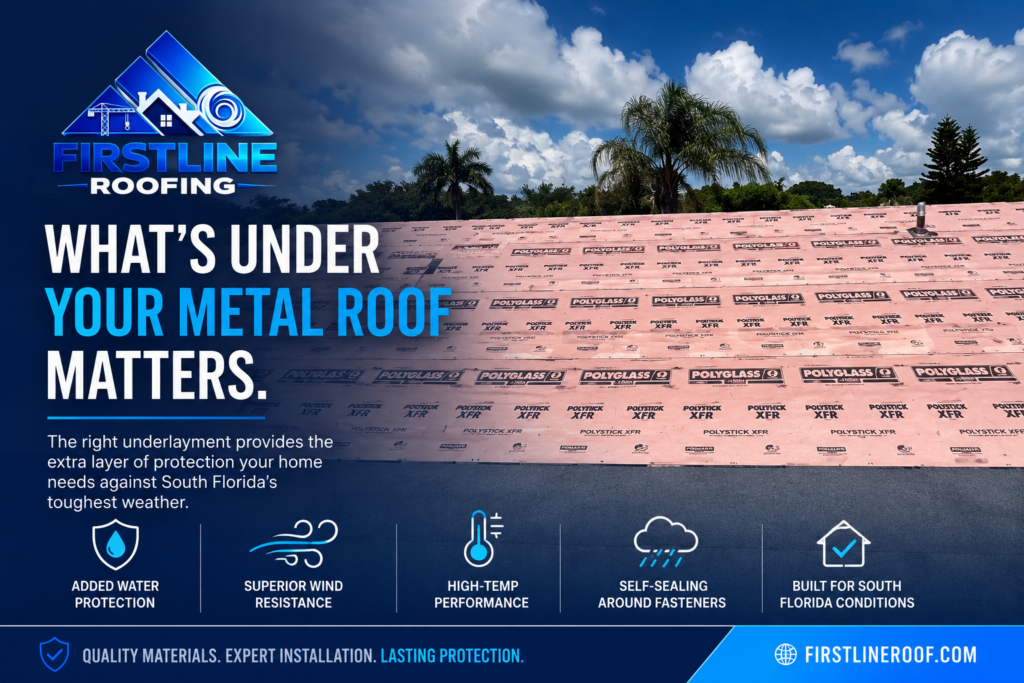
Many self-adhered products are designed to self-seal around fasteners, reducing the risk of water intrusion.
Enhanced Wind Resistance
Fully adhered systems are less susceptible to wind uplift compared to loosely attached underlayments.
Superior Temporary Protection
If weather delays occur during construction, self-adhered underlayments often provide better temporary dry-in protection before the final roofing material is installed.
These advantages are particularly valuable in South Florida, where sudden afternoon storms and hurricane conditions are a reality.
South Florida’s Climate Demands Better Roofing Systems
Roofing products installed in South Florida face some of the most demanding environmental conditions in the country.
Property owners must contend with:
- Intense UV exposure
- High humidity
- Heavy rainfall
- Tropical storms
- Hurricane-force winds
- Salt air near coastal communities
A roofing system that performs well in another region may not be suitable for South Florida’s unique climate.
This is one reason building codes and installation requirements continue to evolve throughout Broward, Palm Beach, and Miami-Dade Counties.
Homeowners considering a metal roof should focus not only on the visible roofing panels but also on the complete roofing assembly beneath them.
The most successful roof systems are designed as integrated systems where every component works together to protect the structure.
Why Two Metal Roofing Estimates Can Look Similar but Be Very Different
One of the biggest misconceptions in the roofing industry is that all metal roof installations are created equal.
Two contractors may submit proposals for what appears to be the same roof.
The finished metal panels may even come from the same manufacturer.
However, the hidden components beneath the roof can vary significantly.
Differences may include:
- Type of underlayment
- Thickness of materials
- Fastener systems
- Flashing details
- Ventilation design
- Installation methods
These differences often determine how the roof performs years after installation.
When comparing estimates, homeowners should ask detailed questions about what will be installed beneath the metal roofing system, not just the metal itself.
Long-Term Value Versus Initial Cost
Choosing premium roofing components may increase upfront project costs, but it can significantly improve long-term performance.
A properly designed metal roofing system can provide decades of protection when quality materials and proper installation practices are utilized.
In many cases, spending slightly more during installation helps reduce future repair costs and minimizes the risk of premature system failure.
For homeowners planning to stay in their homes long-term, investing in higher-quality roofing assemblies often provides substantial value over the life of the roof.
The Bottom Line
Metal roofs have earned a reputation for durability, energy efficiency, and longevity. However, the visible metal panels tell only part of the story.
The hidden components beneath the roof—particularly the underlayment—play a crucial role in protecting the structure from moisture intrusion and severe weather.
When evaluating a metal roofing project, homeowners should look beyond the finished appearance and focus on the complete roofing system.
The best metal roofs are not simply built with premium panels. They are built on a foundation of quality materials, proper installation techniques, and attention to detail from the roof deck up.
At FirstLine Roofing, we believe that the components homeowners never see are often the most important. That’s why every roofing system should be designed with long-term performance, durability, and South Florida’s demanding climate in mind.
Learn more about our metal roofing services at https://firstlineroof.com/metal-roofing/
You can also review roofing best practices and industry standards through the National Roofing Contractors Association at https://www.nrca.net and manufacturer resources available from Polyglass at https://polyglass.us.