
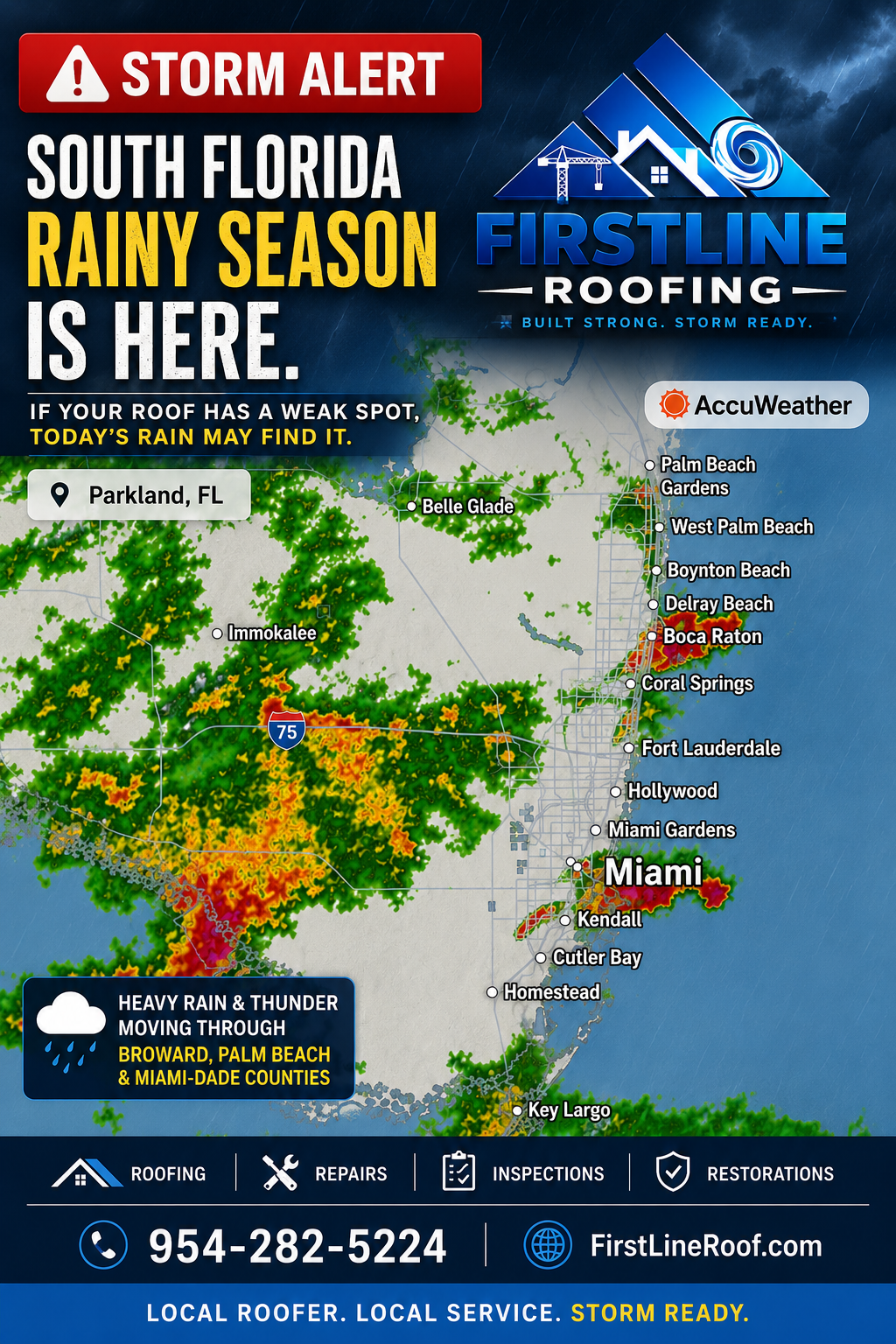
Every year, South Florida homeowners prepare for hurricane season, but many forget that some of the most costly roof leaks don’t come from hurricanes at all. They come from the daily storms, heavy rain, and persistent moisture that arrive with our annual rainy season.
The image above shows exactly what many residents across Broward, Palm Beach, and Miami-Dade Counties are experiencing right now: widespread rain bands, thunderstorms, and prolonged periods of moisture moving across South Florida.
For homeowners, this weather pattern can expose roofing problems that may have gone unnoticed during the dry season.
Why Roof Leaks Often Appear During Rainy Season
A roof can appear perfectly fine during months of dry weather. However, once frequent storms begin, hidden weaknesses often reveal themselves.
Common issues include:
- Deteriorated underlayment
- Cracked roof tiles
- Loose flashing
- Aging sealants
- Clogged gutters
- Ponding water on flat roofs
- Improper roof-to-wall transitions
Many homeowners are surprised when a leak suddenly appears after years without problems. In reality, the issue may have existed for some time and simply wasn’t exposed until the roof faced continuous rain events.
The Biggest Problem Areas We See in South Florida
At FirstLine Roofing, some of the most common leak locations include:
Roof-to-Wall Transitions
Areas where roofing materials meet stucco walls are especially vulnerable. Flashing failures can allow water intrusion behind the roofing system and into the structure.
Flat Roof Connections
Many South Florida homes have tile or shingle roofs that transition into flat roof sections. These transition points are often the source of recurring leaks if not properly detailed and maintained.
Valleys
Roof valleys handle large amounts of water during heavy storms. Broken tiles, deteriorated metal, or debris accumulation can quickly create leak conditions.
Penetrations
Plumbing vents, exhaust vents, skylights, and other roof penetrations require proper flashing and waterproofing. These areas frequently become vulnerable as sealants age.
The Hidden Cost of Waiting
One of the most expensive mistakes a homeowner can make is waiting until a small leak becomes a major problem.
A minor roof leak can eventually lead to:
- Damaged insulation
- Mold growth
- Interior drywall repairs
- Wood rot
- Electrical issues
- Ceiling damage
- Structural deterioration
The earlier a roofing issue is identified, the less expensive the repair typically becomes.
Don’t Forget Your Gutters
During rainy season, gutters play a critical role in protecting your home.
When gutters become clogged with leaves, debris, or roofing granules, water can overflow and back up into areas of the roof that were never designed to handle standing water.
Routine gutter cleaning helps:
- Improve drainage
- Reduce fascia damage
- Prevent water intrusion
- Extend roof life
- Protect landscaping and foundations
Many roof leaks begin with drainage problems that could have been prevented through regular maintenance.
What Homeowners Should Do Right Now
As rainy season ramps up, homeowners should:
- Walk around the property after storms.
- Look for water stains on ceilings.
- Check attic spaces for moisture.
- Inspect gutters and downspouts.
- Watch for cracked or displaced roof tiles.
- Schedule a professional roof inspection if any concerns arise.
Even if no leaks are currently visible, an inspection can identify developing issues before they become emergency repairs.
South Florida Roofs Face Unique Challenges
Our region experiences some of the harshest roofing conditions in the country.
South Florida roofs must withstand:
- Intense UV exposure
- Extreme heat
- High humidity
- Frequent thunderstorms
- Hurricane-force winds
- Salt air in coastal communities
These conditions accelerate wear and tear compared to many other parts of the United States.
Local Roofing Expertise Matters
Understanding South Florida roofing systems requires local experience.
Building codes, weather patterns, and roofing materials used throughout Broward, Palm Beach, and Miami-Dade Counties create unique challenges that require specialized knowledge and proper installation practices.
Whether your home has tile, shingle, metal, or flat roofing systems, routine inspections and preventative maintenance remain the most effective way to avoid costly repairs.
Schedule a Roof Inspection Before the Next Storm
If your roof has a weak spot, rainy season will eventually find it.
The good news is that most roofing issues can be identified and addressed before they become major leaks.
If you have concerns about your roof, now is the ideal time to have it inspected before South Florida’s rainy season reaches its peak.
Related Resources
- Roof Repair Services: https://firstlineroof.com/roof-repairs/
- Roof Inspections: https://firstlineroof.com/roof-inspections/
- Emergency Roofing Services: https://firstlineroof.com/emergency-roofing/
Additional Resources
- National Weather Service Hurricane Preparedness: https://www.weather.gov/safety/hurricane-plan
- FEMA Flood and Storm Preparedness: https://www.ready.gov/floods
FirstLine Roofing proudly serves homeowners and businesses throughout Broward County, Palm Beach County, and Miami-Dade County with roof inspections, repairs, maintenance, and full roof replacement services.